
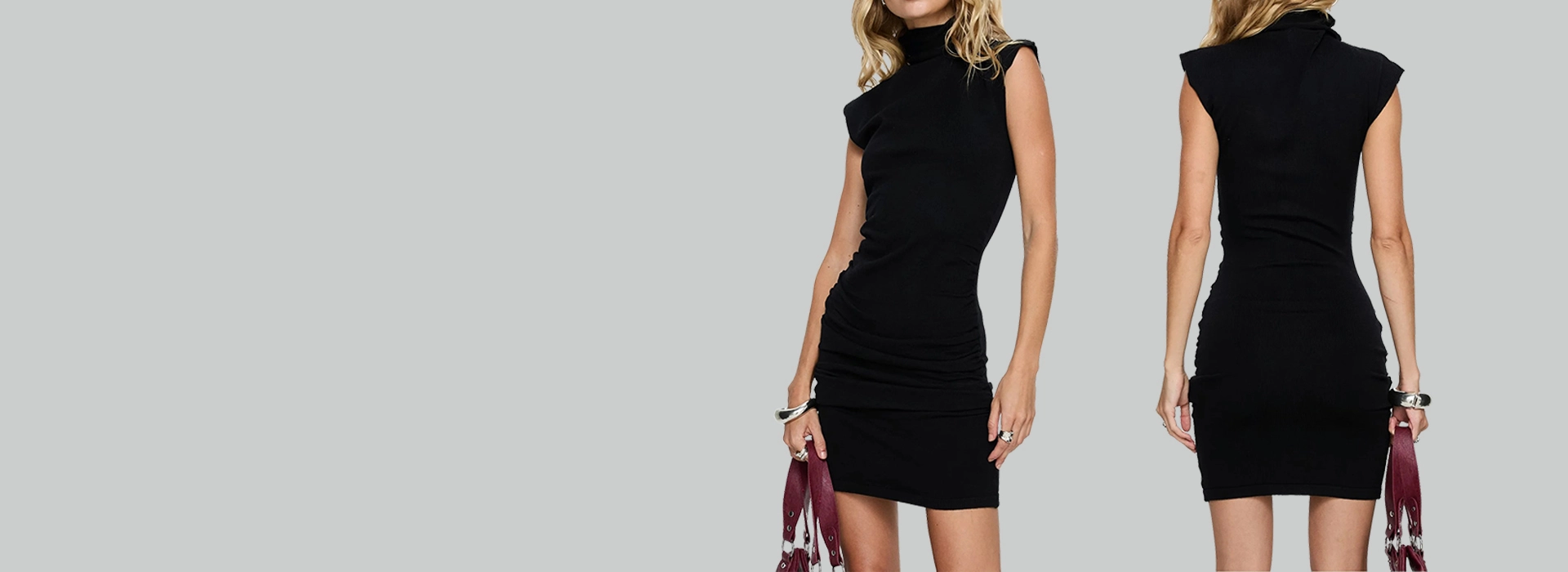
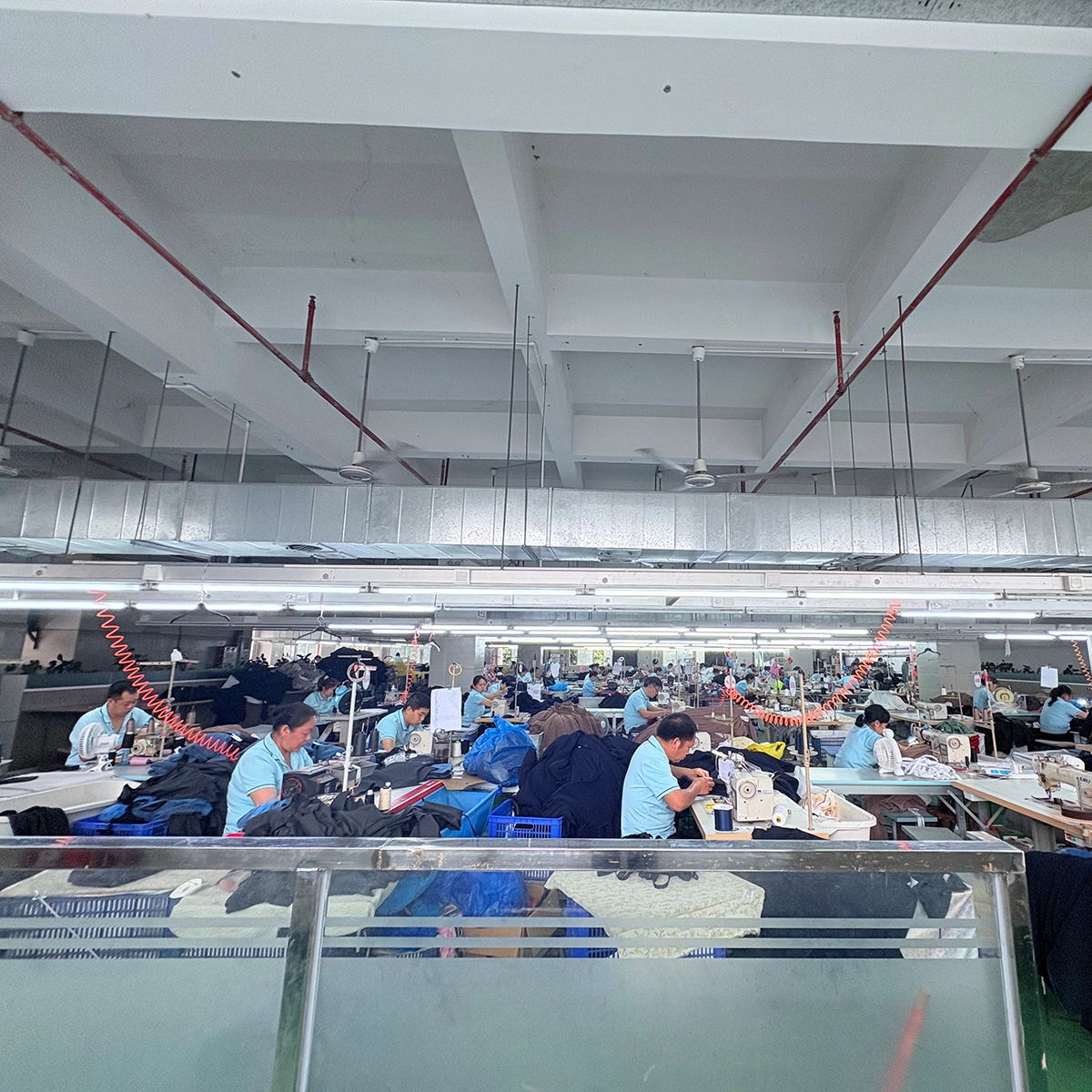
Our Ruched Dress Manufacturing Capacity
- 18+ Years Dress Manufacturing Experience
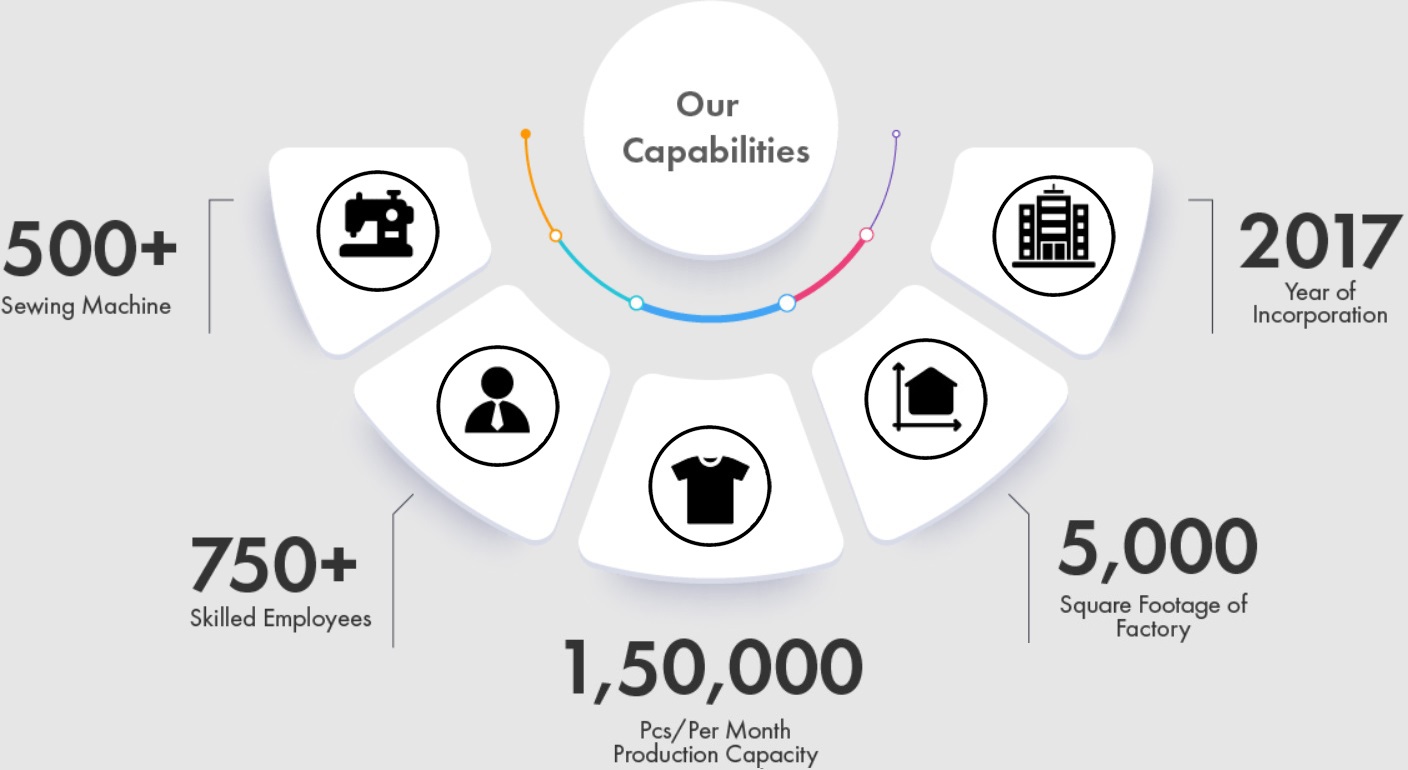
Experienced in producing fitted styles, evening dresses, party dresses and custom designs with complex construction details. - 750+ Skilled Workers
Our sewing teams are experienced in detailed dress construction, including gathers, draping, elastic application and fitted silhouettes. - 500+ Sewing Machines
Used for daily dress production and supporting stable sewing operations for bulk orders. - 5 Automatic Cutting Lines
Used for accurate cutting control and more consistent sizing during bulk production. - 150,000+ Pieces Monthly Production Capacity
Supports orders from fashion startups, growing brands and wholesale buyers with different production volumes. - MOQ Starting From 50–100 Pieces Per Style/Color
Suitable for brands testing new designs before scaling production. - Export Experience To 40+ Countries
Familiar with international production requirements, packaging standards, and shipping processes.
Custom Ruched Dress Manufacturing for Fashion Brands
A ruched dress relies heavily on construction details. Compared with simple dress constructions, ruched styles require more control over pattern adjustment and sewing tension.
When you develop custom ruched dresses with Xiuyu Apparel, you can provide your own:
- Tech pack or design sketches
- Reference images
- Existing garments
- Fabric requirements
- Brand specifications
Product Specifications
| Item | Details |
|---|---|
| Sample Development | 3–7 Days |
| Bulk Production | 25–30 Days |
| MOQ | 50–100 pcs per style/color |
| OEM & ODM | Supported |
| Private Label | Available |
| Fabric Sourcing | Available |
| In-line Quality Control | During Production |
| Final Inspection | Before Shipment |
| Custom Sizing | Available |
Popular Ruched Dress Styles We Can Customize
Brands use ruched details across different collections, from body-conscious partywear to elegant evening styles. You can customize ruched dresses based on your target market, price range, and brand positioning.
Catalogue from Xiuyu Apparel
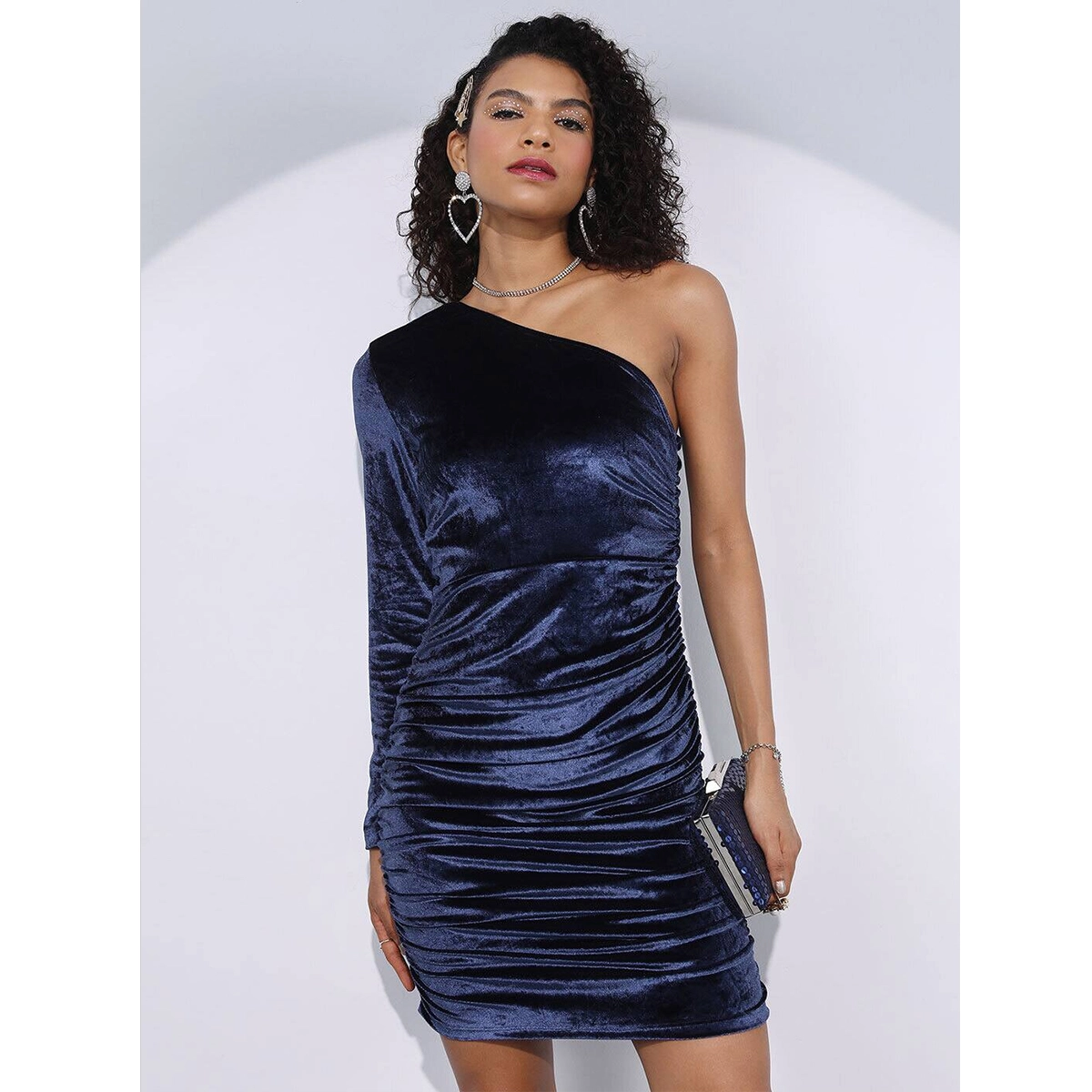
Ruched Bodycon Dress
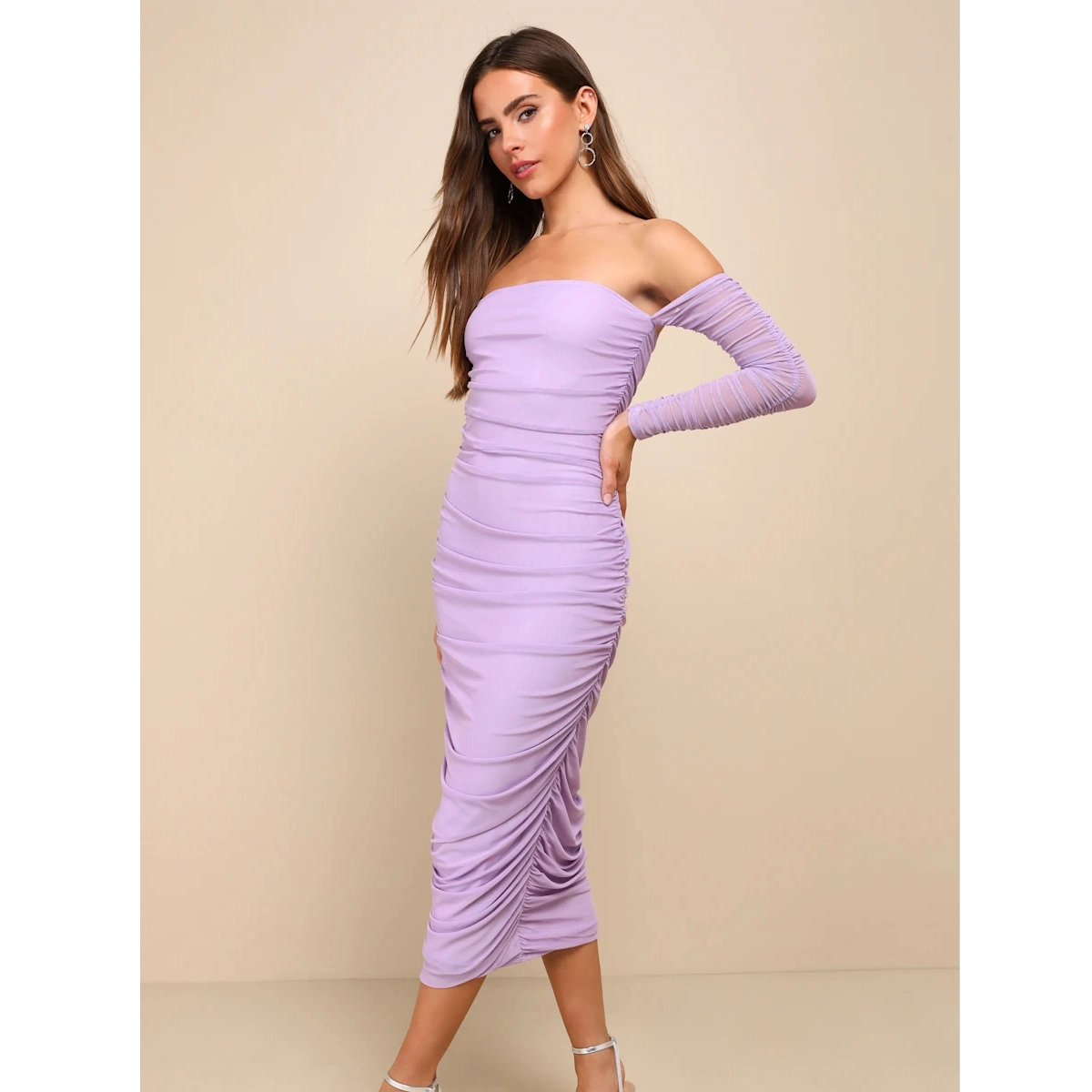
Ruched bodycon dresses require accurate pattern control and suitable stretch fabrics. During sampling, we check fabric recovery, ruching position, and seam structure before confirming the fitted shape for bulk production.
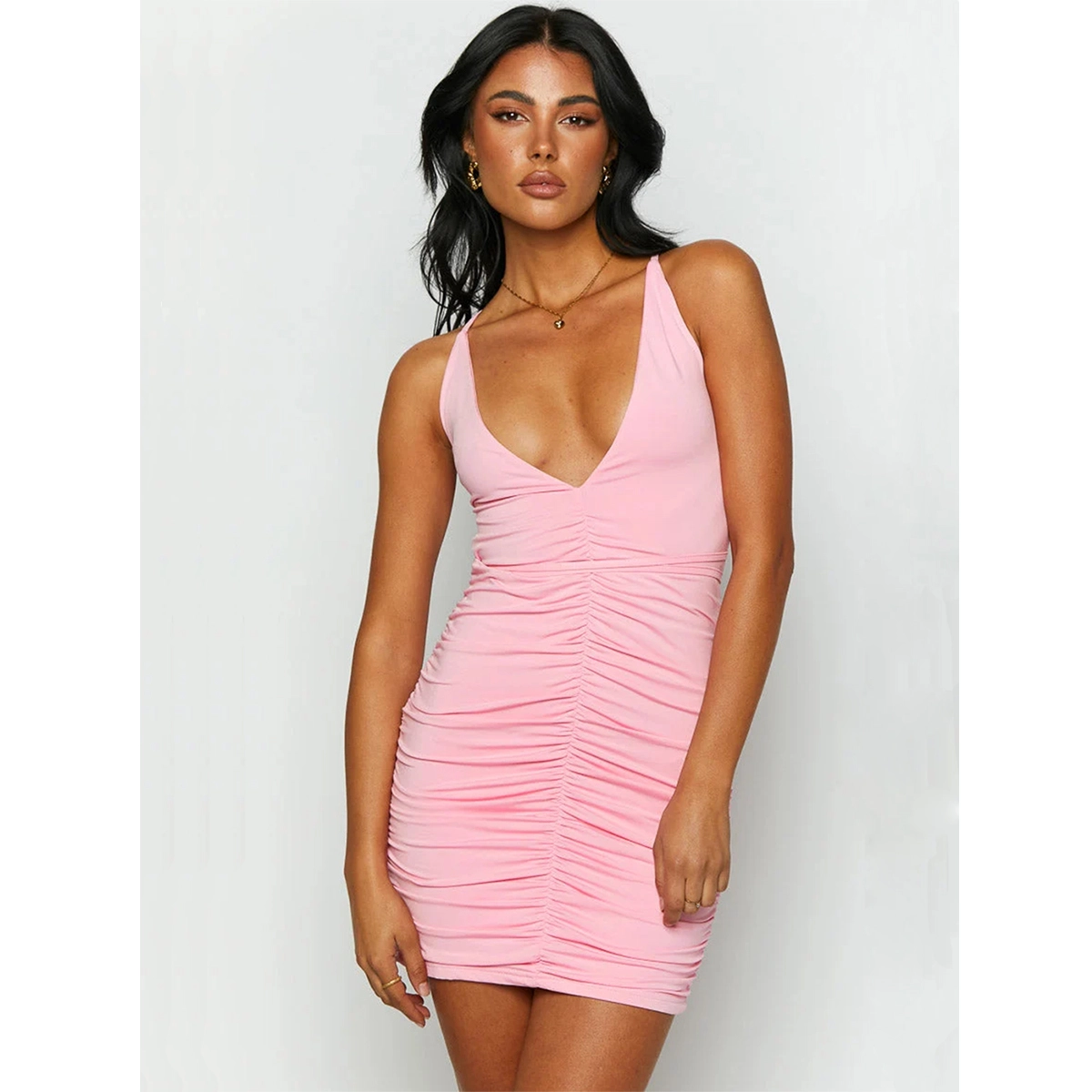
Ruched Mini Dress
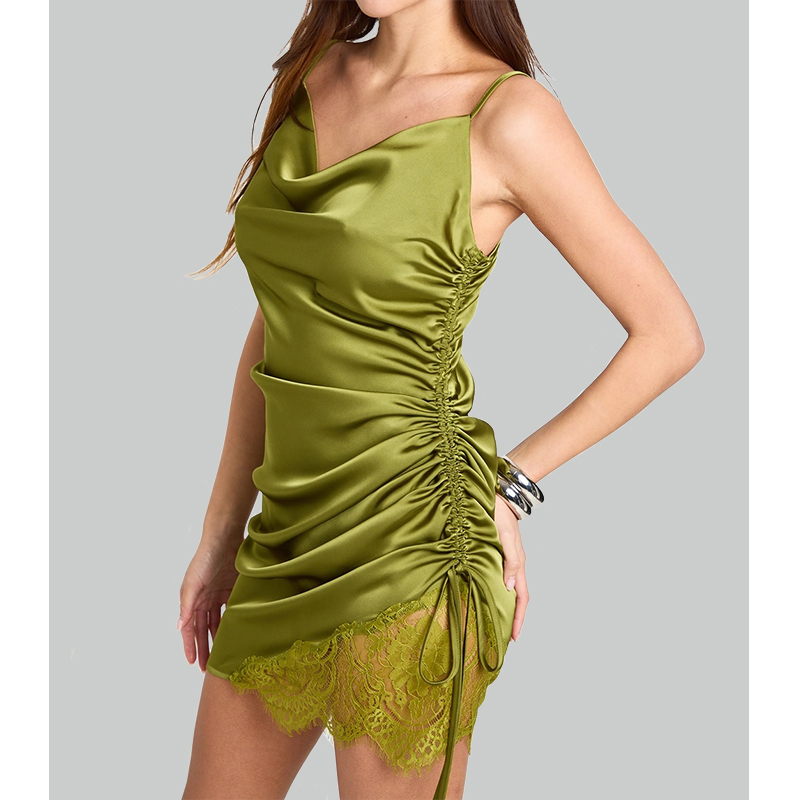
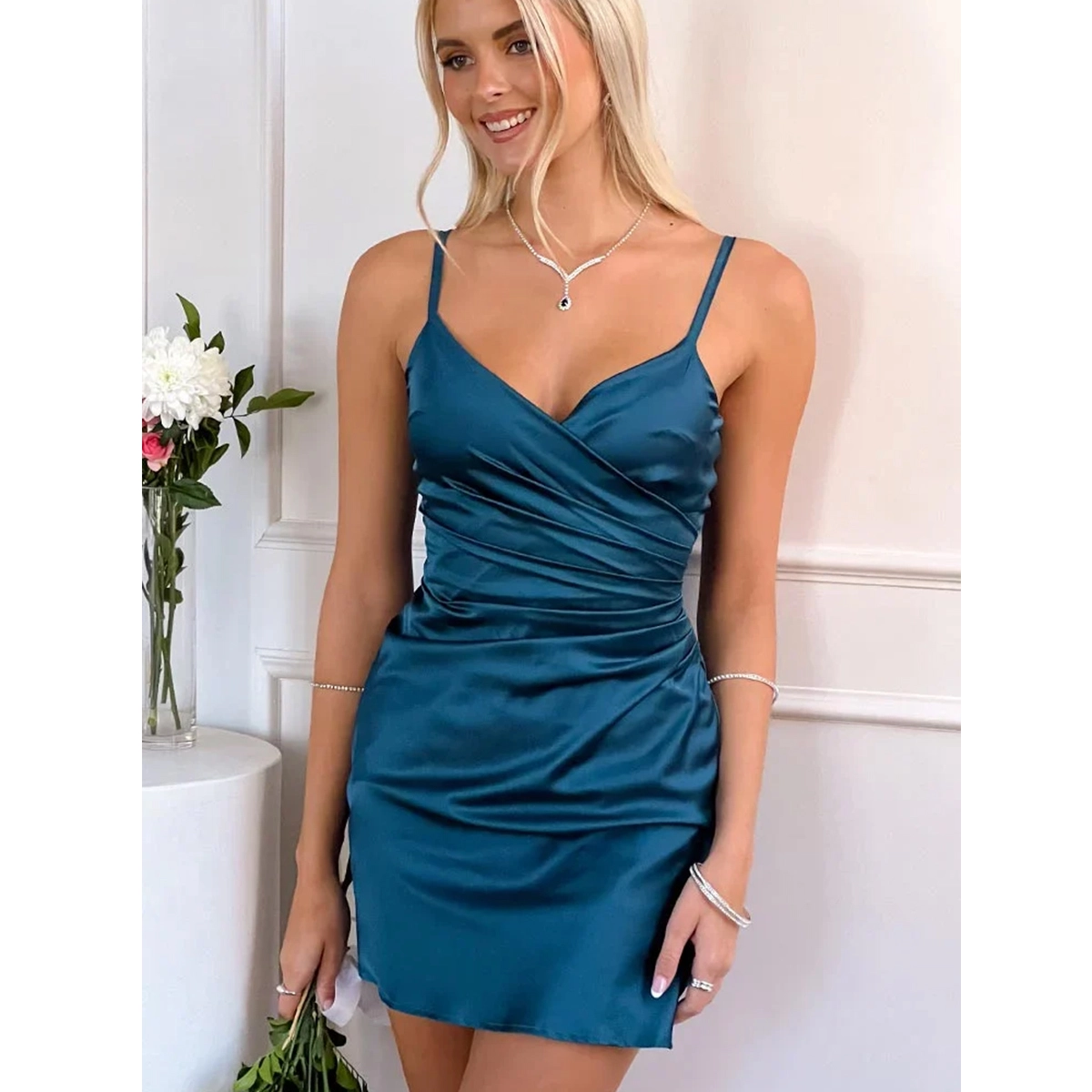
Ruched mini dresses are often developed for partywear and fashion collections. During sampling, we check length proportion, neckline construction, side ruching position and lining details to confirm the required silhouette.
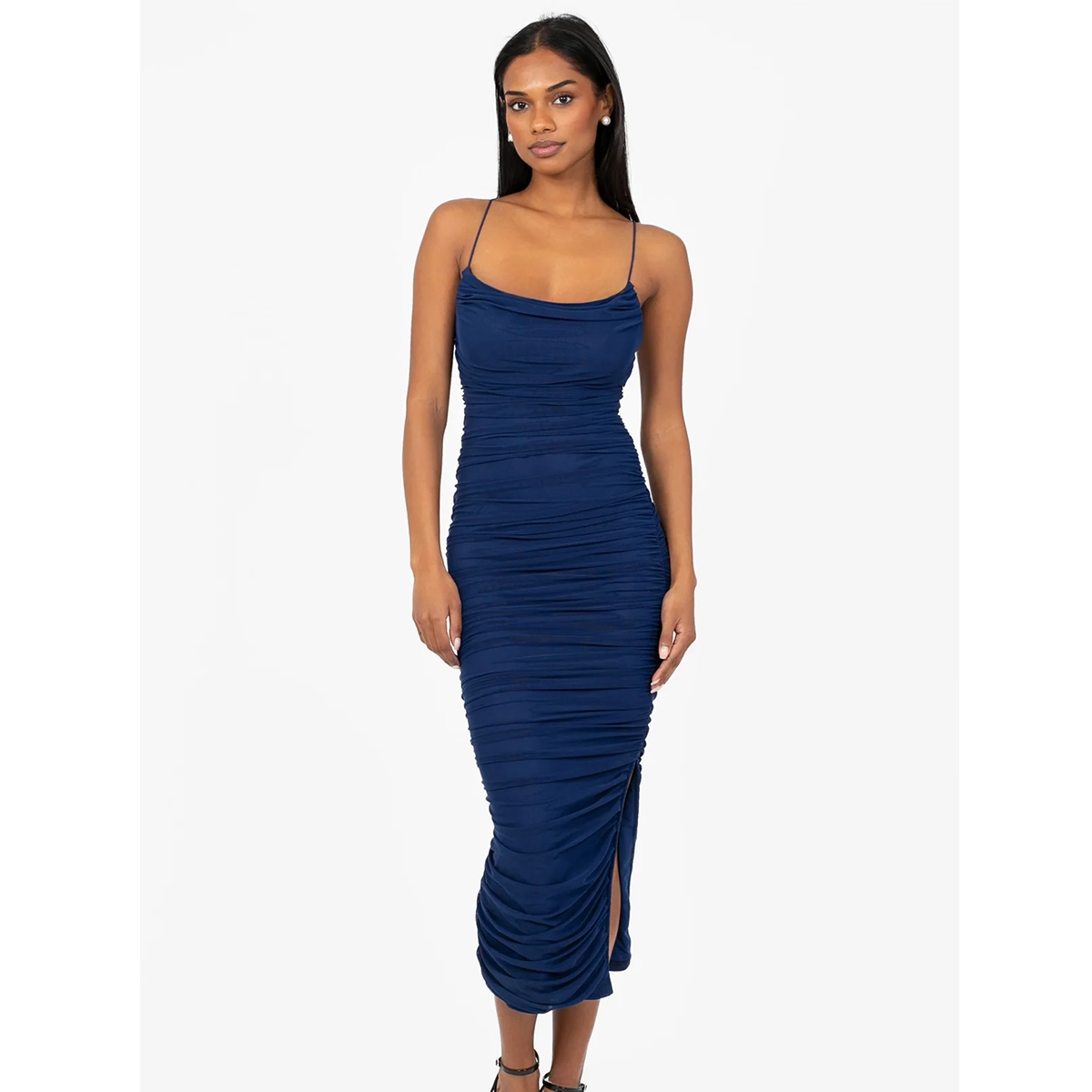
Ruched Midi Dress
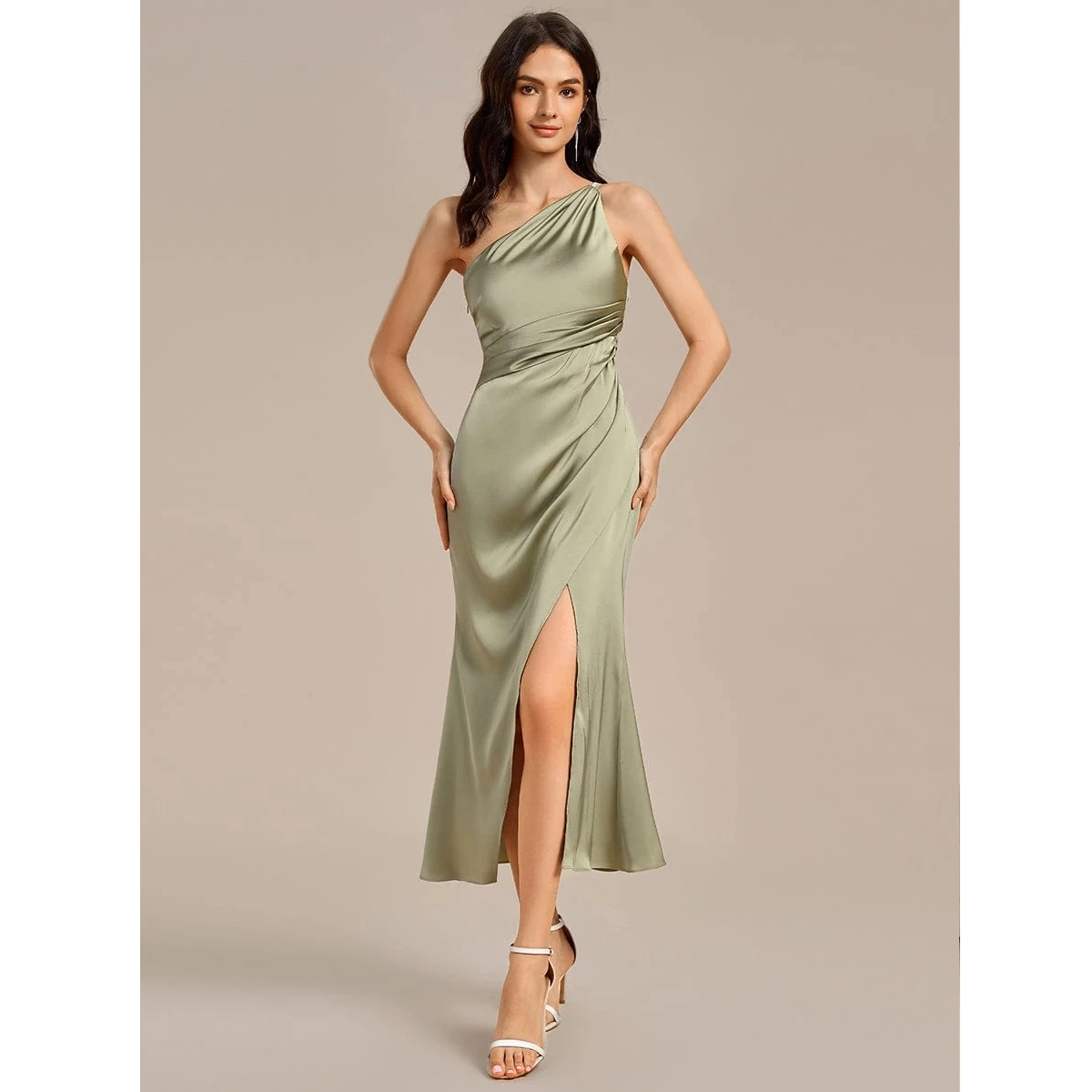
Midi ruched dresses require careful balance between fabric drape and garment proportion. During sampling, we check waist placement, hem shape, fabric weight, and overall fitting before confirming the production pattern.
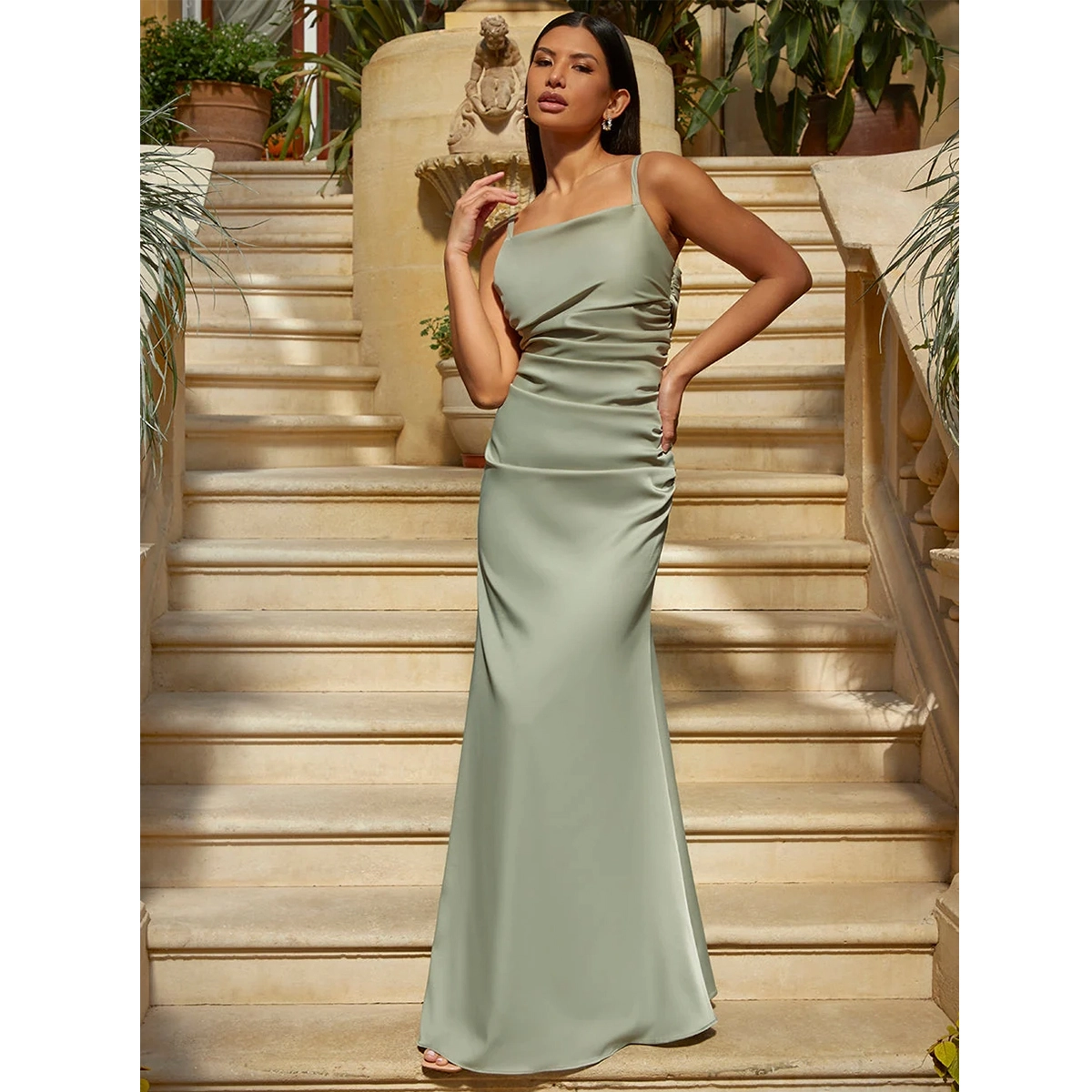
Ruched Maxi Dress
Maxi ruched dresses usually involve higher fabric usage and more fitting adjustments. Our team checks fabric weight, stretch control, length proportion and lining construction before confirming the production pattern.
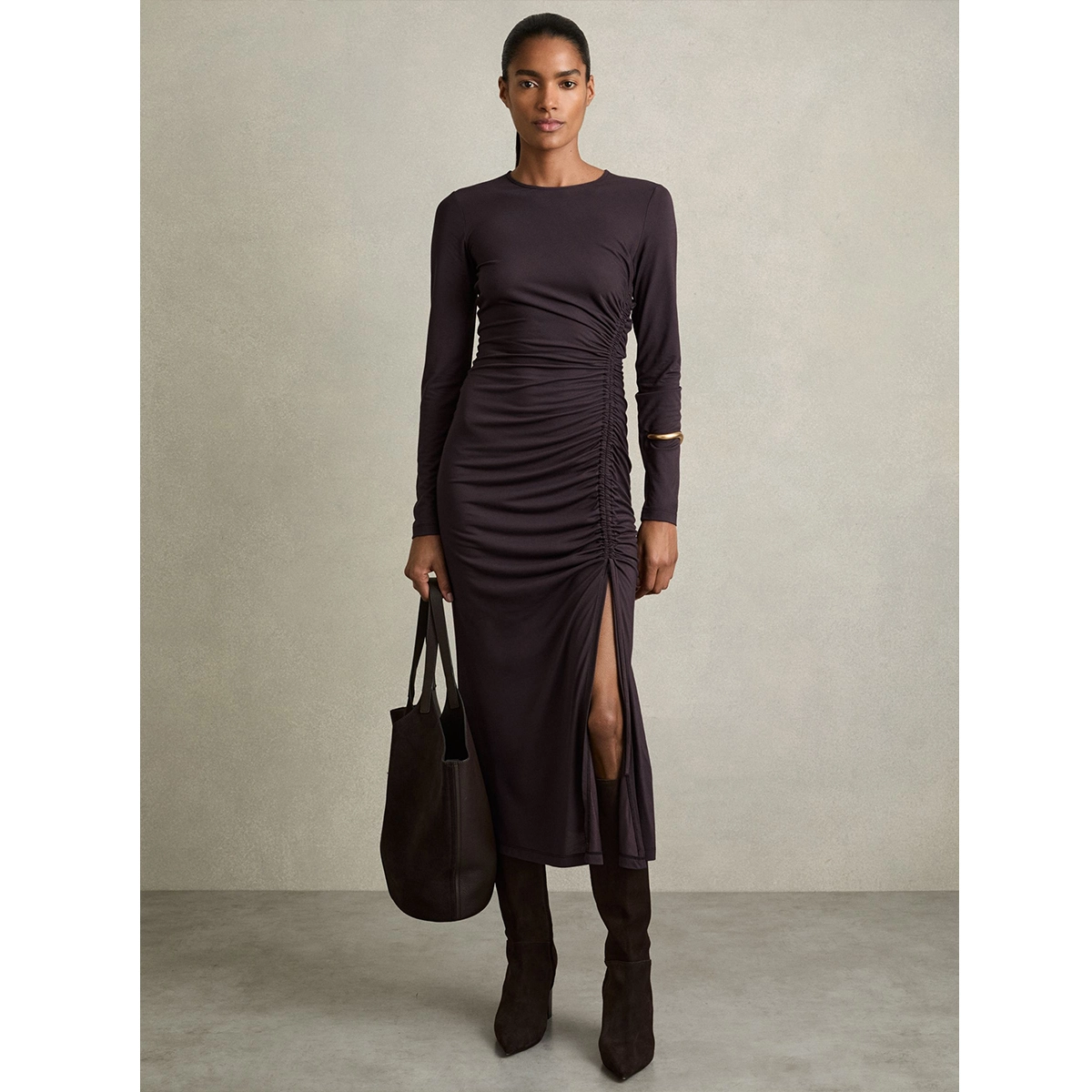
Jersey Ruched Dress
Jersey is widely used for fitted ruched dresses because of its stretch and recovery. Fabric weight, elasticity and sewing tension need to be controlled to create even gathers while keeping the body-contouring shape.
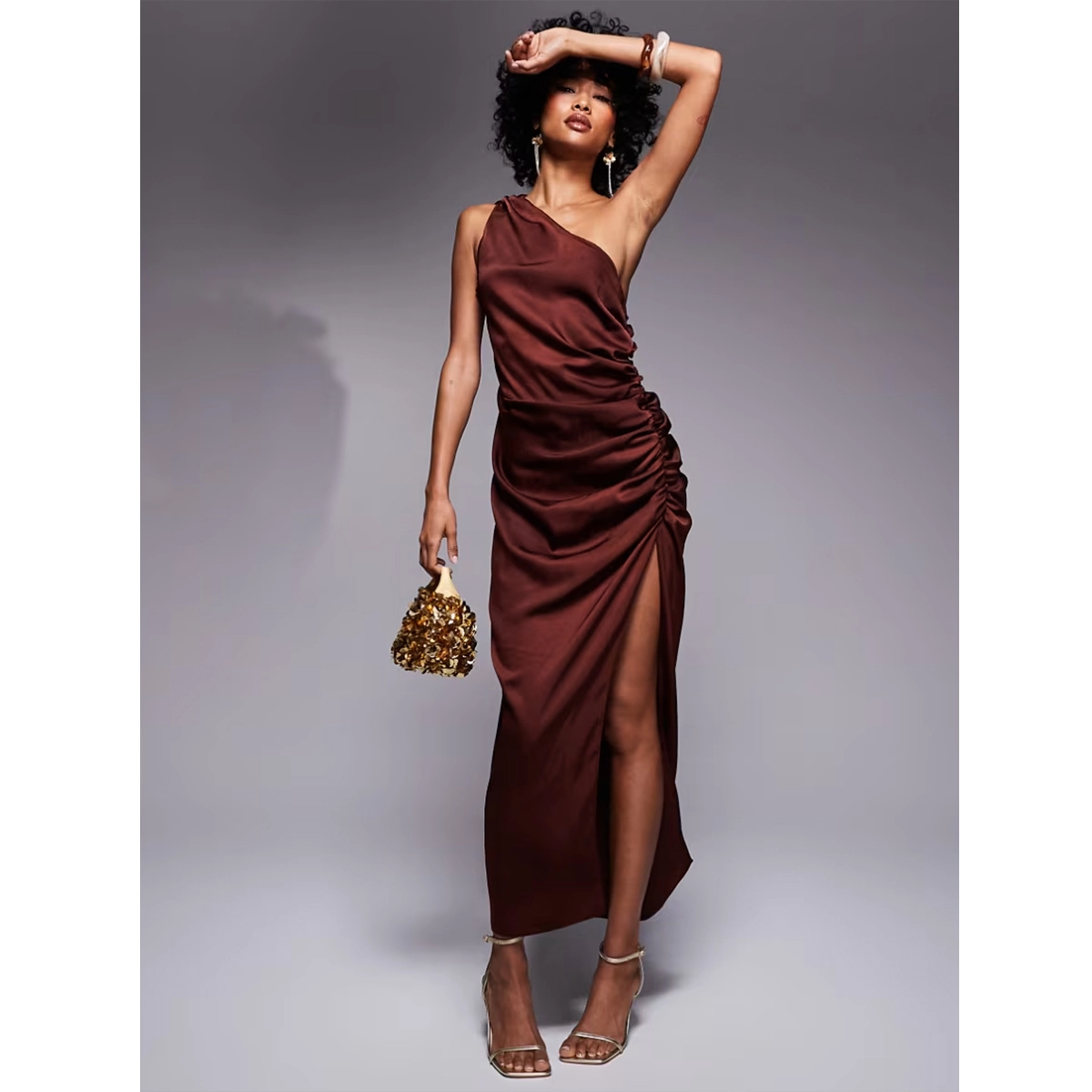
Satin Ruched Dress
Satin ruched dresses require careful handling during cutting and sewing. Fabric direction, seam tension, and pressing methods can affect the surface appearance, so these details are checked during sample and bulk production.
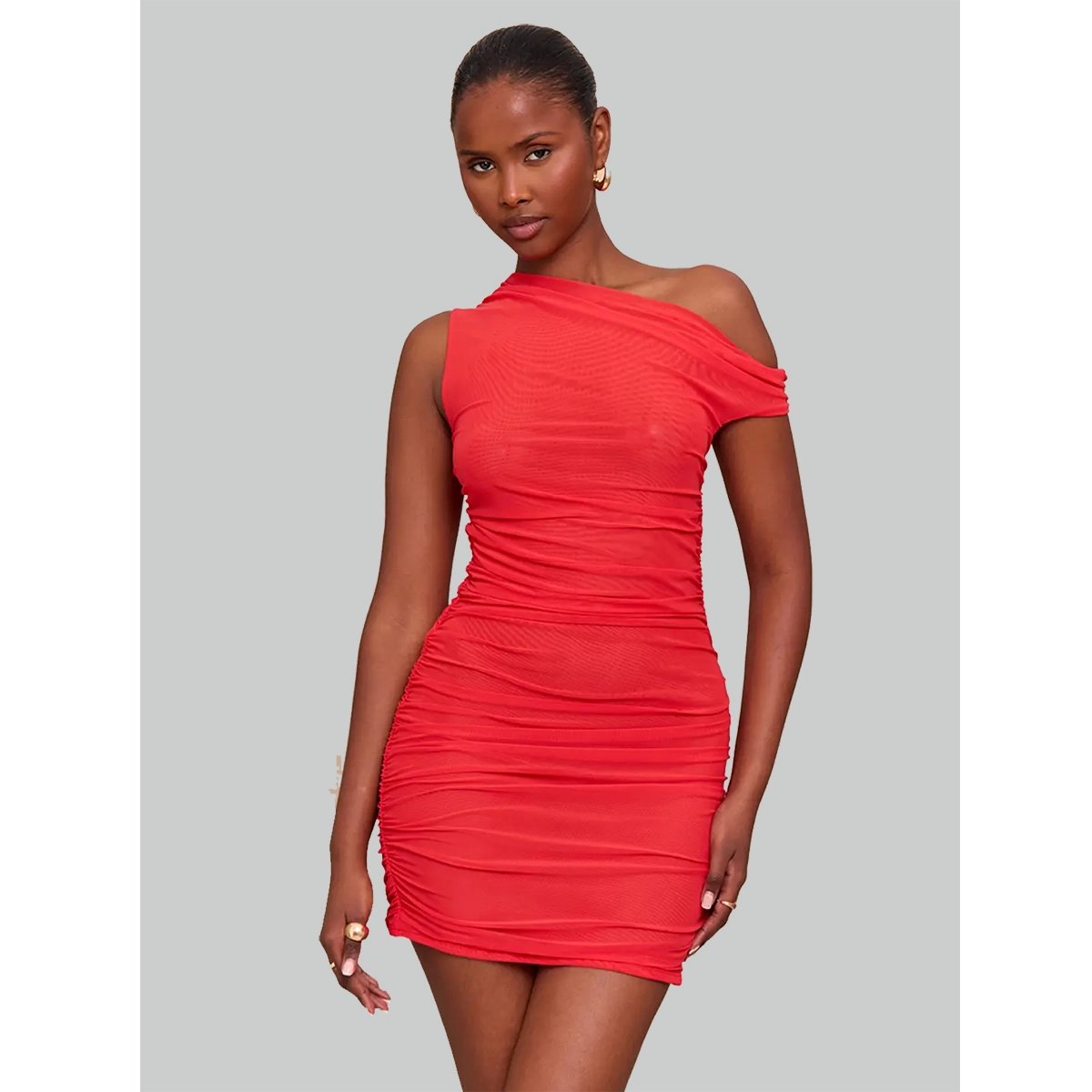
Mesh Ruched Dress
Mesh ruched dresses require different handling compared with stable fabrics. Pattern adjustments, seam reinforcement and sewing methods are controlled to manage stretching, transparency and the final garment shape.
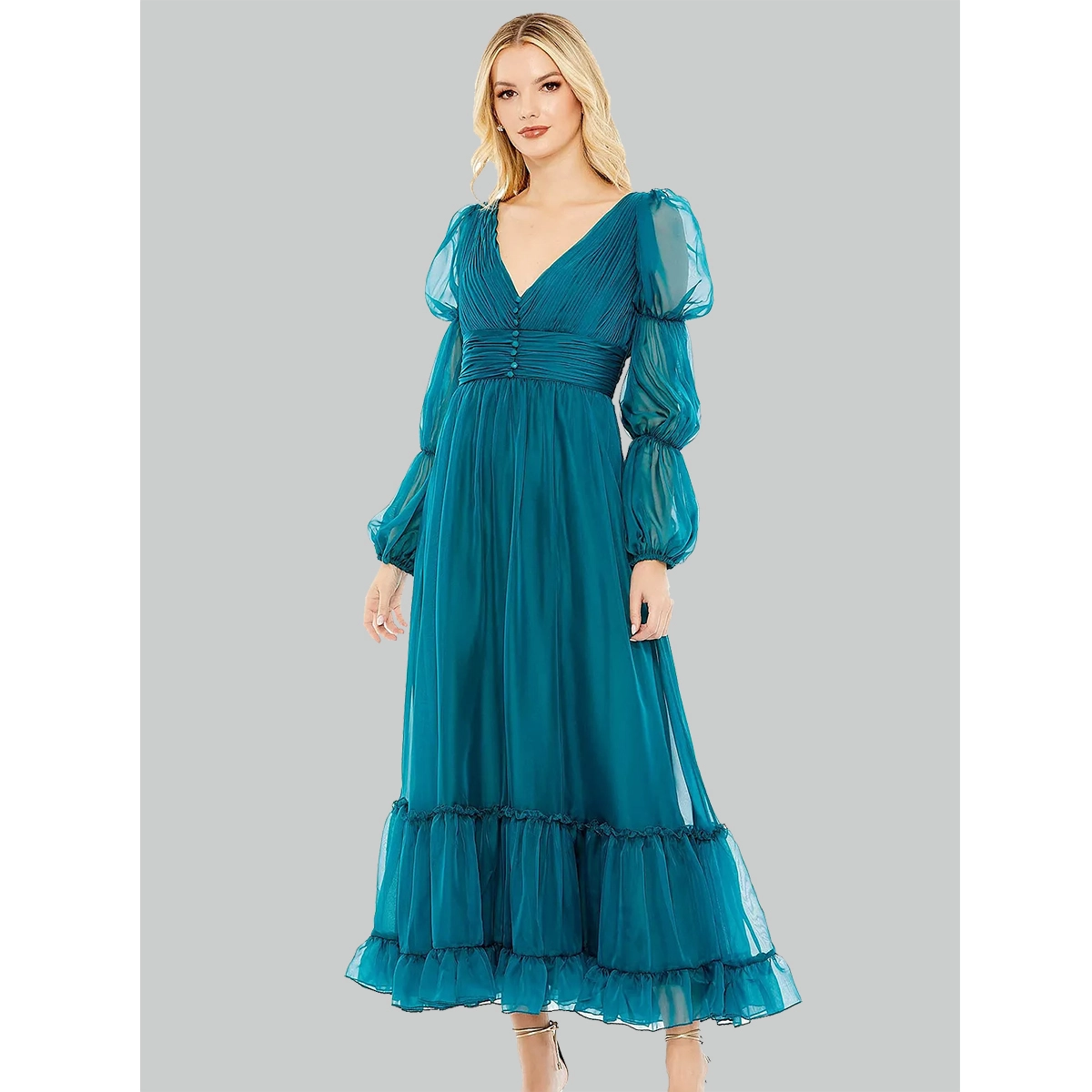
Chiffon Ruched Dress
Chiffon creates a softer drape for ruched dresses but requires careful cutting and sewing control. Fabric layers, lining construction, and finishing details are reviewed during sampling to achieve the required appearance after production.
Fabric Options for Custom Ruched Dresses
Fabric selection plays an important role in ruched dress production. The same ruching technique can create different results depending on fabric stretch, weight and drape.
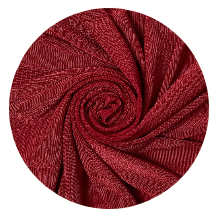
Stretch jersey is widely used for ruched bodycon dresses because the fabric allows gathering while keeping a close-to-body fit.
You need enough elasticity for comfortable fitting, but the fabric also needs good recovery to prevent the gathers from losing shape after wearing.
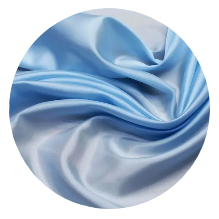
Satin creates a clean surface and soft drape, but the fabric requires careful cutting and pressing control during production.
In production, our team controls cutting direction, sewing tension, pressing temperature and seam alignment because satin can easily show construction issues.
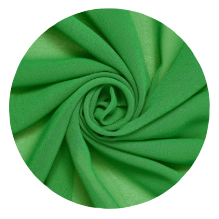
Mesh fabrics are commonly used for partywear and fitted ruched styles where layering and transparency need to be controlled.
You need to consider elasticity, transparency, and reinforcement around seams. Proper pattern adjustment helps avoid stretching distortion during sewing.
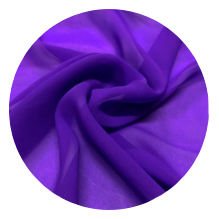
Lightweight fabrics such as chiffon can create soft ruching effects.
For chiffon ruched dresses, we check lining construction, fabric layers and finishing methods to achieve a clean final appearance.
Private Label Ruched Dress Manufacturing Services
Private label customers can customize not only the dress design but also branding and packaging details.
Xiuyu Apparel supports private label production with:
- Custom woven labels
- Care labels
- Hangtags
- Barcode labels
- Packaging solutions
- Custom colors
- Fabric selection
- Size grading
This allows brands to develop their own ruched dress collections with custom labels, sizing and production specifications.
What Makes Ruched Dresses Different for Manufacturing?
A ruched dress uses gathered fabric to create texture, shaping, and a body-contouring effect. Fabric performance and construction methods directly affect how the ruching looks and fits after production.
When you send your design, our team reviews details such as:
- Where the ruching is placed
- How much fabric gathering is required
- Fabric stretch and recovery
- Seam construction
- Lining requirements
- Fit across different sizes
For example, a stretch jersey ruched bodycon dress requires different pattern adjustments compared with a satin ruched evening dress. The fabric behavior determines how much gathering is needed and how the final garment will sit on the body.
What Affects Ruched Dress Manufacturing Cost?
The quotation for a ruched dress depends on more than the design appearance. Fabric usage, construction steps and finishing requirements all affect the final cost.
Key cost factors include:
- Fabric type, stretch level and fabric weight
- Ruched area and gathering ratio
- Amount of fabric required for creating gathers
- Full-body ruching or partial ruching design
- Number of ruched panels and seam construction
- Dress length and overall silhouette
- Lining requirements and inner construction
- Zippers, boning or support structures
- Printing, embroidery or special surface treatments
- Fabric cutting difficulty and pattern adjustment
- Order quantity
- Custom labels, packaging and finishing requirements
The ruching structure affects pattern making, fabric usage and sewing time, so it is evaluated before production. A dress with concentrated ruching on the waist or side seam may require careful pattern adjustment, while an all-over ruched design usually involves more fabric preparation and sewing control to achieve consistent gathers.
How to Start a Custom Ruched Dress Order
You can start with a tech pack, sketch, reference garment or even a basic product idea. Our team will check construction details, fabric requirements and production feasibility before sampling. Measurements, fabric preferences, colors, ruched areas, gathering details, seam construction, trims, labels and packaging requirements can be added as the design is confirmed.
For ruched dress styles, the key details are the ruched placement, gathering ratio, fabric stretch, and how the gathers are constructed. Whether the ruching is applied at the waist, side seams, bust area or across the full dress can affect pattern development, fabric consumption and the final fit.
During sampling, fabric behavior and garment shape need to be checked carefully. Stretch fabrics, lightweight materials and different gathering techniques can create different drape effects, so adjustments may be needed before moving into bulk production.
If your collection includes styles beyond ruched dresses, Xiuyu Apparel also works as a clothing manufacturer for broader womenswear production.
From Design Idea to Bulk Ruched Dress Production
For ruched styles, fabric behavior and pattern accuracy need to be controlled from sampling through bulk production.
1. Design Review and Production Evaluation
You can provide:
- Tech pack
- Fashion sketch
- Reference images
- Existing garments
- Development samples
Before sampling, our team checks construction details, fabric requirements and possible production challenges.
Checking these details before sampling can reduce adjustment work during later production stages.
2. Pattern Development and Sample Making
Ruching requires accurate pattern control.
Our pattern team considers:
- Gathering ratio
- Fabric stretch direction
- Panel construction
- Fit requirements
- Seam placement
The first sample is used to check more than appearance.
During sample review, you can check:
- Overall silhouette
- Fit balance
- Ruching position
- Fabric performance
- Construction details
Sample development usually takes around 3–7 days depending on the design complexity.
3. PP Sample Approval Before Bulk Production
Before bulk production starts, you confirm the approved PP sample.
This stage allows both sides to align on:
- Measurements
- Fabric selection
- Construction details
- Finishing requirements
Once confirmed, production follows the approved specifications.
4. Bulk Manufacturing and Quality Control
During bulk production, your garments go through:
- Fabric inspection
- Automatic cutting
- Sewing production
- In-line quality checks
- Pressing
- Final inspection
- Packing
The bulk production follows the approved PP sample, with QC checks focusing on ruching placement, measurements and finishing details.
Manufacturing Considerations for Ruched Dresses
Fabric Selection Affects the Final Ruching Effect
The same ruched design can look completely different when produced with different fabrics.
When selecting materials, you need to consider:
- Stretch recovery
- Fabric thickness
- Draping performance
- Surface texture
- Lining requirements
Common fabric options for ruched dresses include:
Stretch Jersey
Suitable for fitted styles because it allows comfortable movement while keeping the gathered effect.
Mesh
Often used for partywear and bodycon designs. Mesh requires careful handling during cutting and sewing because excessive tension can affect the final shape.
Satin
Creates an elegant appearance but requires attention during production because pulling marks, seam tension, and pressing can influence the surface.
Velvet
Provides a rich texture for evening collections, but fabric direction and pressing methods need to be controlled during manufacturing.

About Our Dress Factory
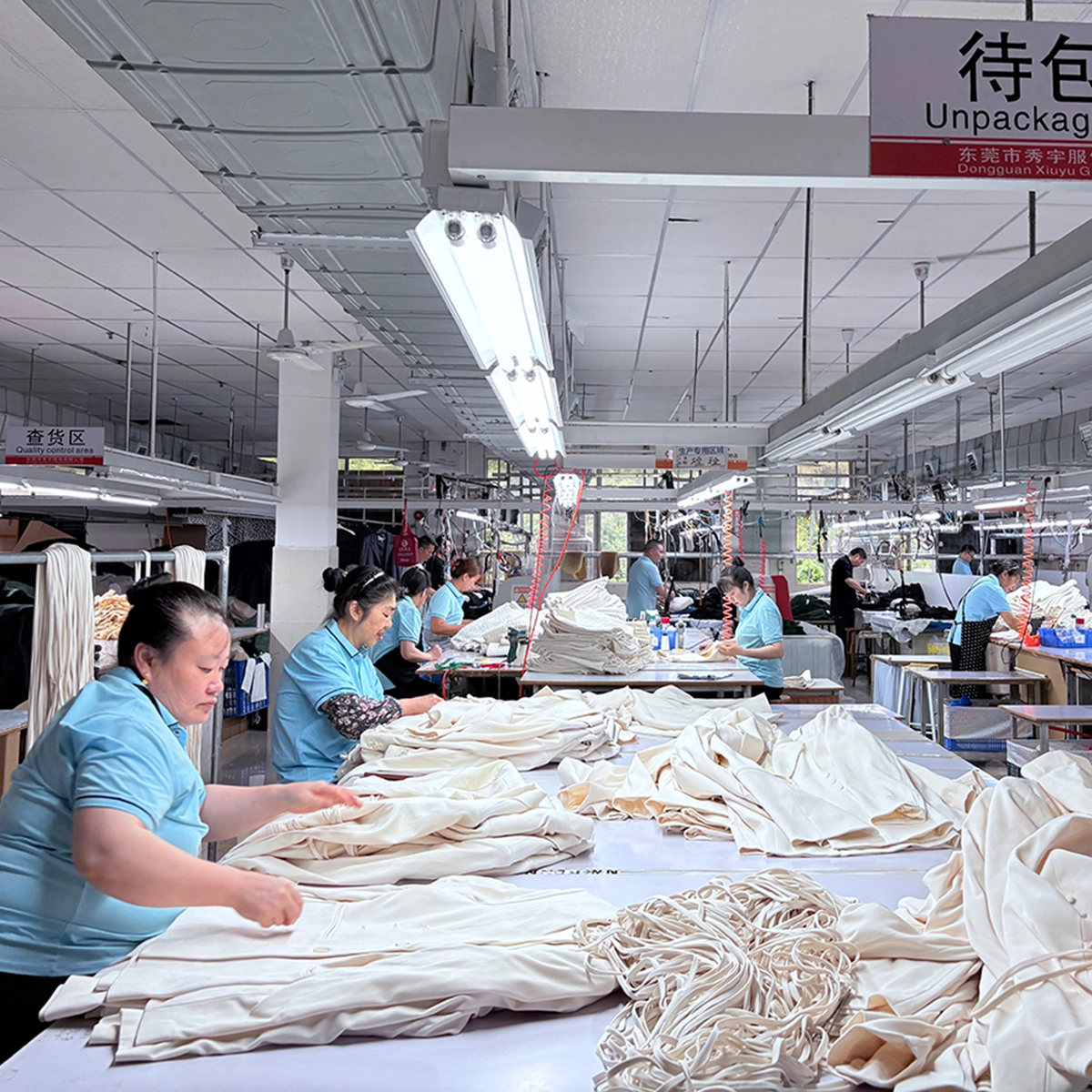
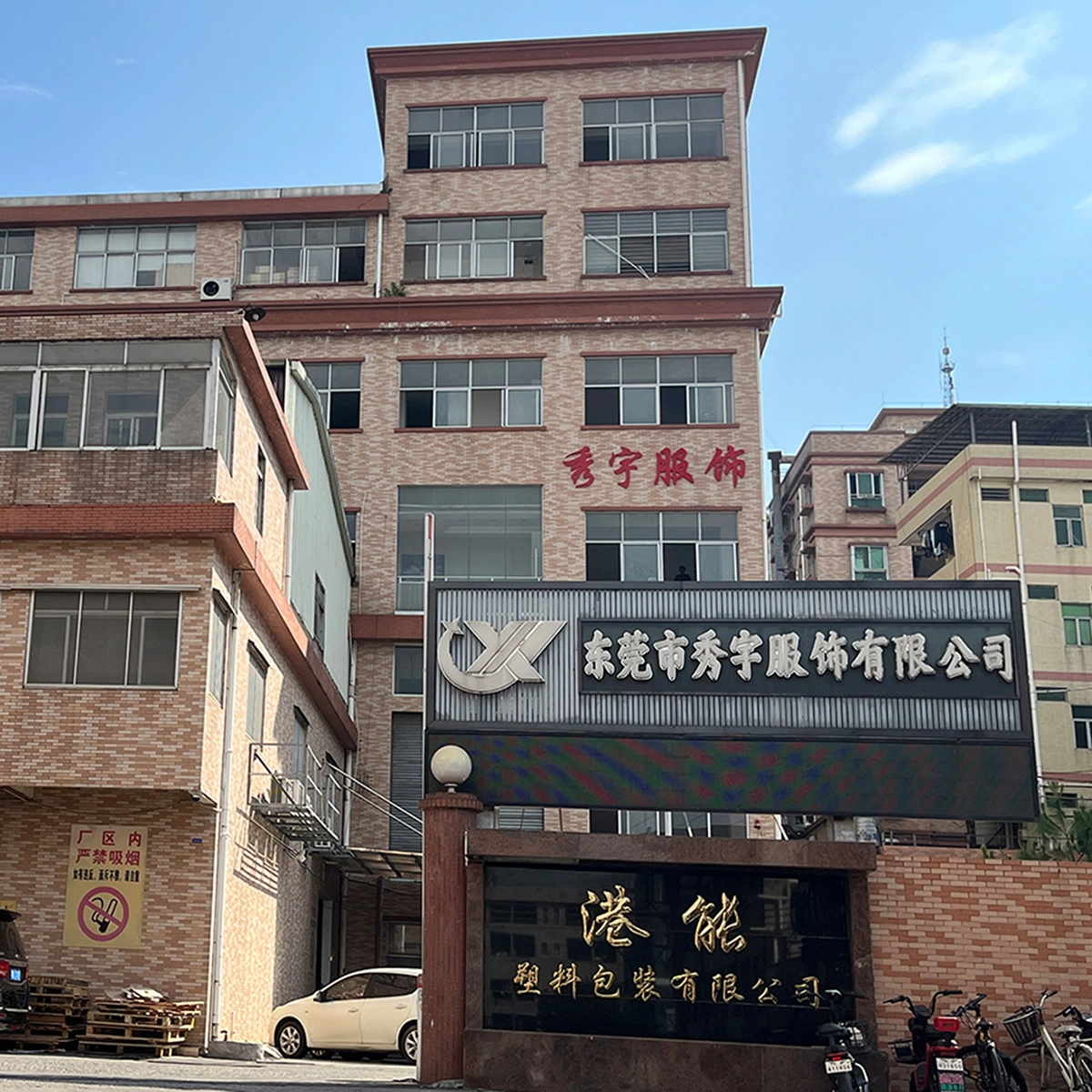
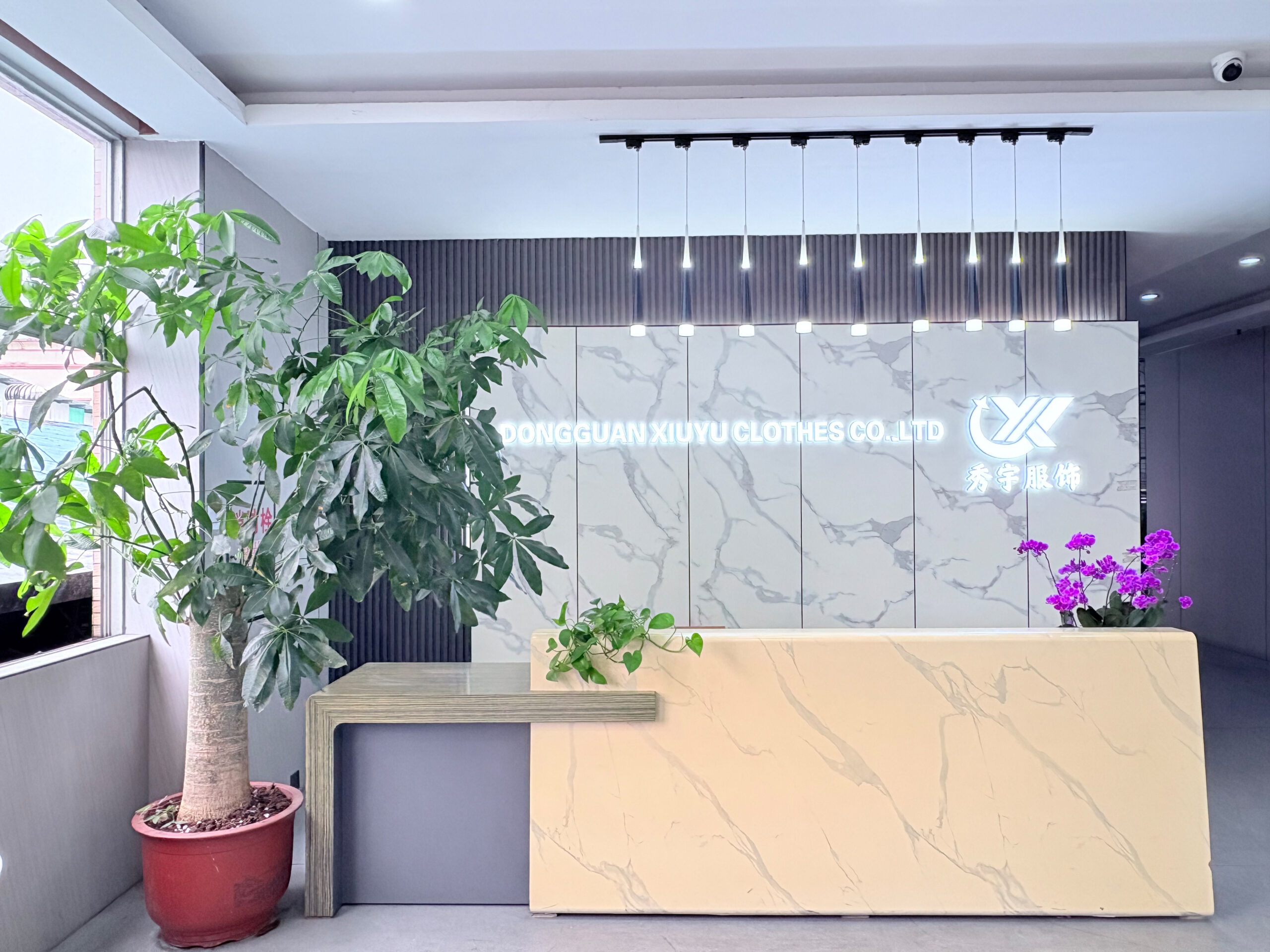
Xiuyu Apparel has operated its own garment factory since 2007, producing dresses and other apparel for brands, retailers and wholesalers. Our production covers pattern making, sampling, fabric preparation, cutting, sewing, QC, pressing and packing.
- Inside Our Dress Manufacturing Factory
- Our Capabilities
- Factory Picture
- One-Stop Services
Before bulk cutting starts, fabric inspection is completed and the PP sample is confirmed for the new style.
Inside Our Manufacturing Workshop
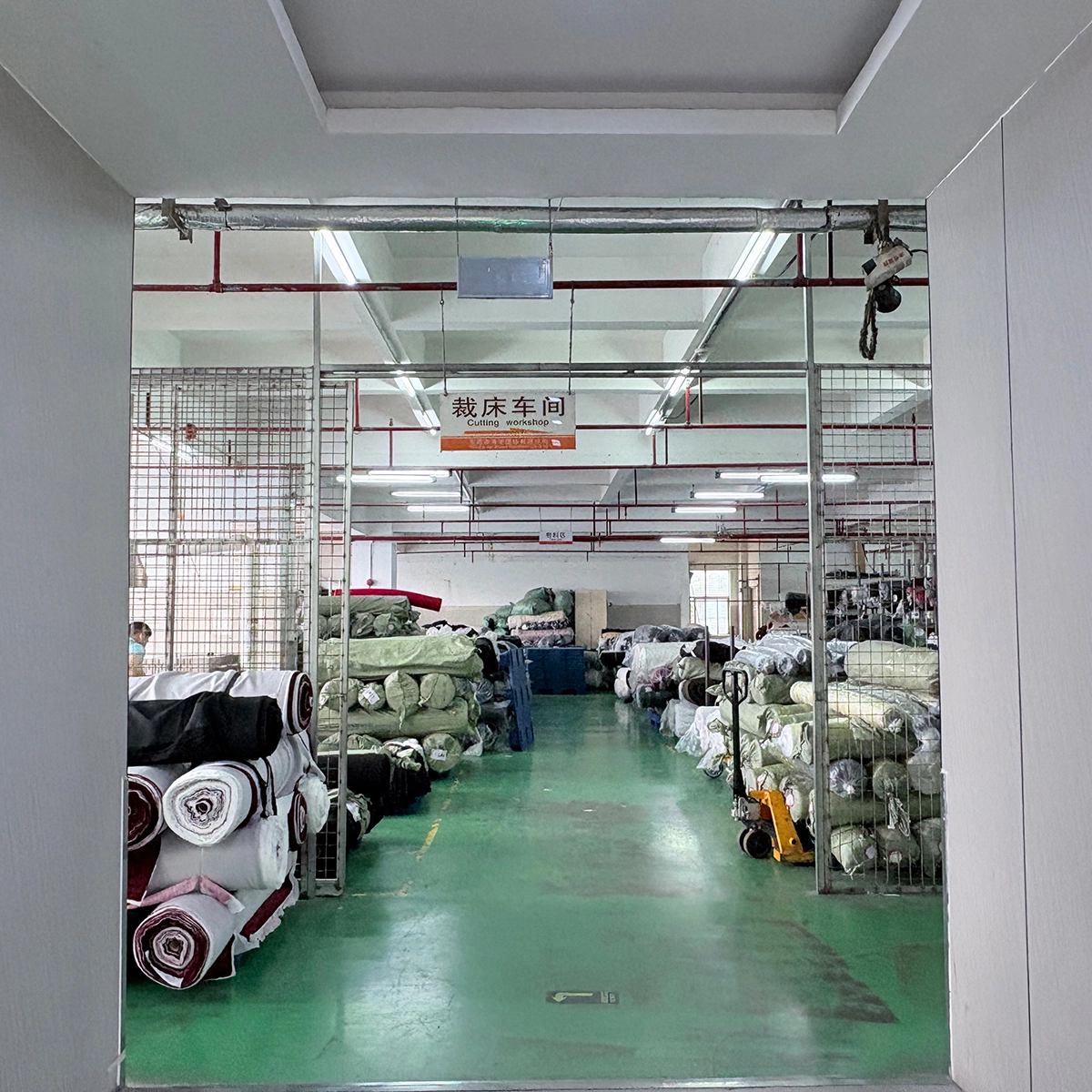
Fabric Warehouse
Fabric rolls are labeled and recorded when they arrive at the factory. Before production, the team checks the quantity, color and fabric condition against the order requirements.
↓
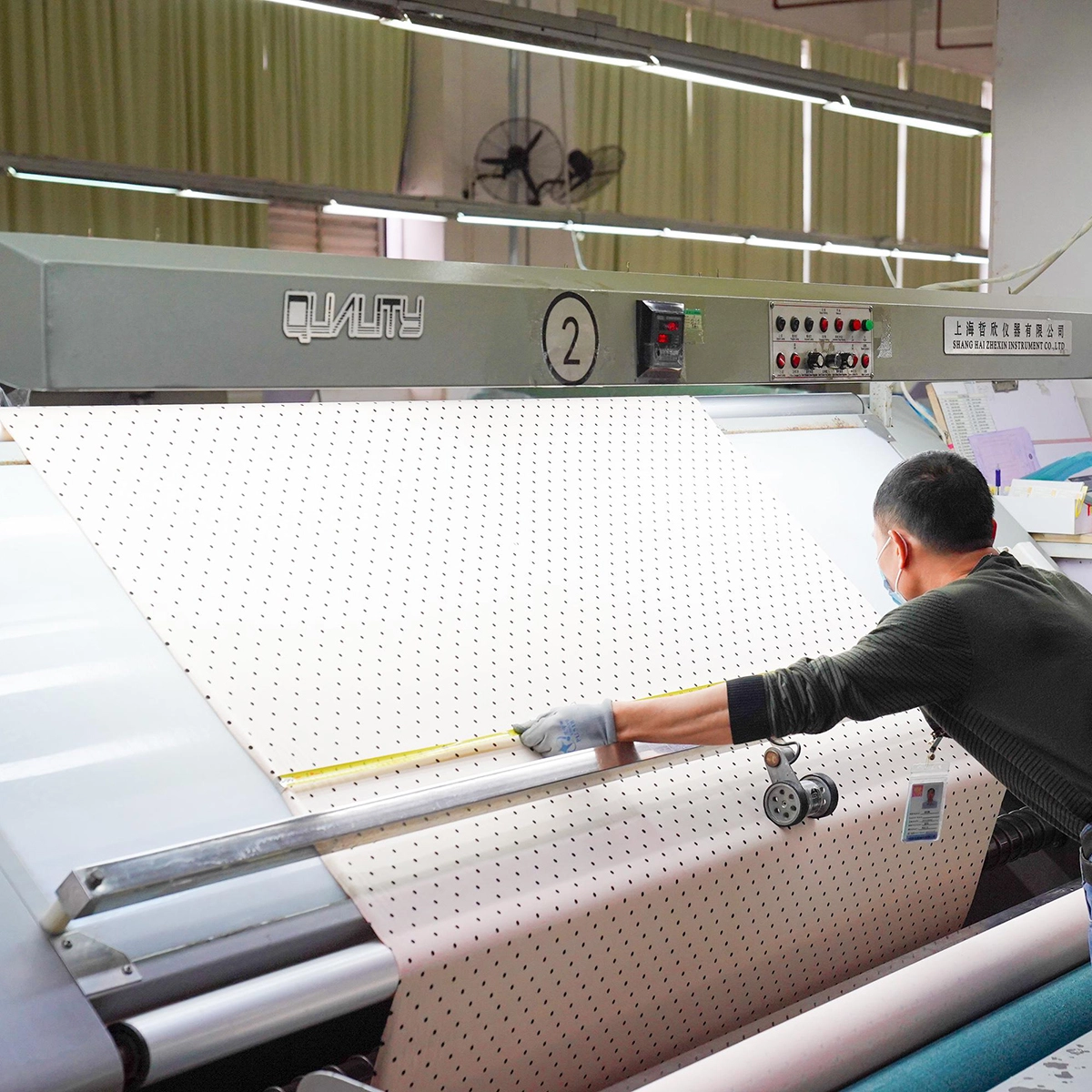
Fabric Inspection
Each fabric roll is inspected by our QC team before entering production. Through the Four-Point Fabric Inspection System, we check color differences, weaving defects, stains, and fabric condition to reduce material issues during garment manufacturing.
↓
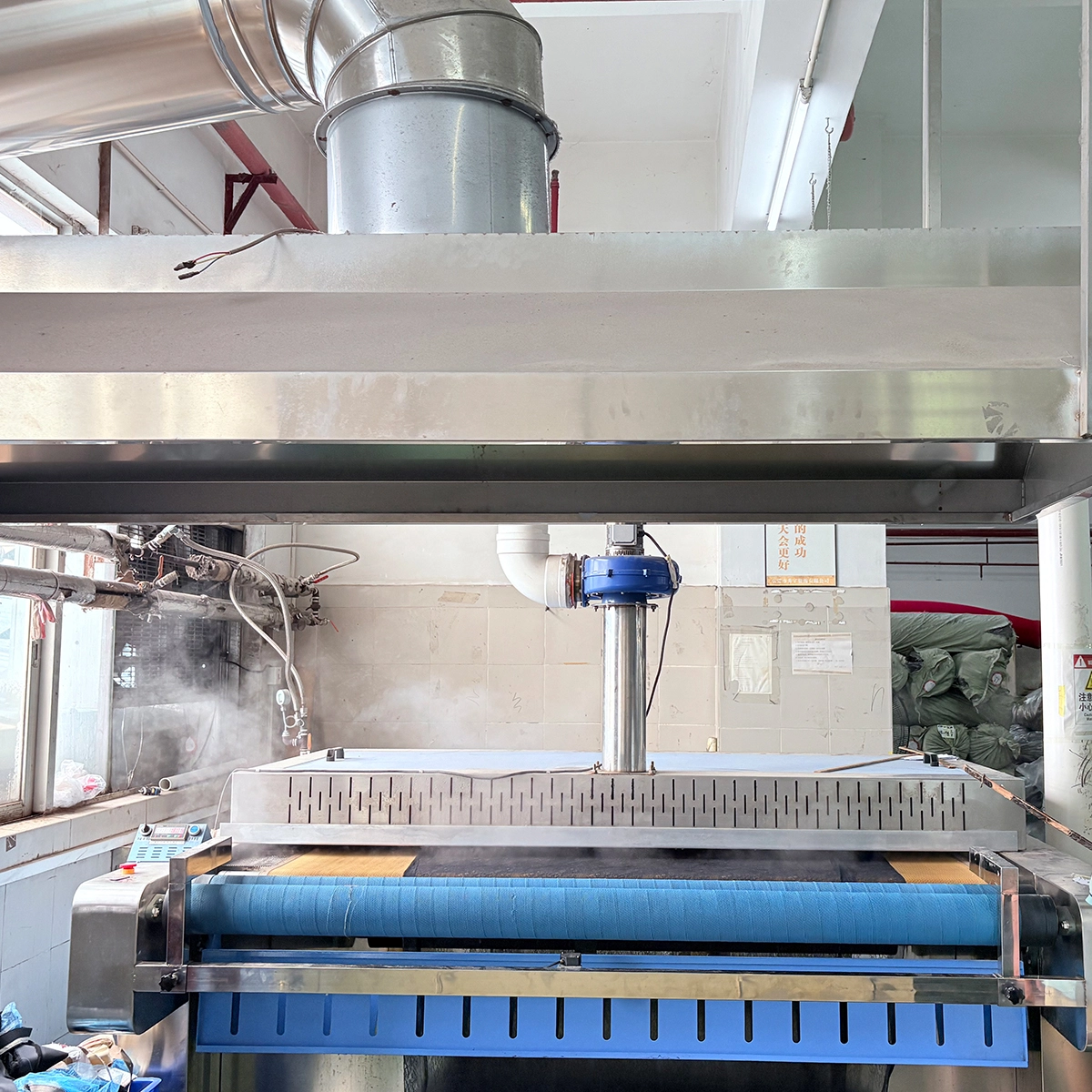
Fabric Pre-shrinking
Where the fabric requires pre-shrinking, the material is treated before cutting to control dimensional change. The fabric condition is checked before the production pattern is finalized.
↓
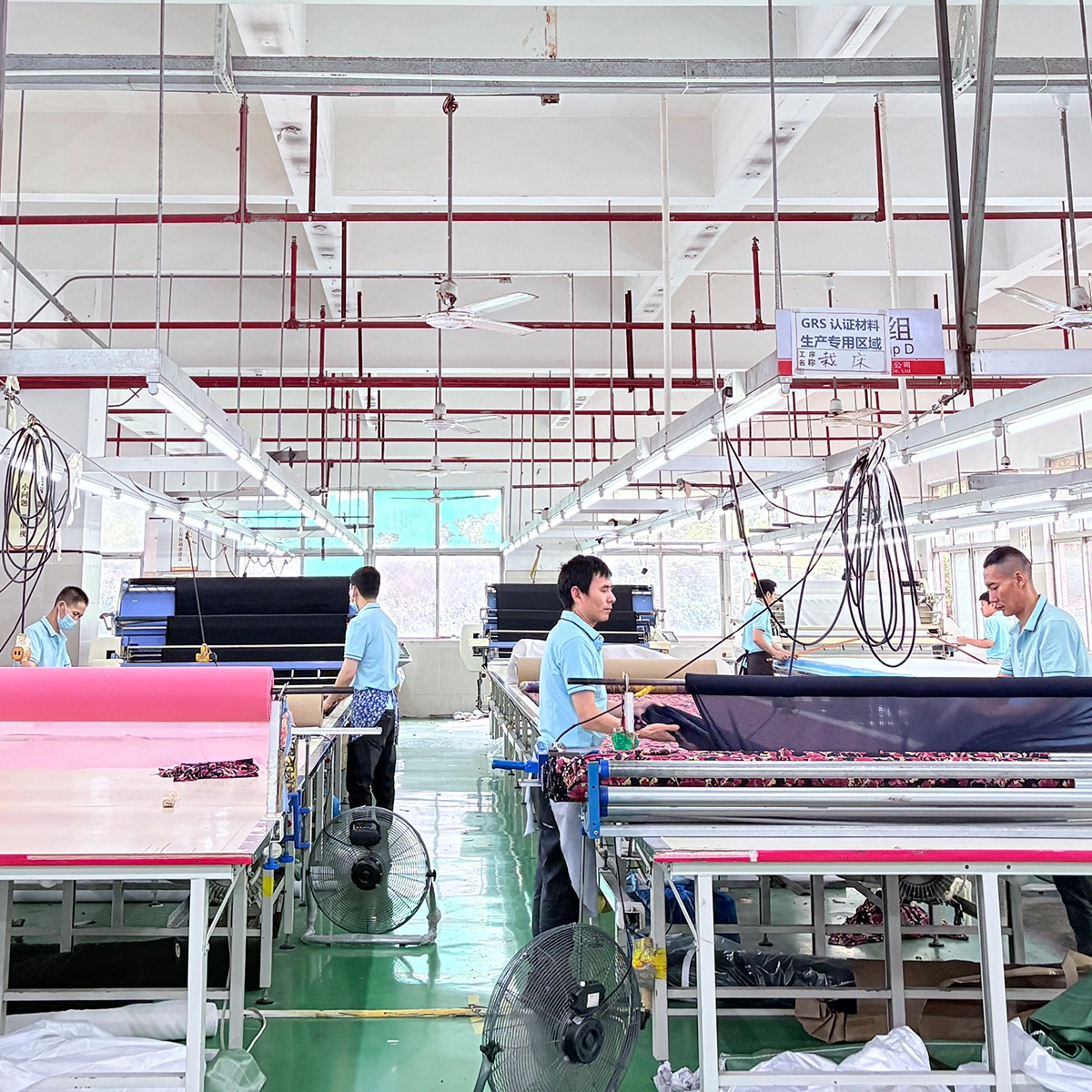
Automatic Cutting
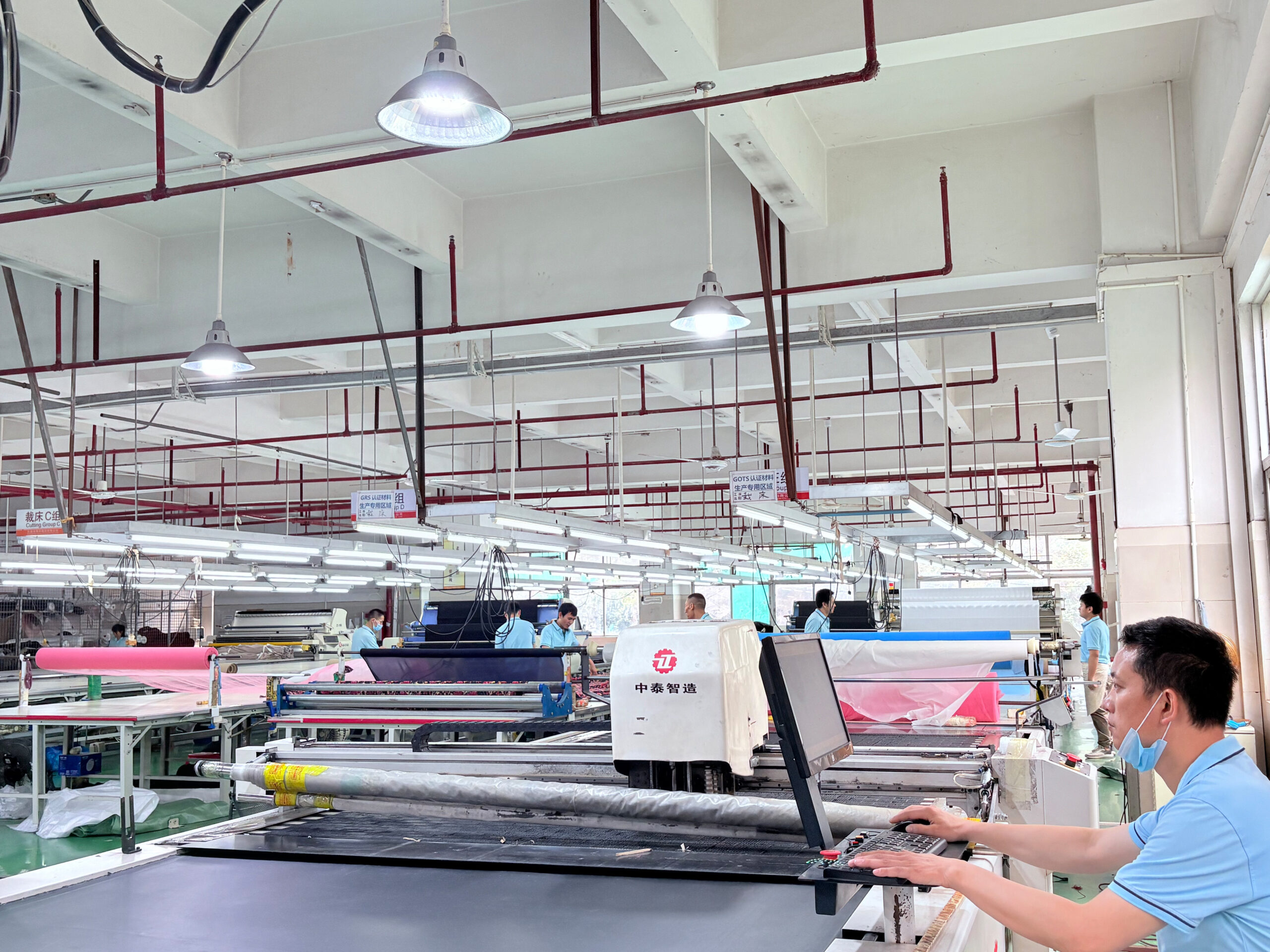
Once the pattern and fabric are approved, the fabric is spread and cut according to the production marker. For printed, directional or bias-cut styles, fabric placement and grain direction are checked before cutting.
↓
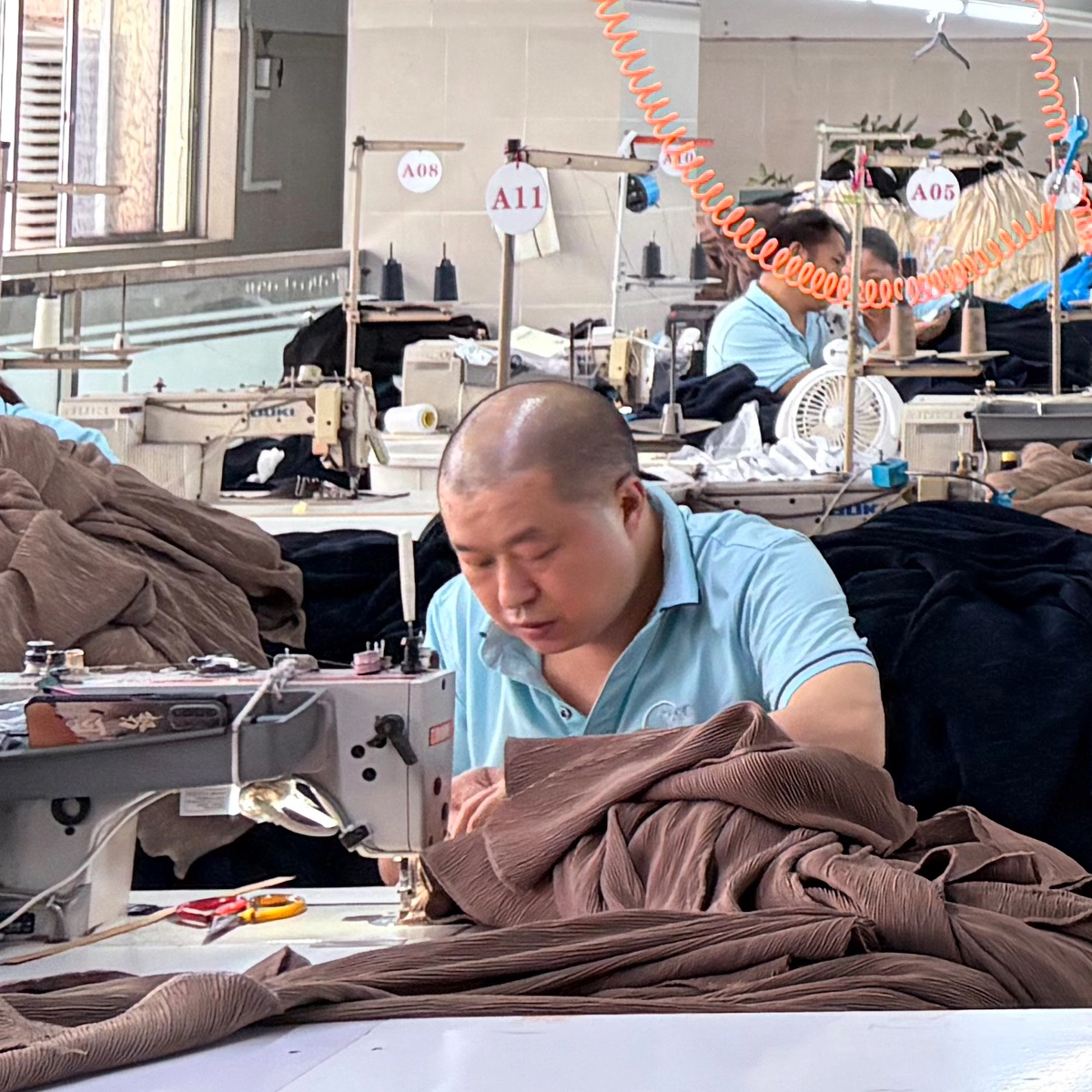
Bulk production Sewing
Cut panels are sent to the sewing line and assembled according to the PP sample and production pattern. Sewing operations vary by style, especially for ruched areas, lining, zippers, elastic details and fitted sections.
↓
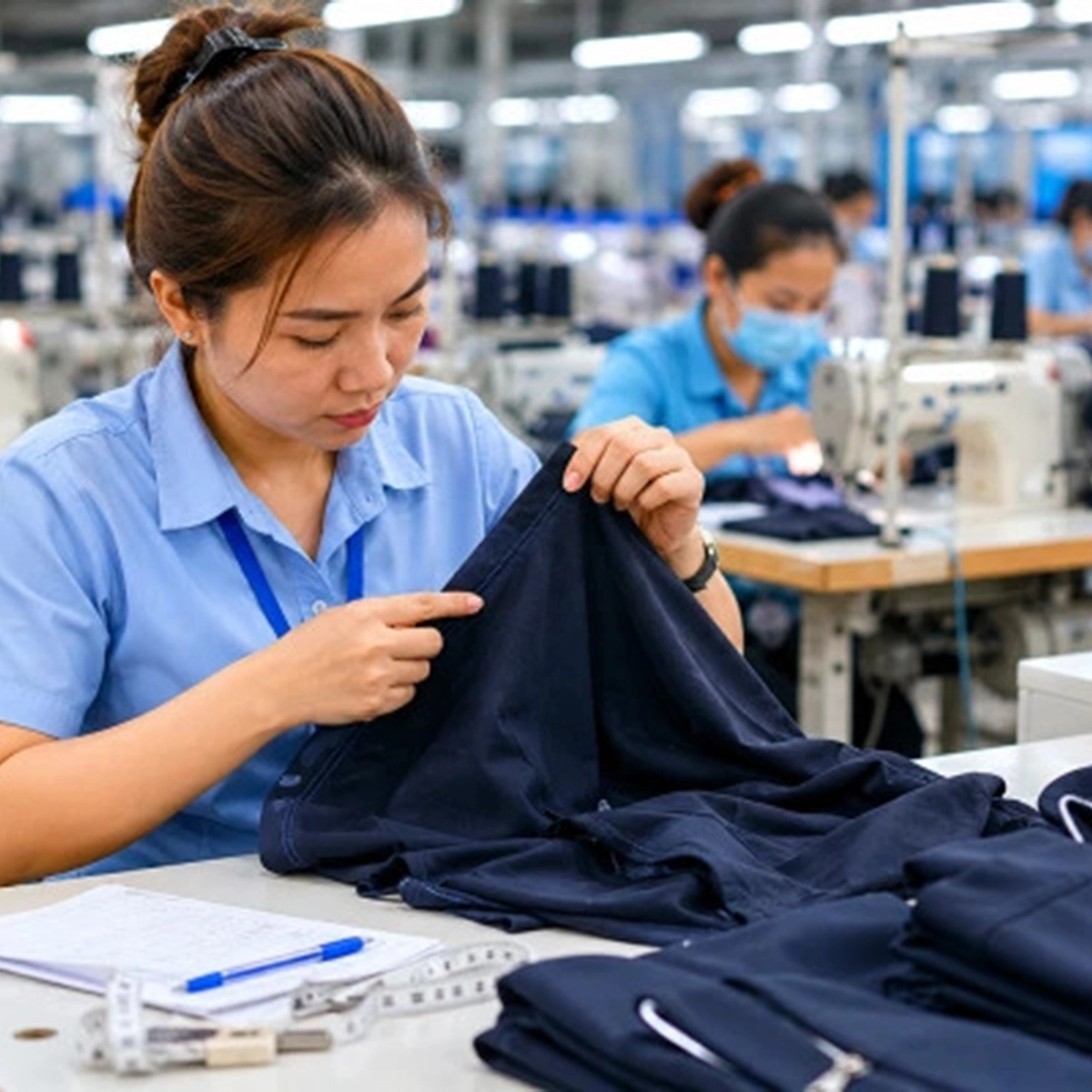
In-line Inspection
During sewing, QC checks measurements, stitching and construction at different operations. If a problem is found, the affected pieces are pulled aside for correction before moving on.
↓
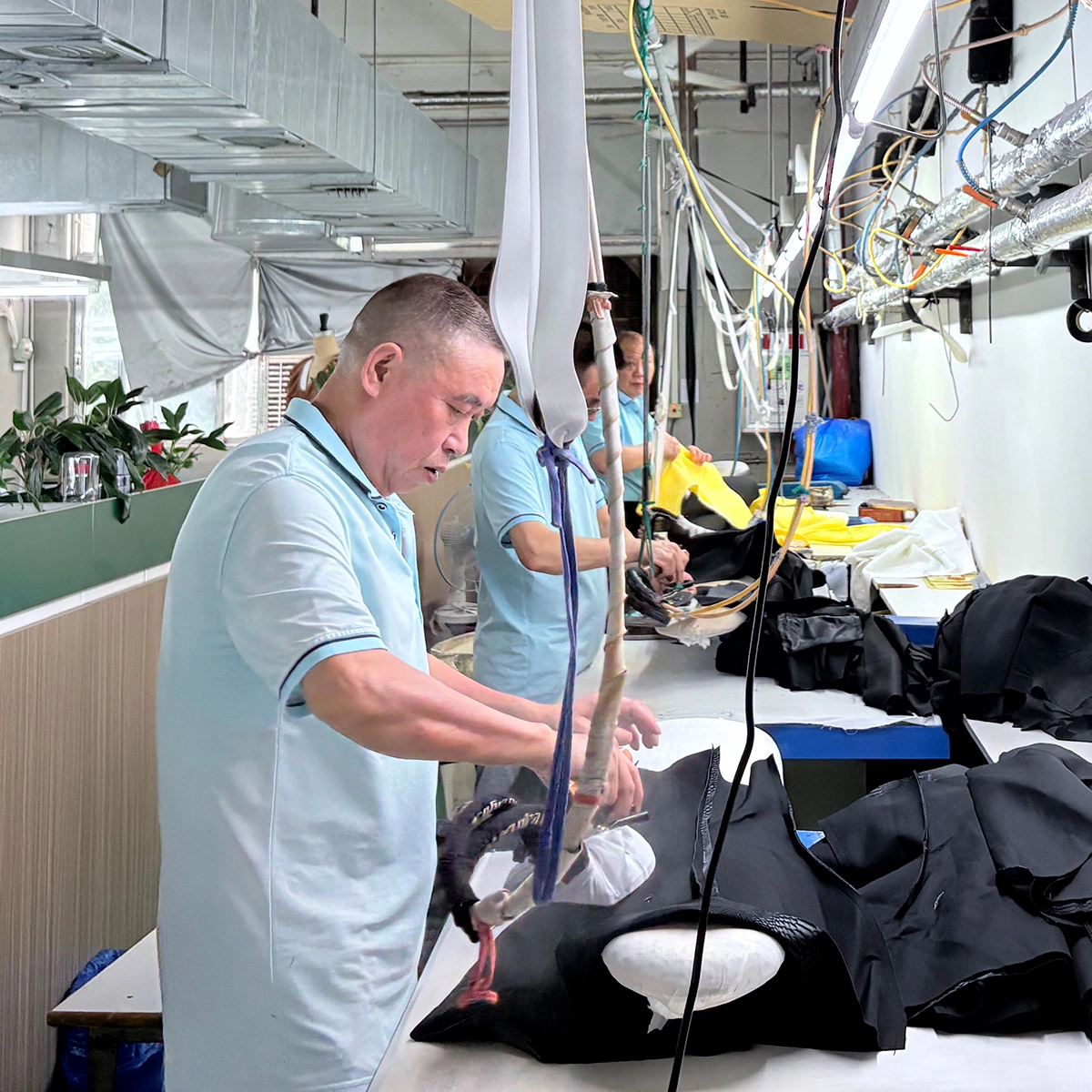
In-line Pressing
Garments are pressed during production to shape seams and key areas before the next operation. For silk styles, pressing temperature and pressure are controlled according to the fabric.
↓
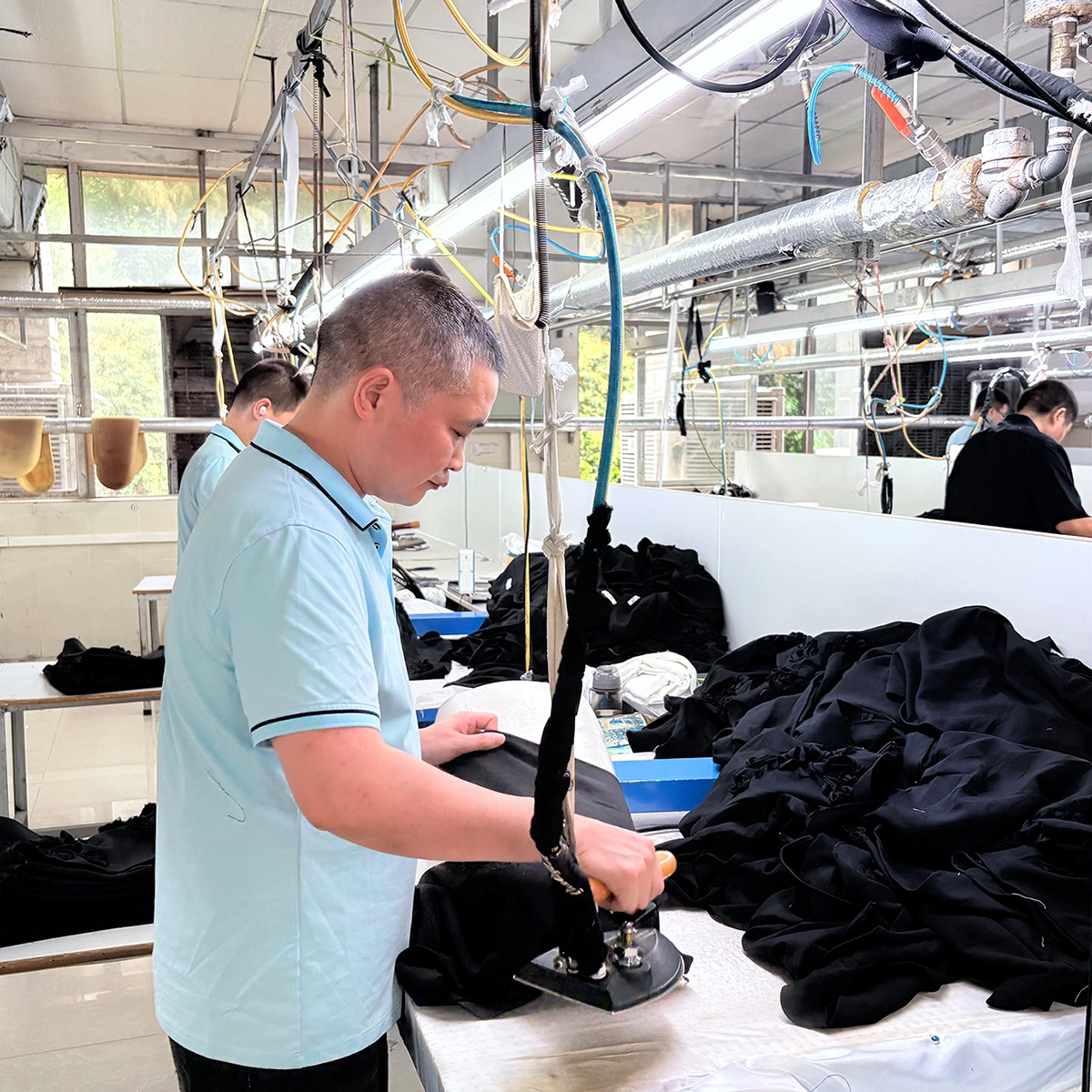
Final Pressing
After sewing and assembly, garments go through final pressing to remove wrinkles and shape key areas. The finishing team also checks seams and other visible details before the garments move to final inspection.
↓
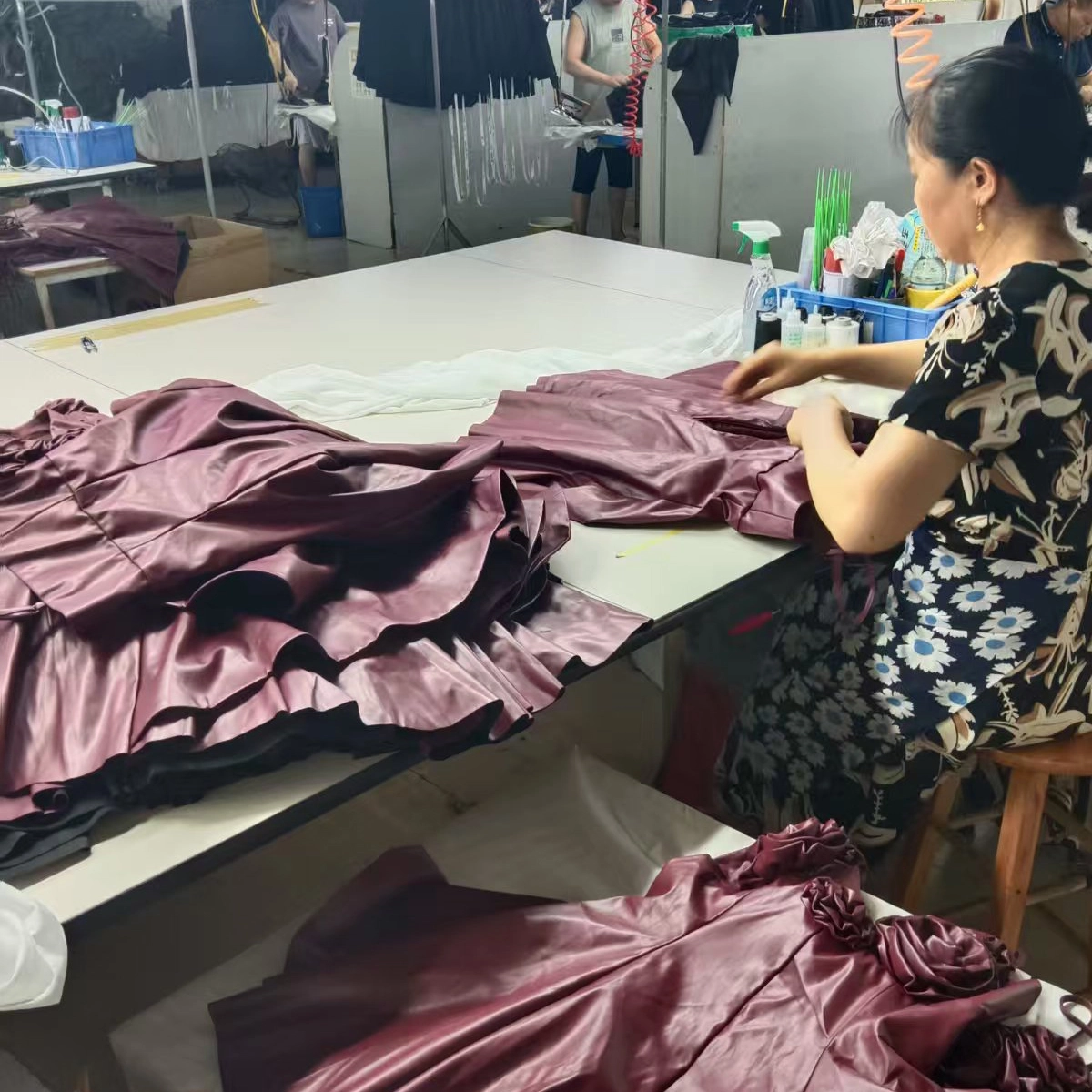
Final Inspection
Finished garments are checked against the approved PP sample and production requirements. The team checks measurements, stitching, construction, labels and overall appearance before the garments are released for packing.
↓
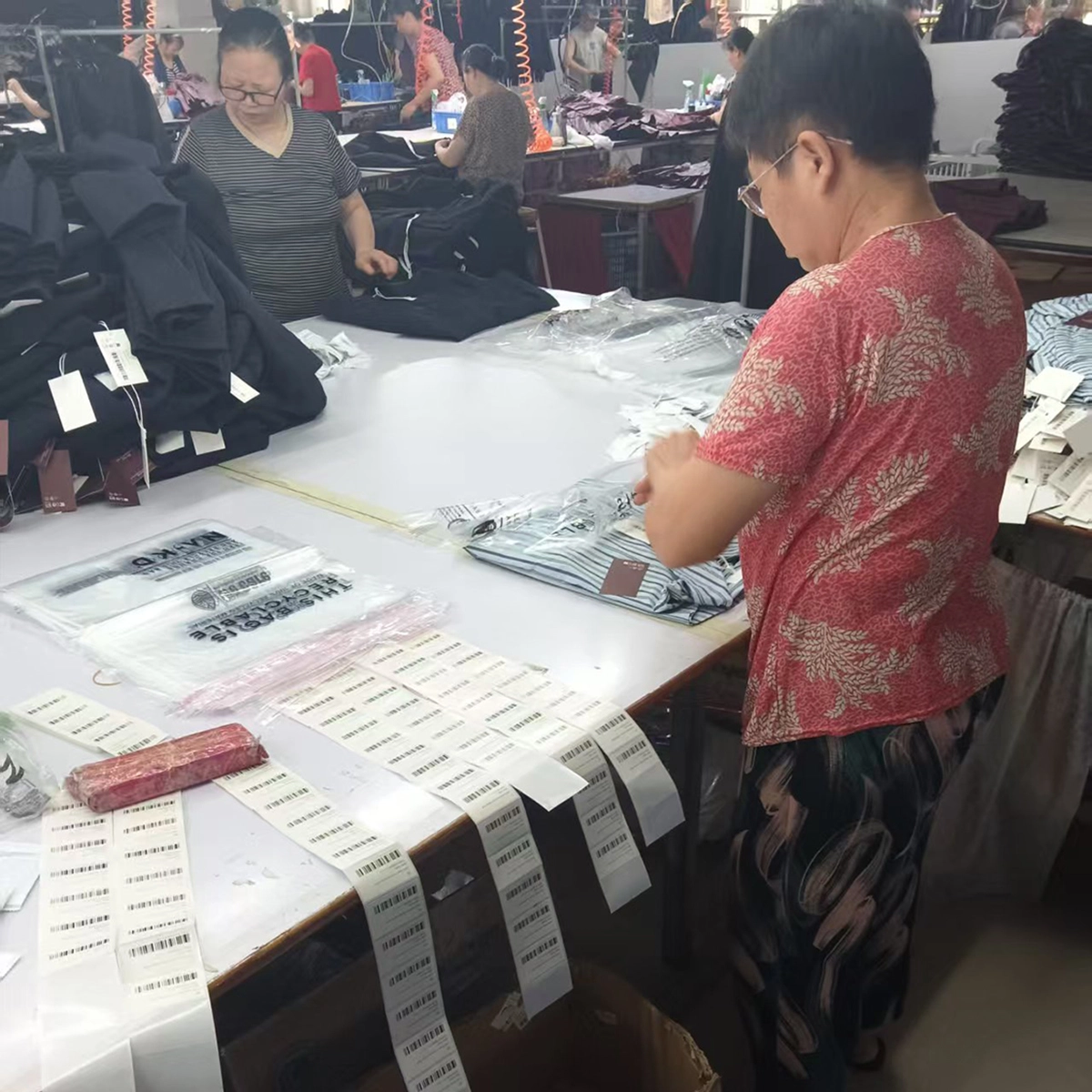
Garment Packing
After inspection, finished garments are folded and packed according to approved packing instructions. Our team handles labeling, barcode application, and customized packaging details before orders are shipped.
↓
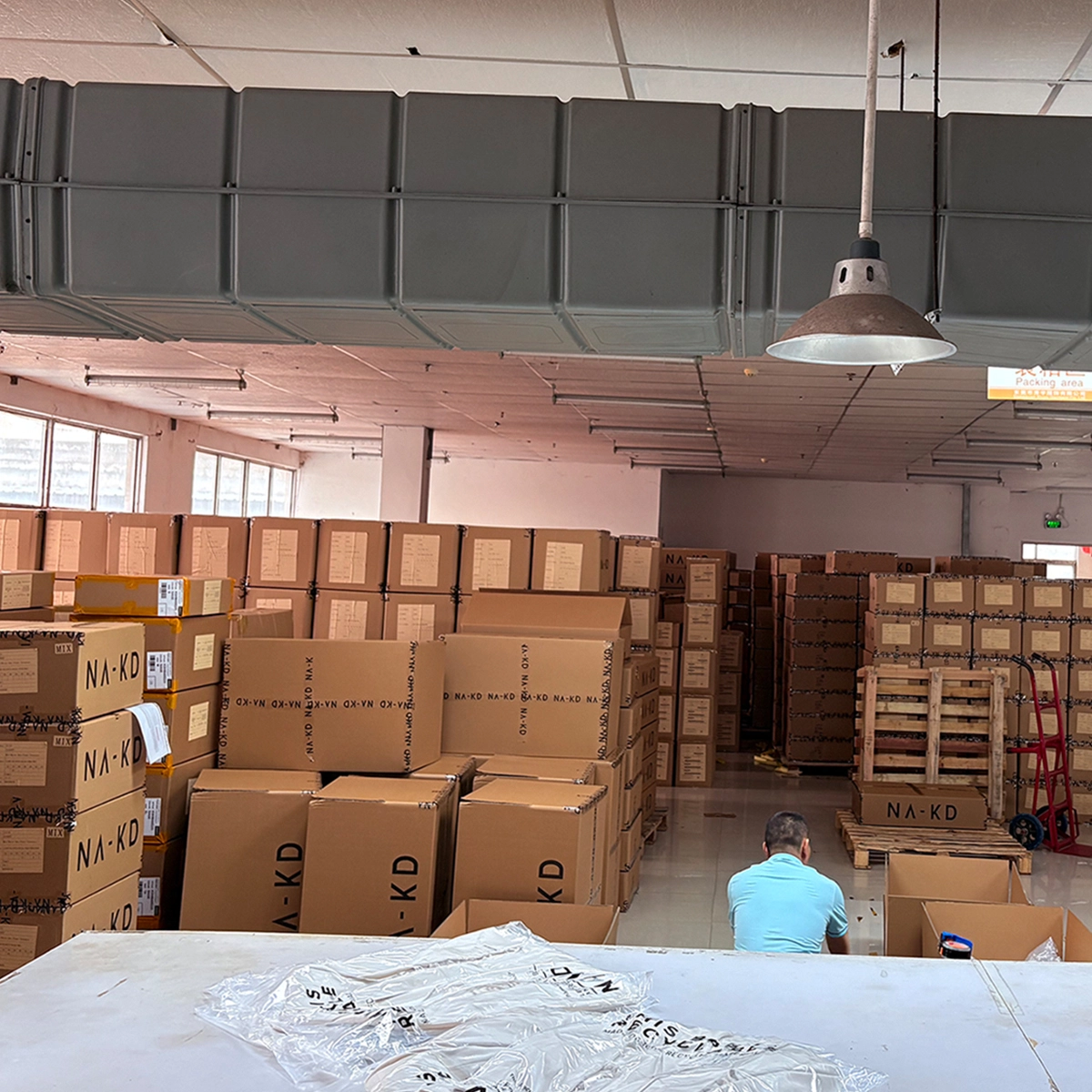
Finished Products
Before loading, our warehouse team reviews finished garments by style, color, and size. Carton quantities, labels, and packing details are checked to prevent shipment errors before orders leave the factory.
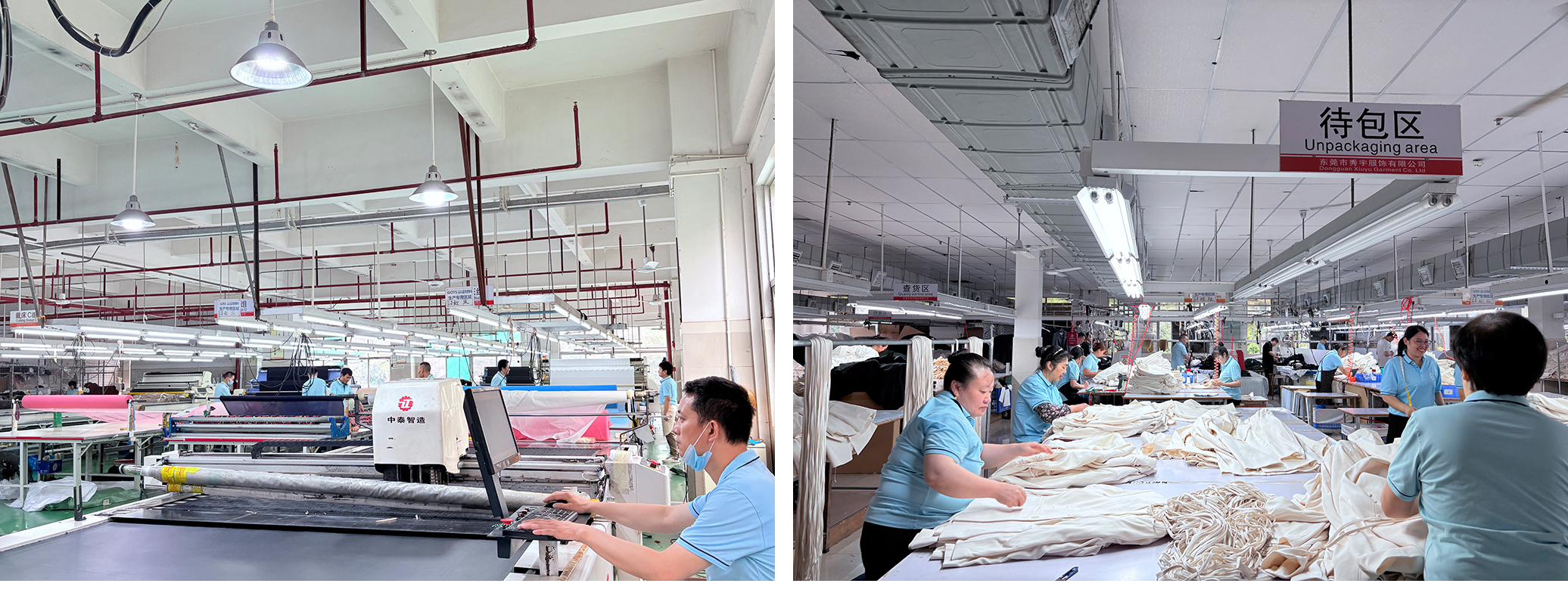 Cutting room & QC inspection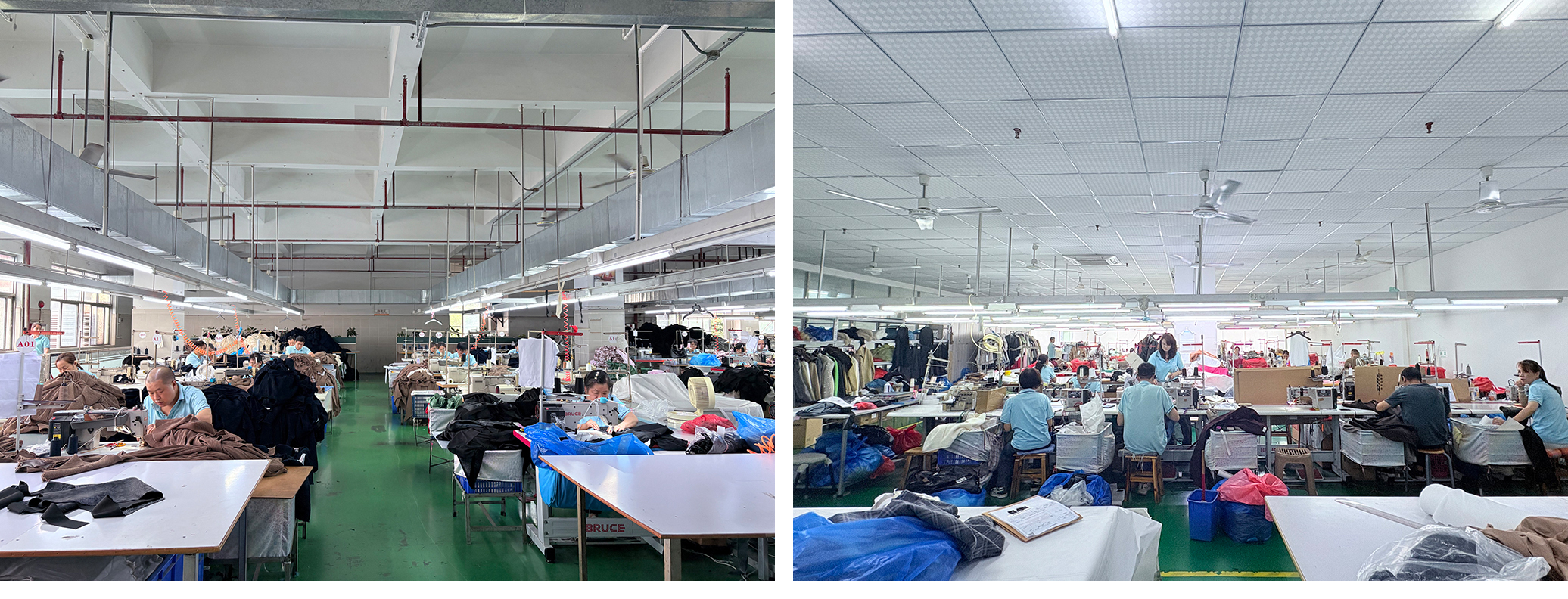
Sewing workshop
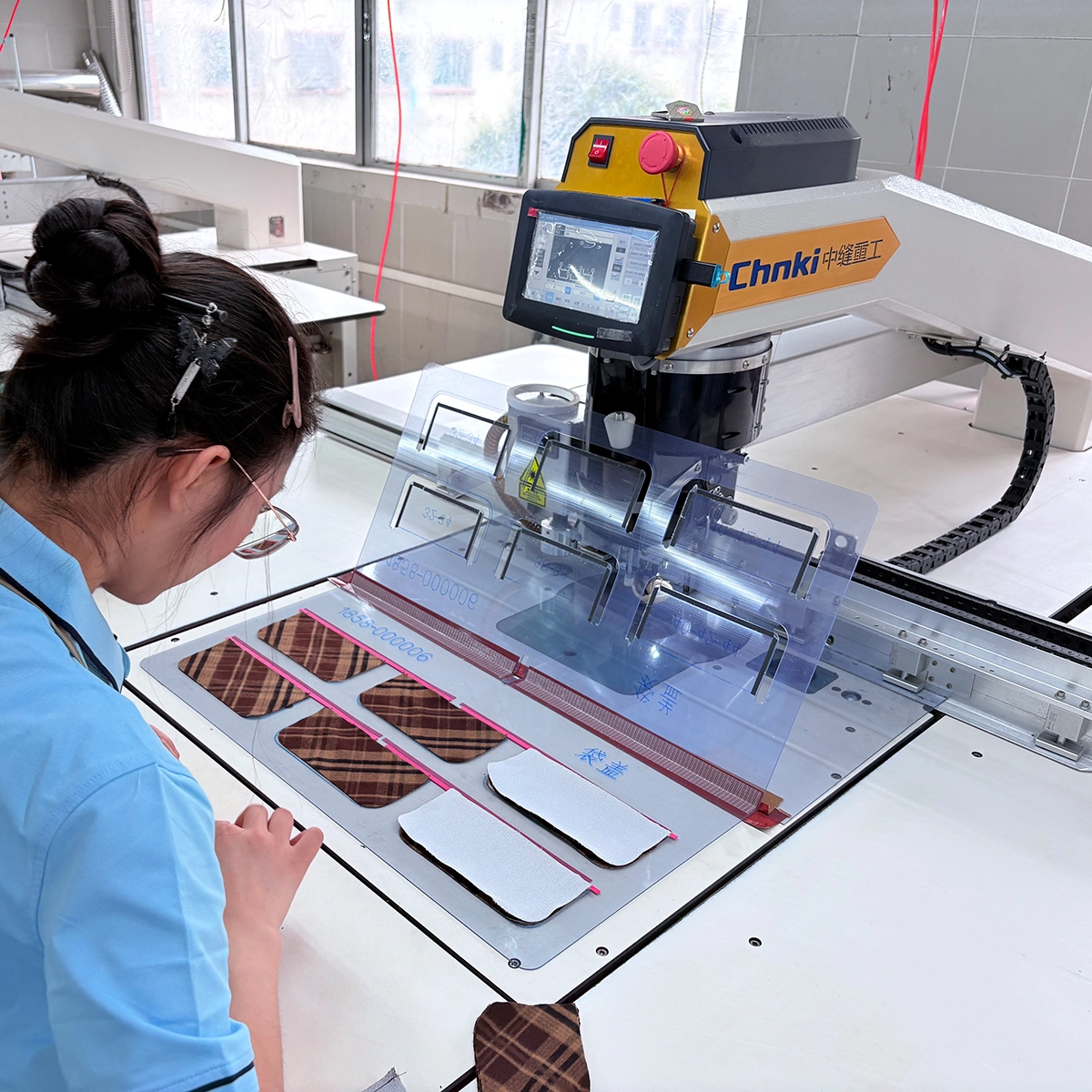
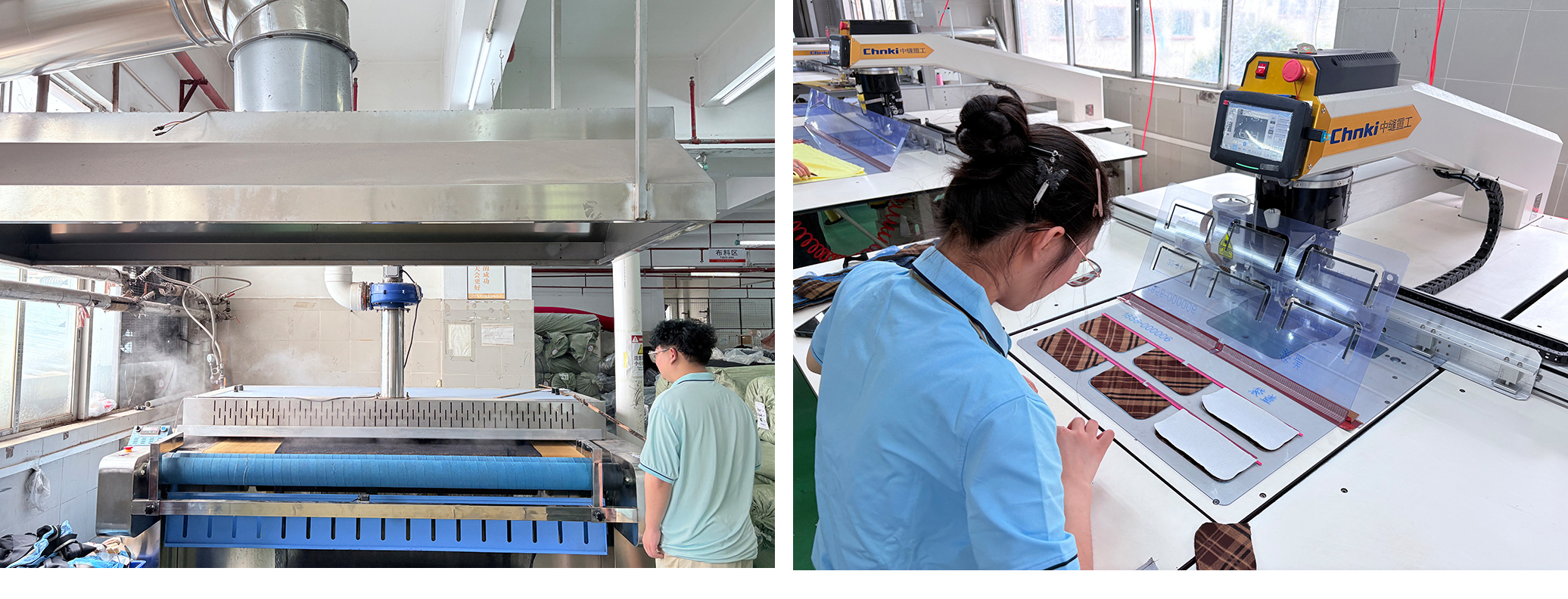 Fabric Pre-shrinking Workshop & Automatic Template Machine Workshop
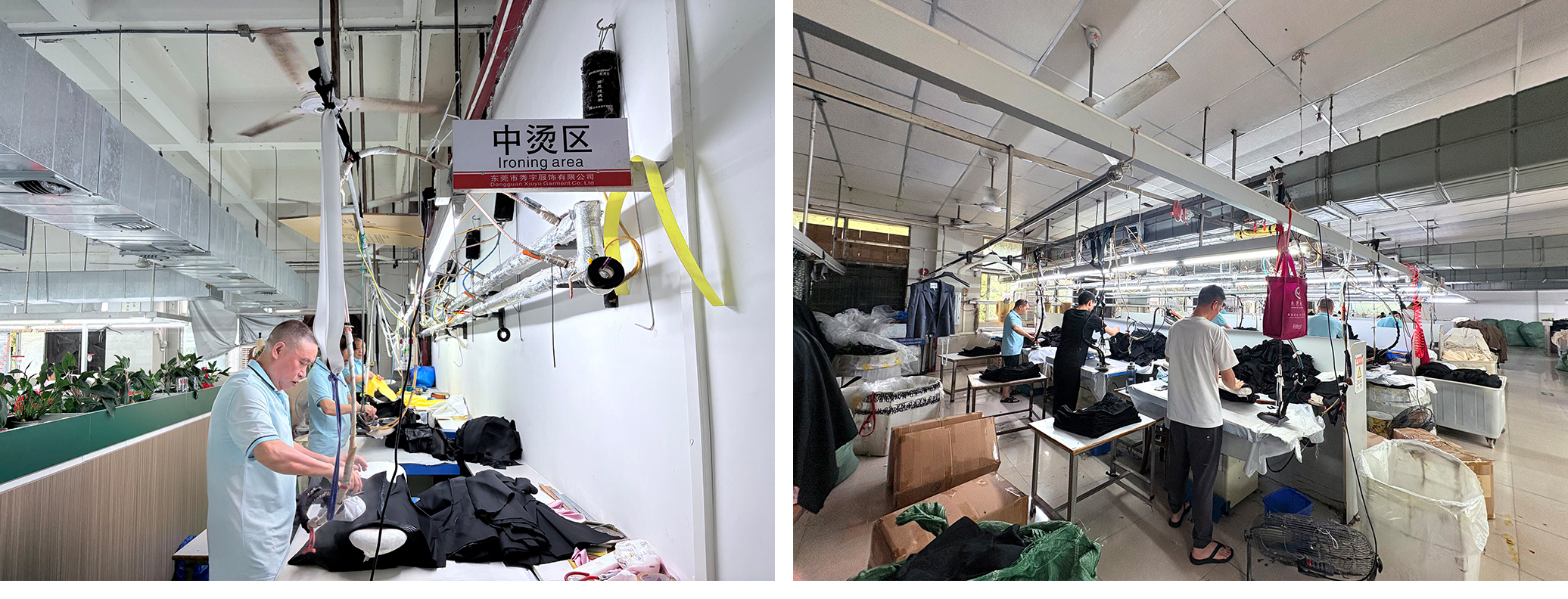 Finishing Workshop
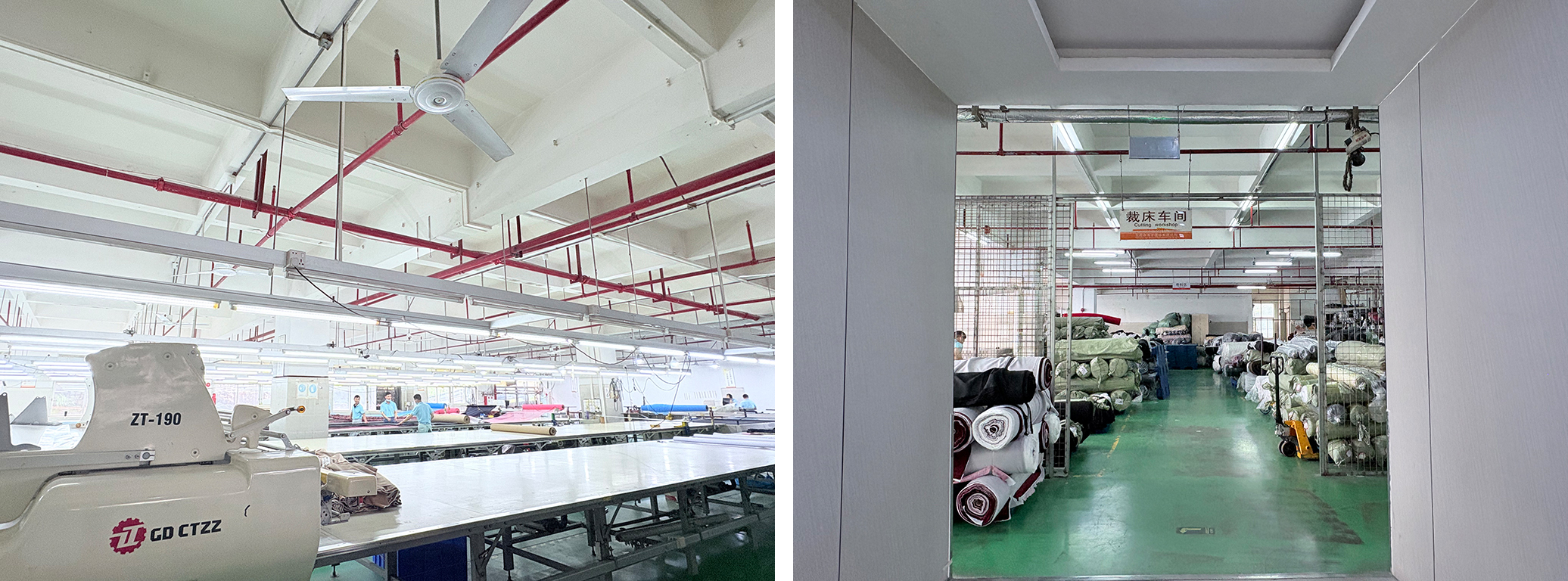
Cutting Room & Fabric warehouse
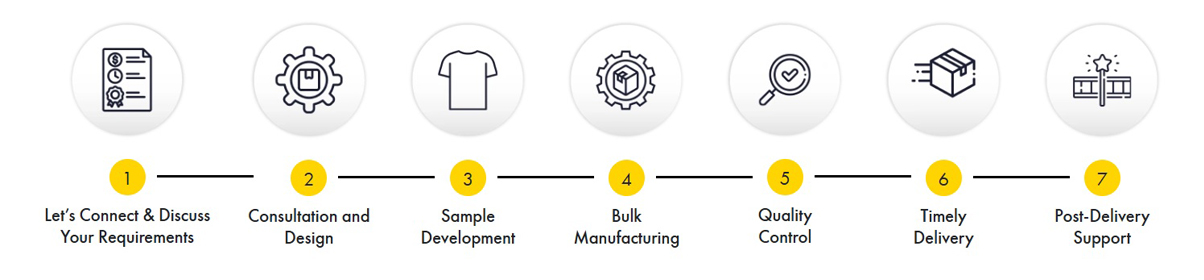
As a custom clothing manufacturer, we handle the main production steps in-house, from pattern making and sampling through cutting, sewing, finishing, and final inspection. Our team works from your tech pack, sample, sketch, or reference and checks the details before the style moves into bulk production.
Keeping these stages with one production team makes it easier to deal with pattern changes, sample revisions, and construction issues before cutting starts. We can also arrange screen printing and custom embroidery when these details are part of the design.
Explore More Dress Manufacturing Options
Different dress silhouettes require specific fabric handling, stretch control and construction methods. As a dress manufacturer, Xiuyu Apparel works with fashion brands, retailers, wholesalers and private label customers to develop dresses with different fits, fabrics and design details.
Explore related manufacturing services:
- Bodycon Dress Manufacturer — for fitted styles with stretch fabrics and body-contouring shapes
- Cocktail Dress Manufacturer — for party and occasion dresses with detailed construction
- Satin Dress Manufacturer — for smooth fabrics requiring careful cutting and finishing
- Mini Dress Manufacturer — for short ruched styles and fashion-forward silhouettes
- Slip Dress Manufacturer — for lightweight designs with soft drape and close-to-body fits
These related categories help you develop a complete dress collection while keeping fabric selection, pattern development and production requirements aligned from the beginning.
Ready to Develop Your Ruched Dress Collection?
Whether you already have a finished design, tech pack or only a first concept, you can share your project with our team.
Send us your tech pack, sketch, reference sample, fabric information or design concept. We can check the ruched details, fabric behavior and construction requirements before sampling and provide production suggestions for bulk manufacturing.
Talk to Our Ruched Dress Manufacturing Team →
Yes. You can send your tech pack, sketches, reference images, or existing garments. Our team reviews construction details, fabric requirements, and fitting expectations before developing patterns and samples for your approval.
Our MOQ is usually 50–100 pieces per style or color. The final quantity depends on fabric availability, customization requirements, and production complexity. We can discuss suitable options based on your collection plan.
Uneven ruching usually comes from fabric tension differences or inaccurate pattern control. We confirm gathering positions during sampling and monitor sewing details during production to keep bulk garments consistent with the approved sample.
Stretch jersey, satin, mesh, and chiffon are commonly used for ruched dresses. The best option depends on your target style. We evaluate fabric stretch, drape, thickness, and production performance before recommending materials.
Sample development usually takes around 3–7 days. After sample approval, fabric confirmation, and production preparation, bulk manufacturing normally requires about 25–30 days depending on order quantity and design details.
Yes. We support private label projects with custom labels, hangtags, packaging, and other branding requirements. You can develop your own ruched dress collection from design concept through finished production.
