
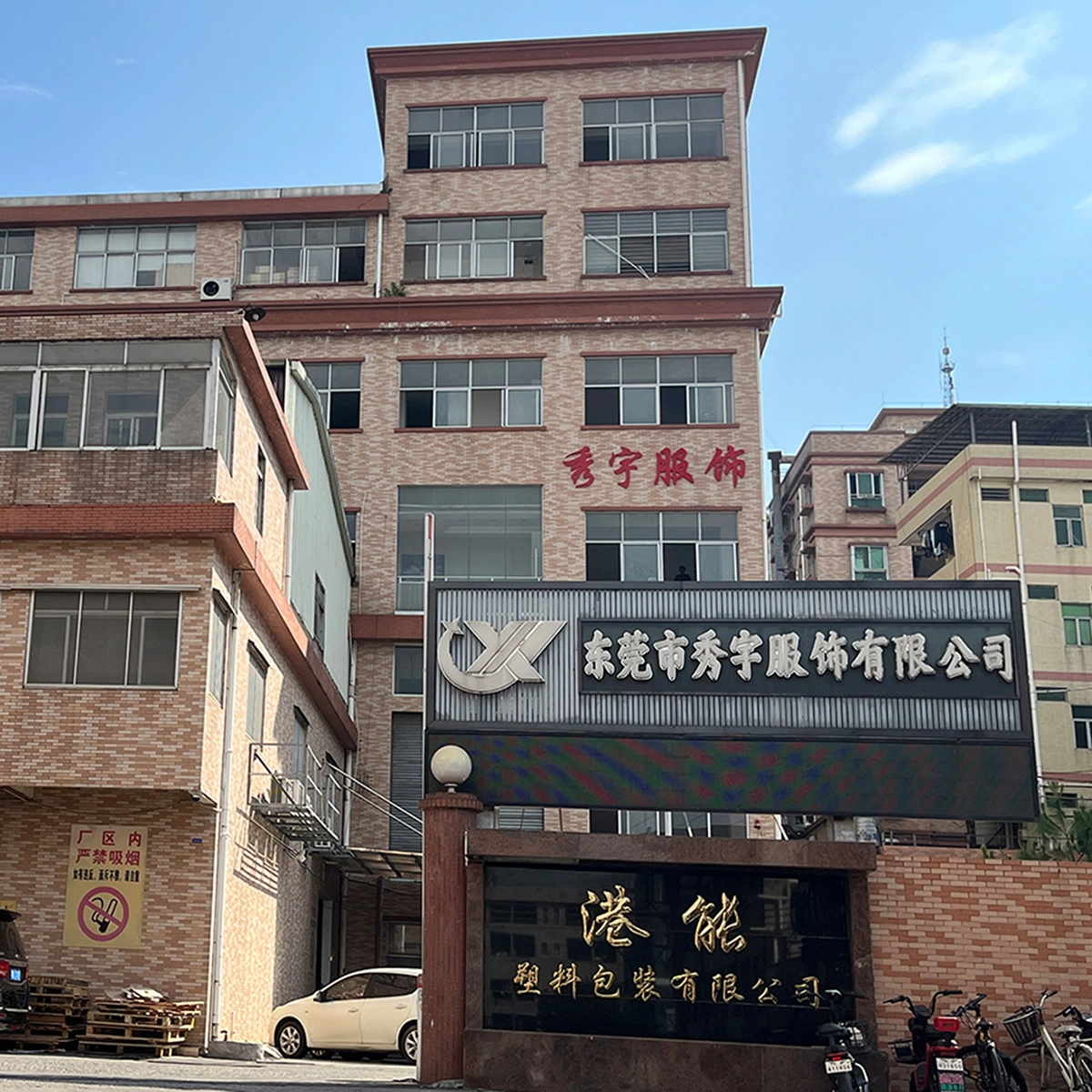
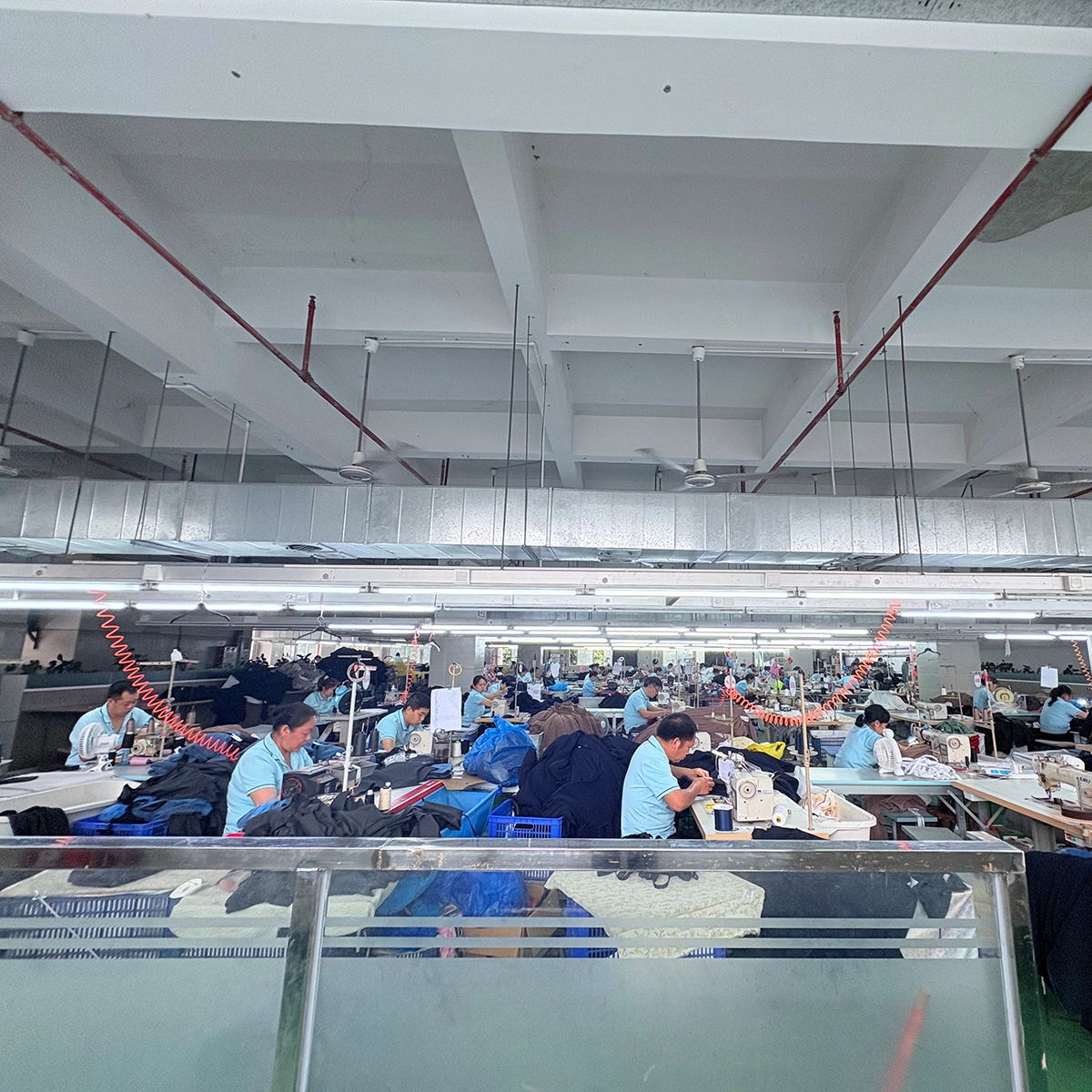
Our Maxi Dress Manufacturing Capabilities
At Xiuyu Apparel, our production setup includes:
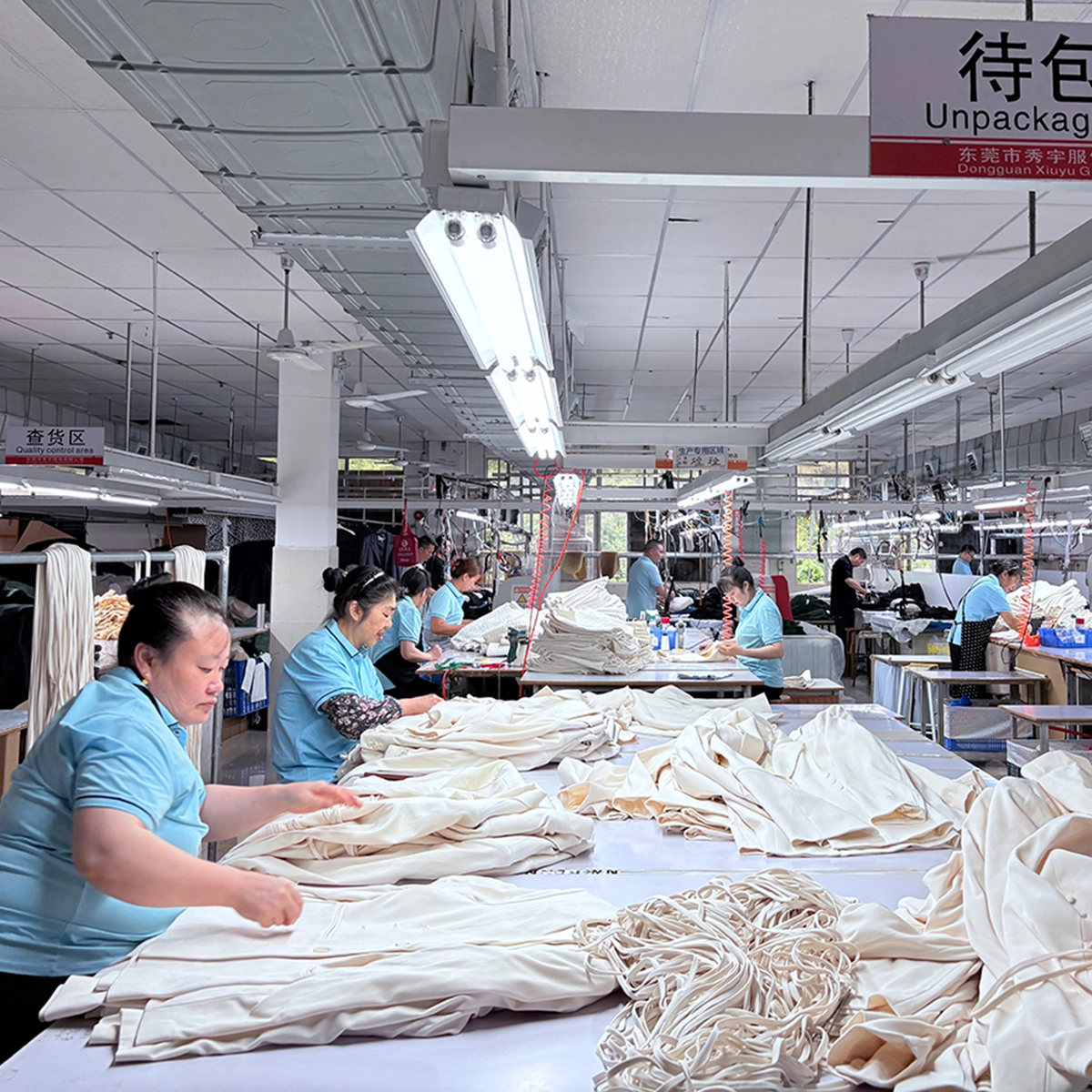
- 750+ production workers
- 500+ sewing machines
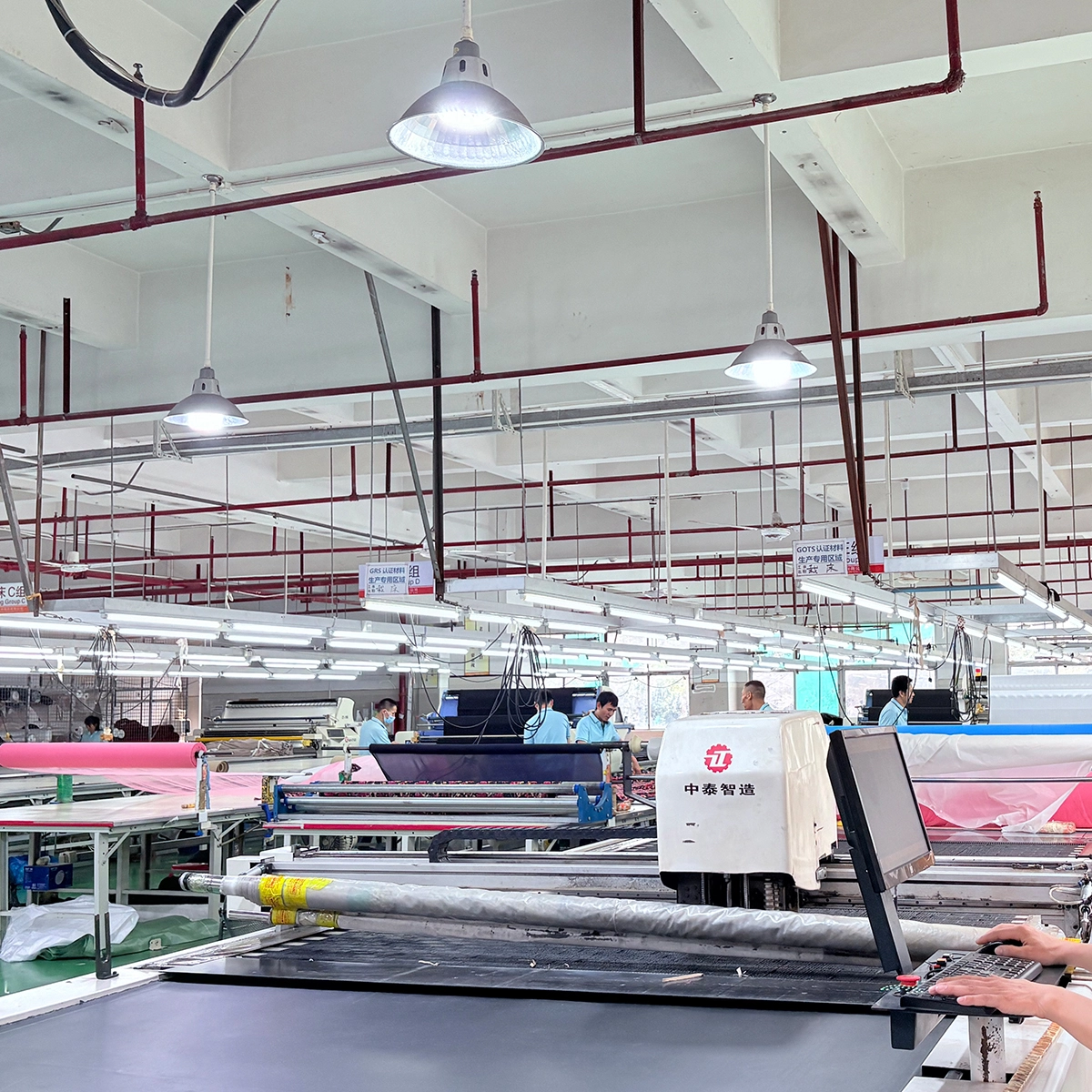
- 5 automatic cutting lines
- Production capacity of 150,000+ pieces per month, depending on the style and order mix
- 18+ years of apparel manufacturing experience
- Orders shipped to customers in 40+ countries
For a new maxi dress, the sample is where most of the production details get settled. Once the sample is approved, we use it as the reference for the bulk order, including measurements, fabric, construction and finishing.
Maxi Dress Production & Customization
With maxi dresses, some problems only become obvious once the fabric is cut and the garment is sewn. This comes up quite often with longer styles.
Fabric can behave differently during cutting and sewing. A long hem makes small length differences easier to notice. Bias-cut panels may drop after hanging, and the lining can also change the way the outer fabric falls.
When we develop a new maxi dress, our experience as a dress manufacturer helps us identify these details during sampling:
- Finished dress length
- Fabric weight and usable width
- Shrinkage after washing or finishing
- Lining and fabric matching
- Neckline construction
- Waist position
- Skirt volume and fall
- Side slit height
- Sleeve or strap construction
- Zipper, button, or other closures
- Hem finishing
- Printing or embellishment details
- Size grading
A specification may look correct before sampling and still need adjustment once the garment is made. The actual sample usually tells us more than the drawing or specification alone. If something needs changing, the pattern or construction is adjusted before the sample is approved for bulk production.
Popular Maxi Dress Styles We Can Customize
Maxi dresses can look similar while requiring quite different production work. Fabric weight, stretch, pattern shape and the way the skirt is expected to move can all change how the style needs to be developed.
Here are some of the maxi dress styles we regularly work with.
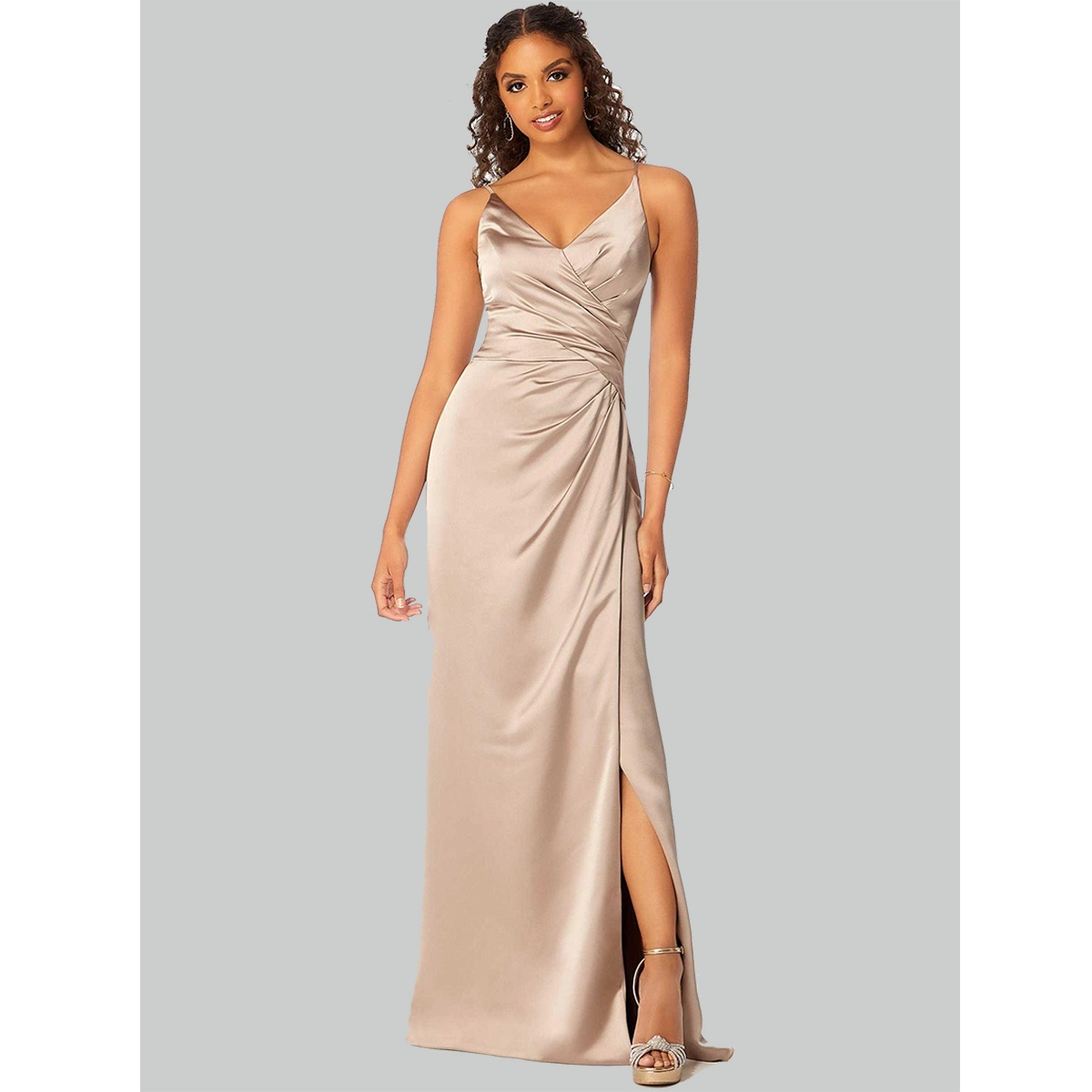
Silk is very sensitive to fabric weight and drape, so the same pattern can look quite different when the fabric is changed. Cutting direction, lining, seam appearance, pressing and finished length all become more important once the silk is made into a full garment. Lightweight silk also needs careful handling during cutting and sewing.
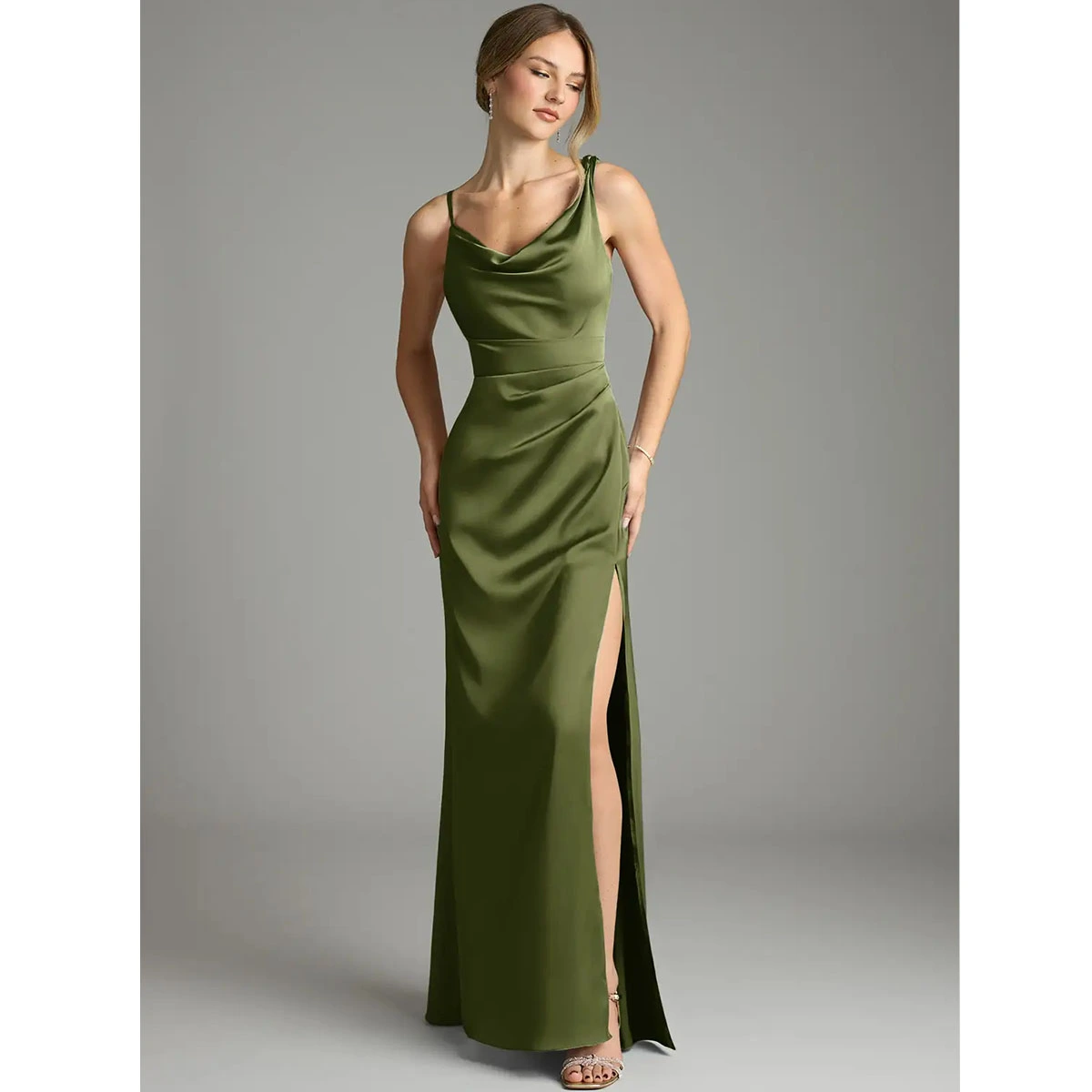
Satin has a smooth surface that can show small sewing or pressing problems more easily than some other fabrics. Fabric weight makes a difference too. A heavier satin may hold the shape differently from a lightweight one, so we check the construction and pressing method on the actual sample.
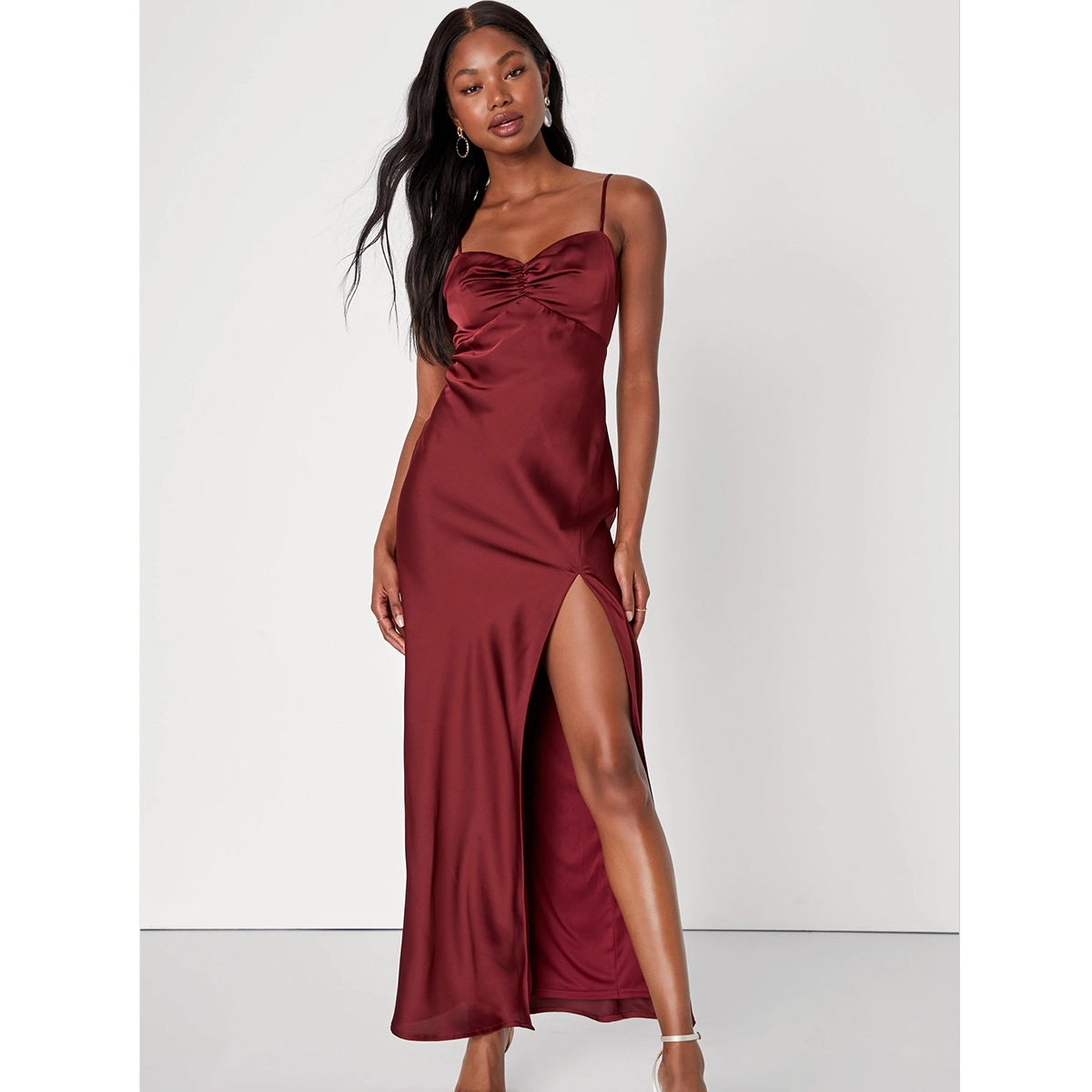
A slip maxi dress looks simple on paper, but it can require quite a bit of fitting work. The style has fewer visible construction details, yet the straps, neckline, bias-cut sections and hem all affect how it sits on the body. Small fitting problems can become quite noticeable.
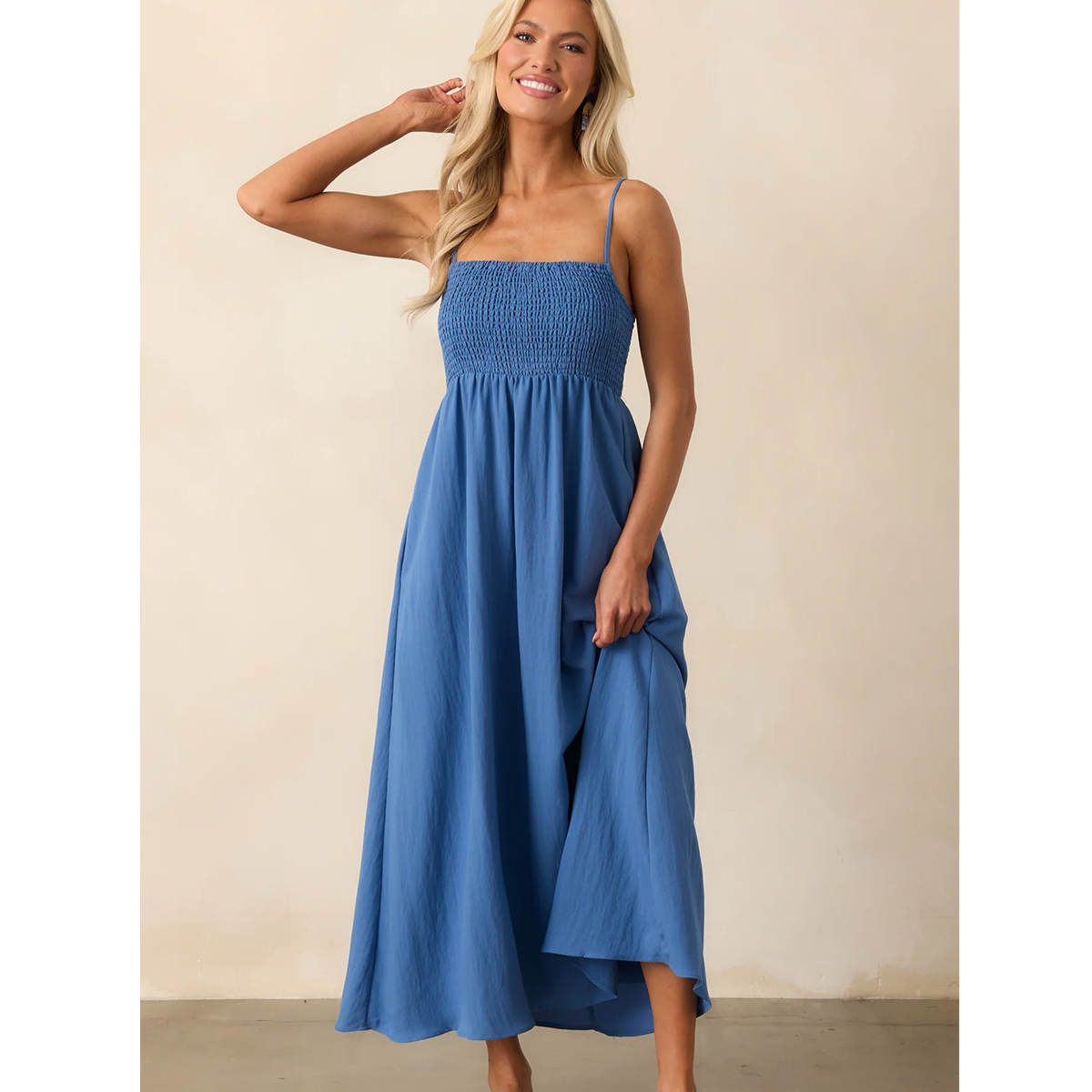
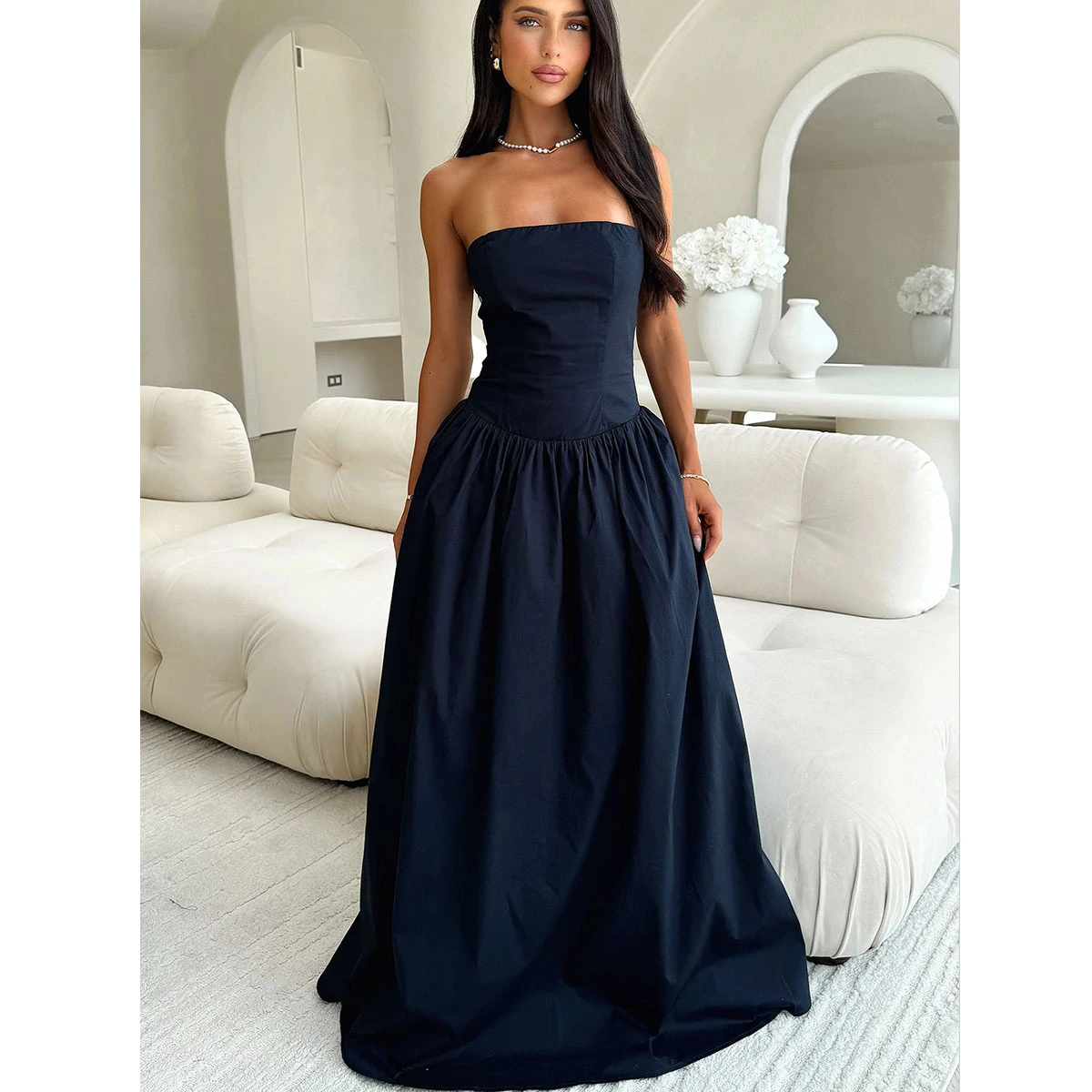
With an A-line maxi dress, the amount of flare comes mainly from the pattern and how the skirt panels are joined to the bodice. The waist position, panel proportions, fabric fall and finished length are considered together rather than looking at the skirt separately.
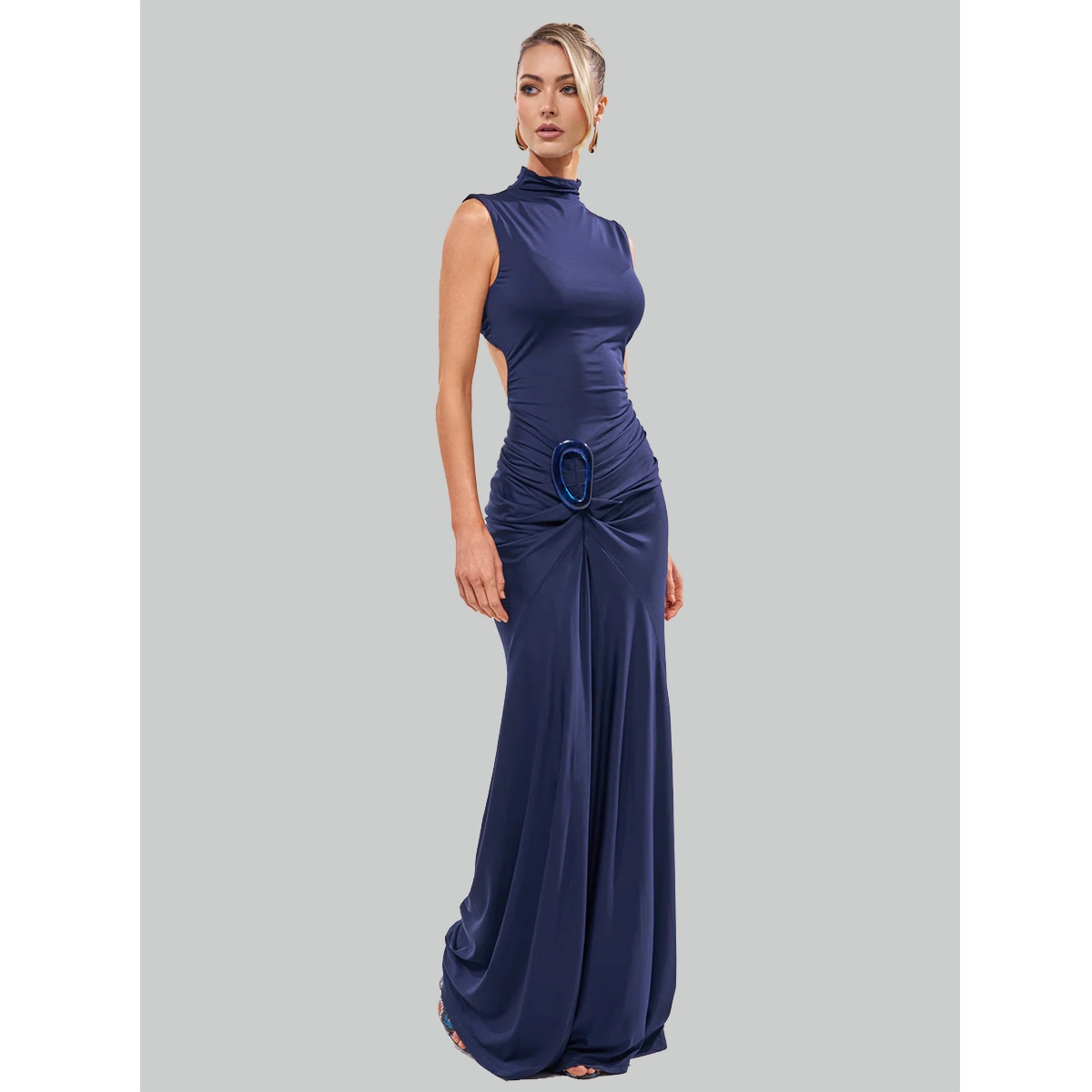
For a fitted maxi dress, the fabric and pattern have to work together. Stretch percentage and recovery can change the fit considerably, particularly around the hips and waist. We also check seam construction and grading so the garment can follow the body without becoming unnecessarily restrictive.
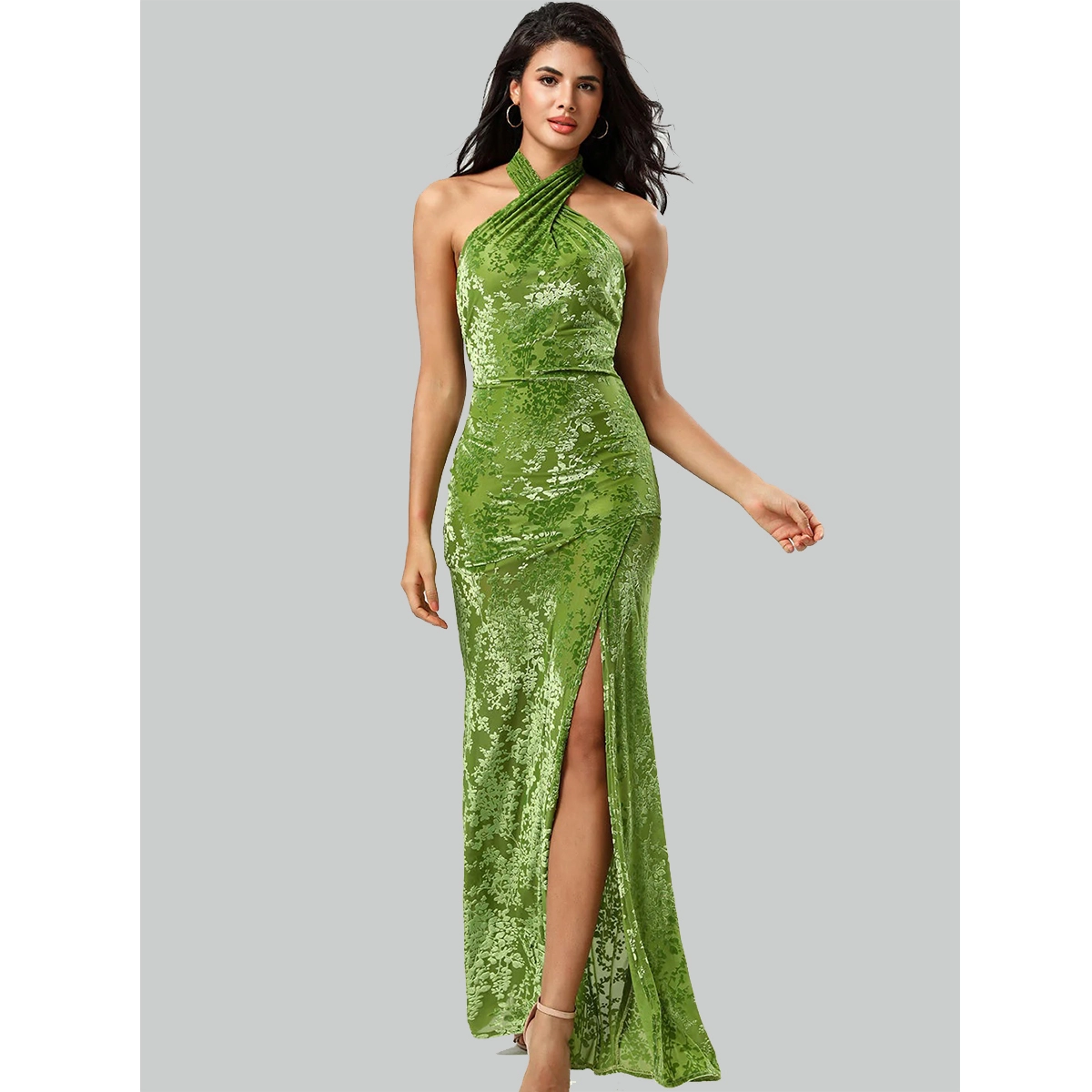
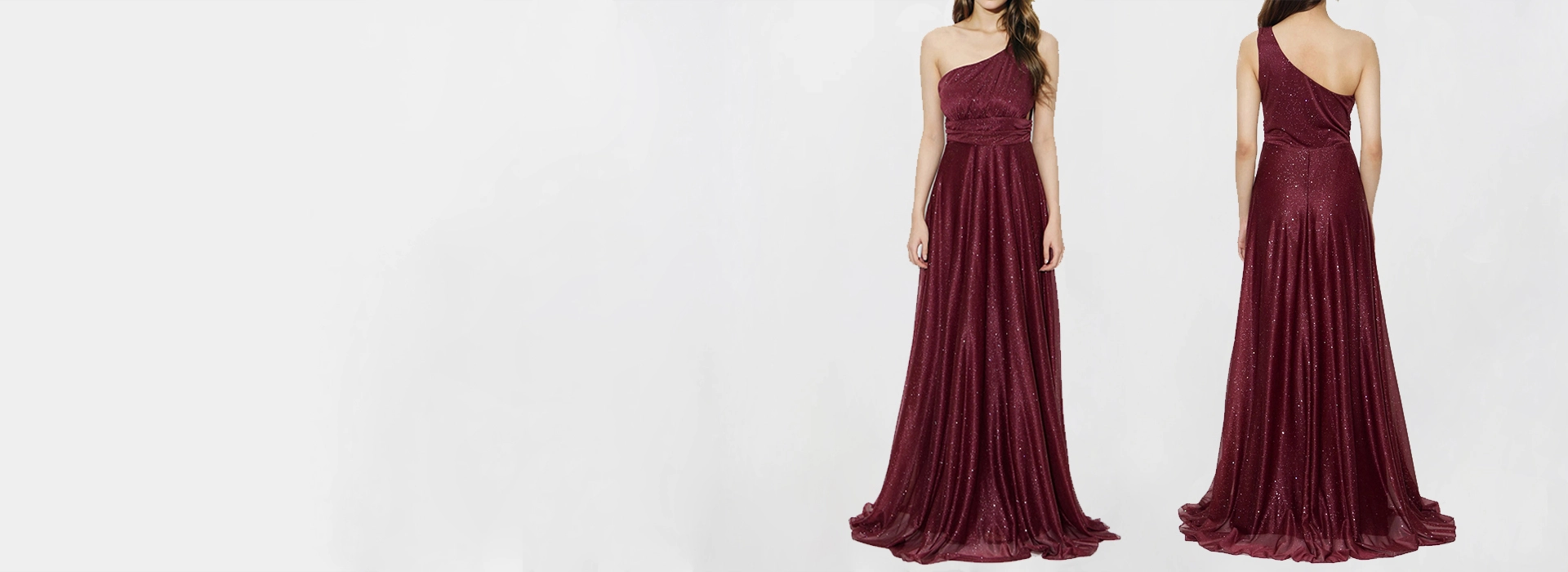
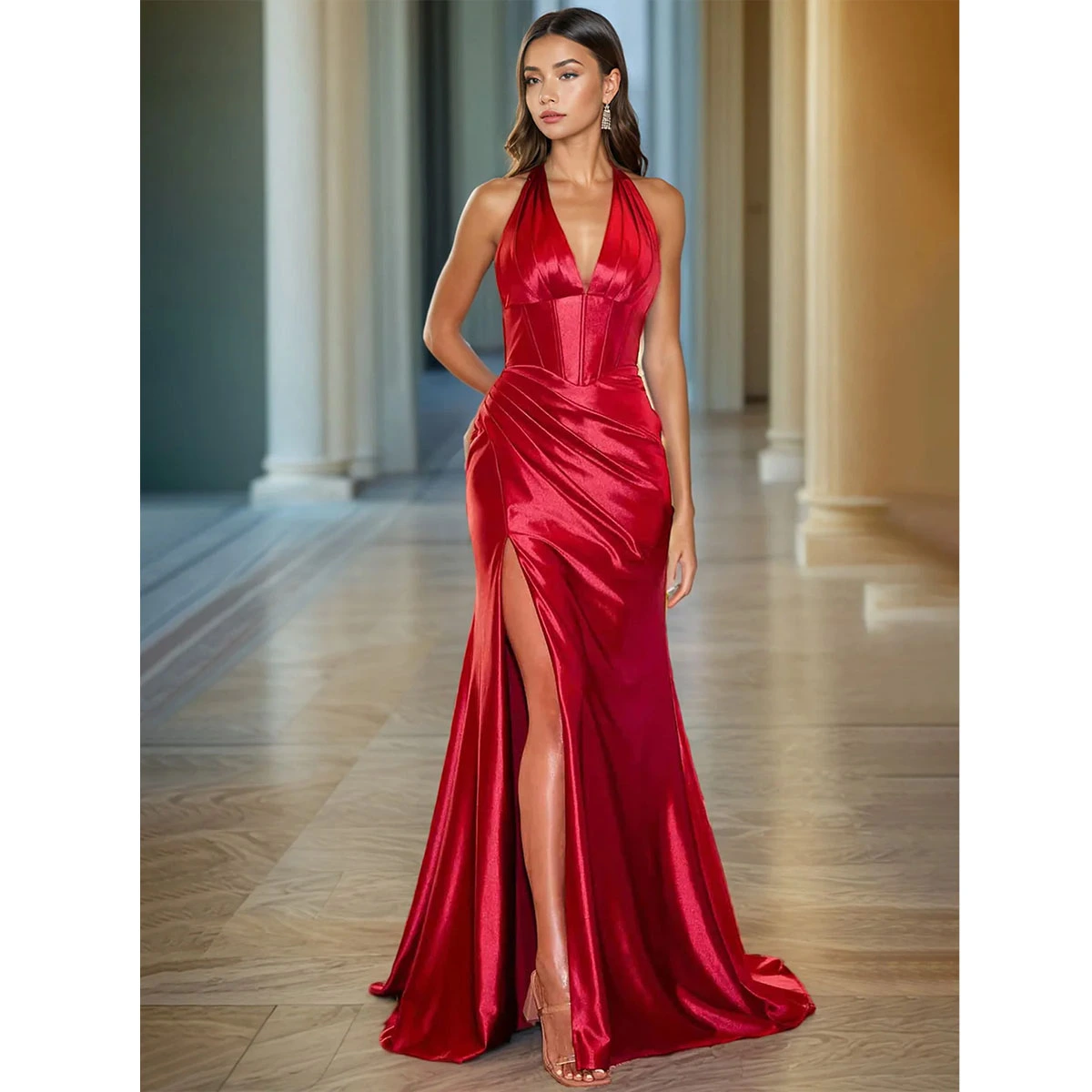
The neckline does most of the visual work on a halter maxi dress, but it also has to stay in the right position when worn. We check the neckline shape, strap length, back construction, and attachment points during fitting. These details are adjusted on the sample when necessary.
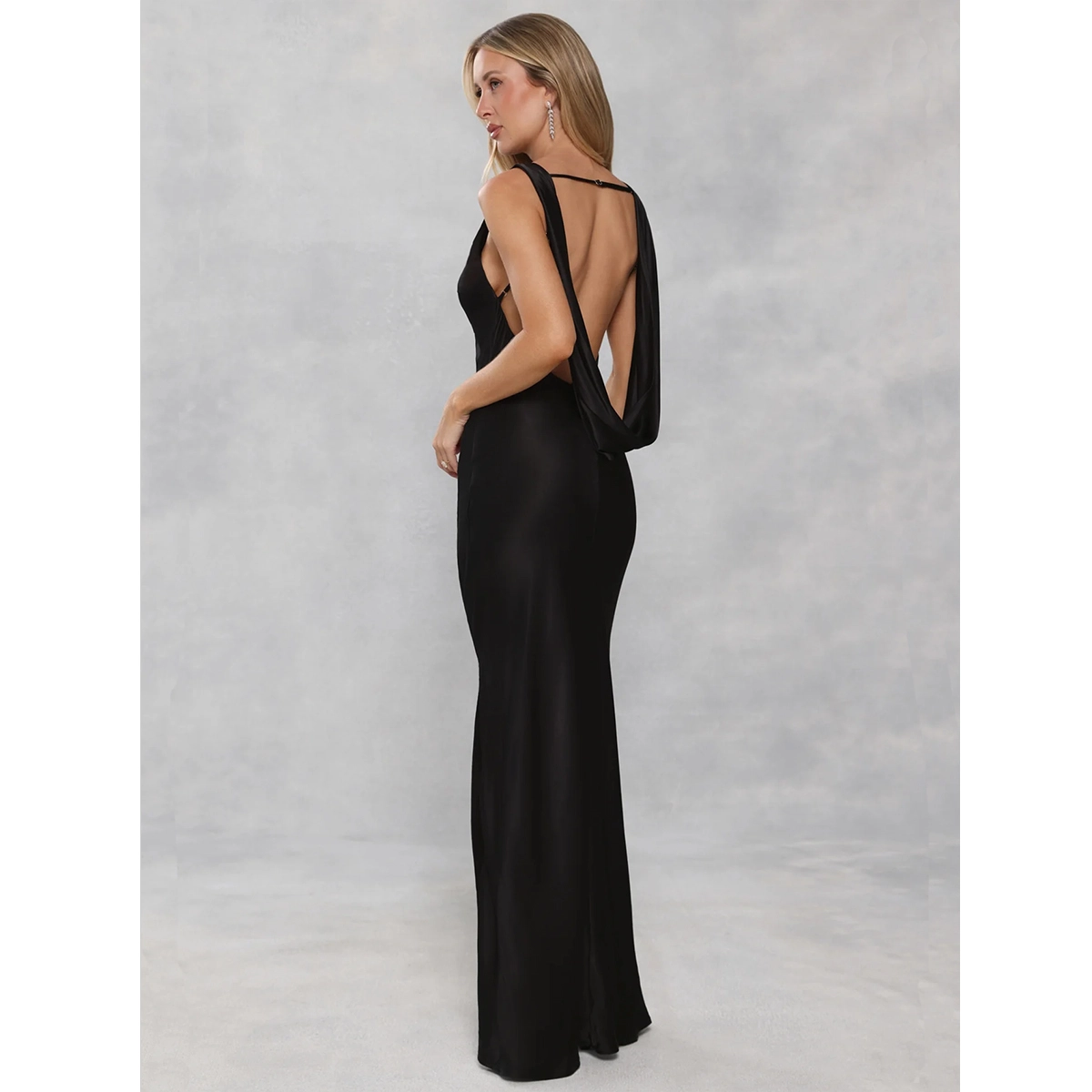
Open-back maxi dresses usually have less fabric supporting the upper body, so the back construction needs more attention. Depending on the design, this may involve adjusting the back edge, straps, elastic, or closure. We look at the fit from the front and back before confirming the construction.
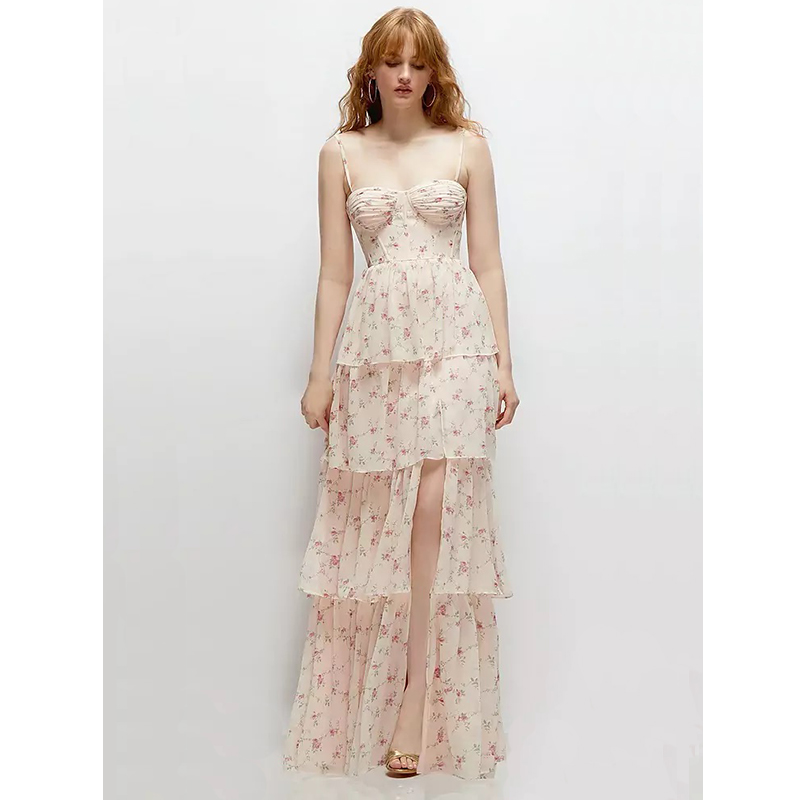
Tiered skirts can use considerably more fabric than a standard maxi dress, and the proportions of each tier affect the overall volume. During development, we check the width of each panel, gathering, seam joining, fabric consumption, and how the layers fall after sewing.
More Maxi Dress Styles We Manufacture
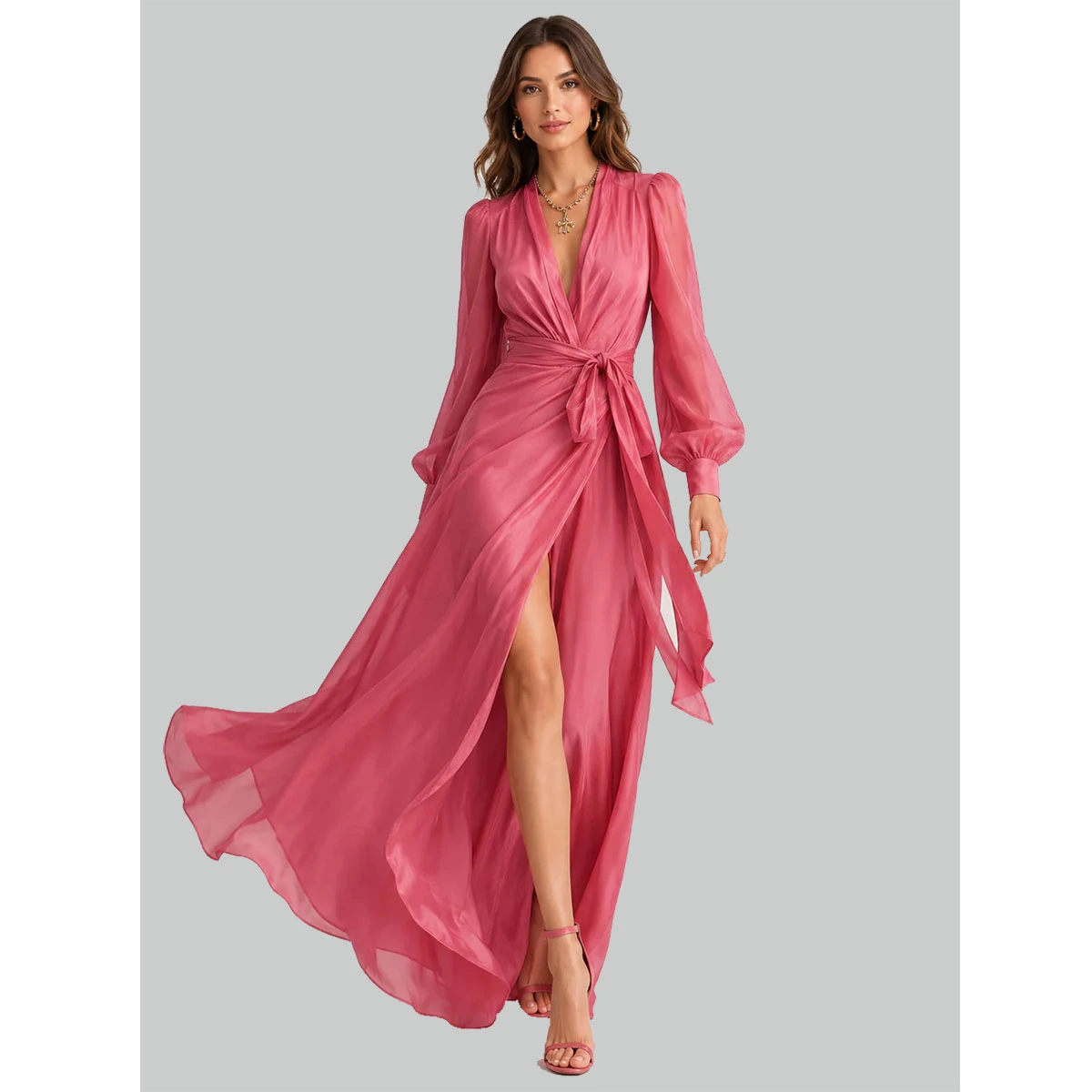
Long sleeves can be developed with different cuffs, gathers, openings, or fitted shapes. Sleeve length and armhole position are checked along with the main body so the dress remains comfortable when worn.
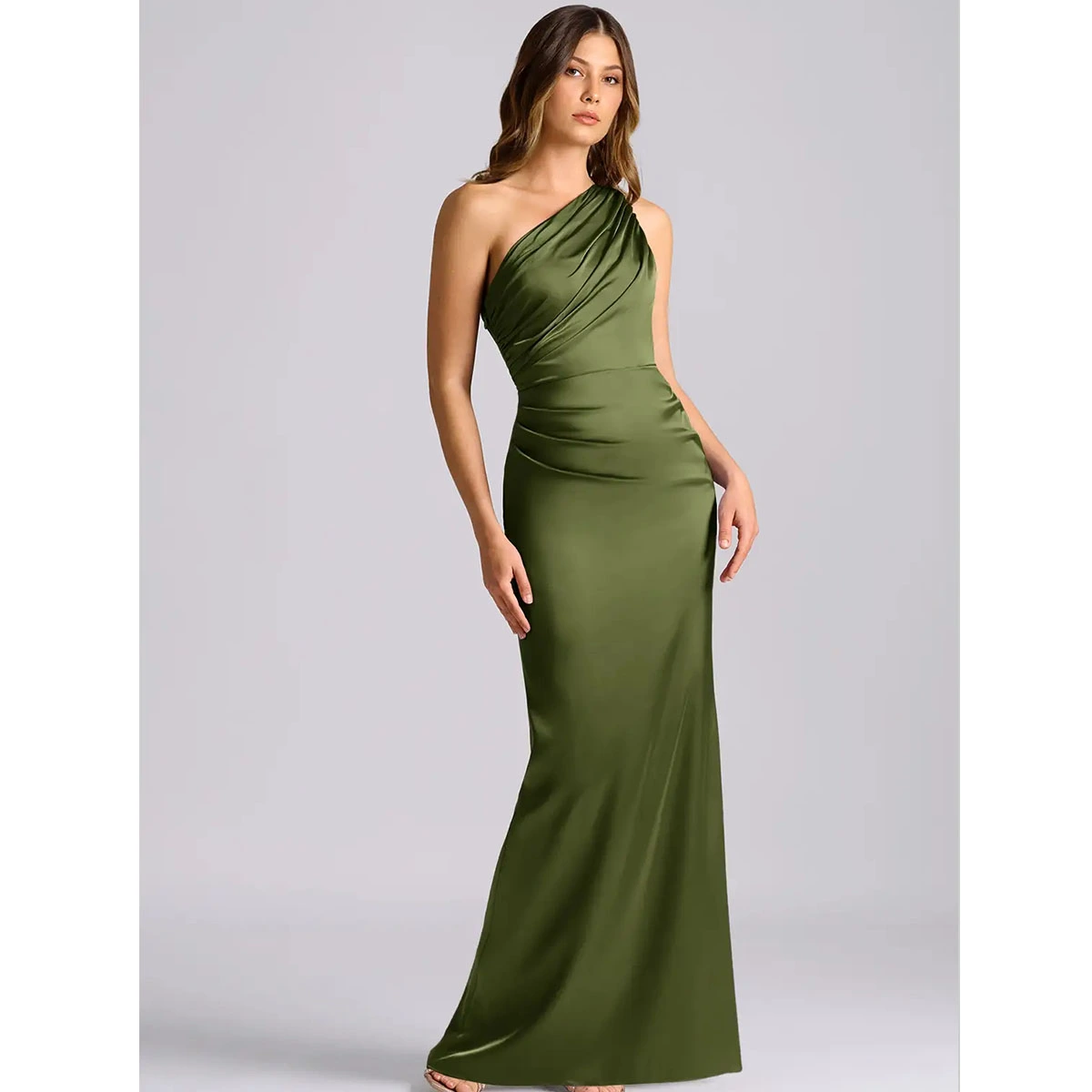
The asymmetry needs to be built into the pattern rather than corrected during sewing. We pay particular attention to the neckline, shoulder position, armhole, and internal support when developing the first sample.
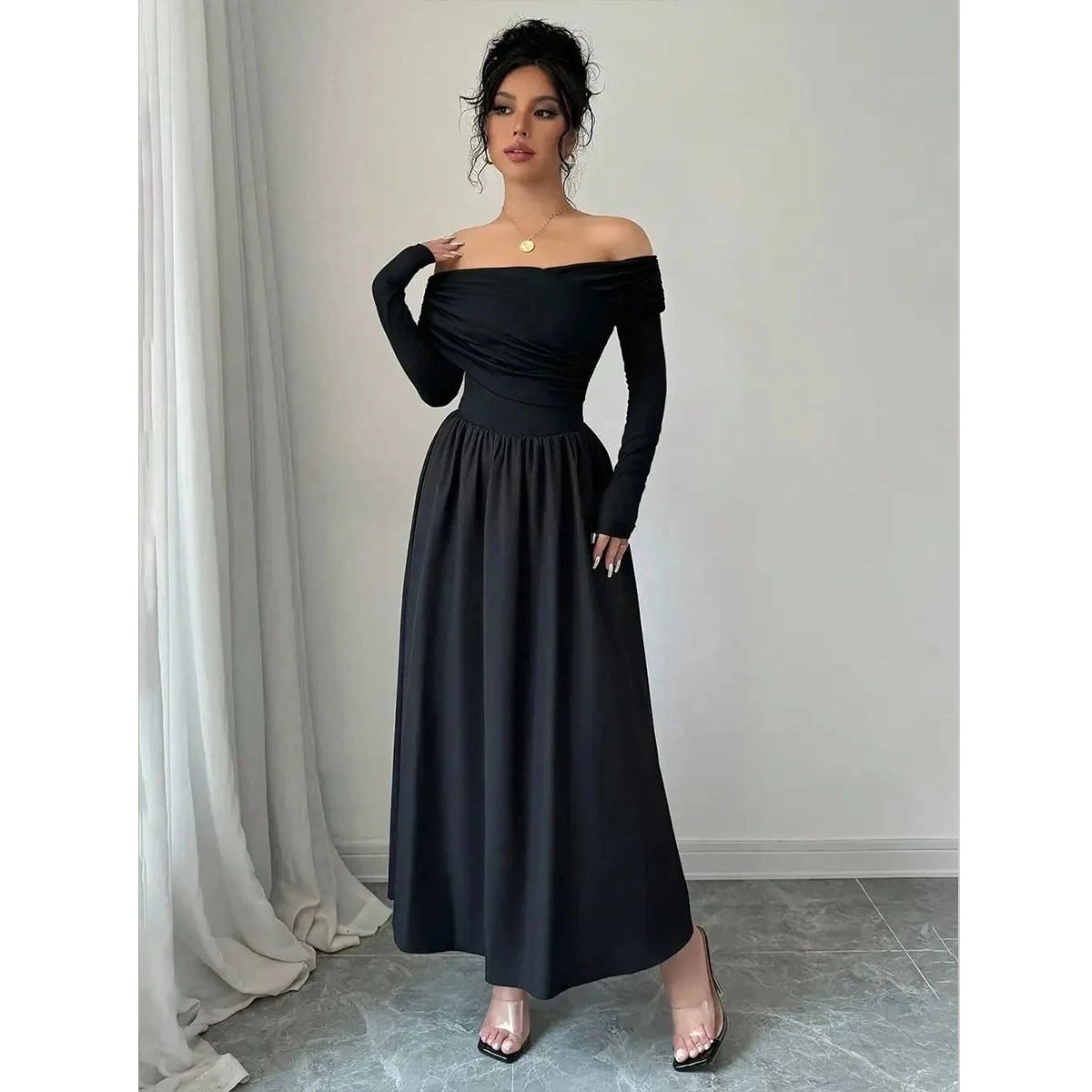
For an off-shoulder design, keeping the neckline in place is one of the practical concerns. Depending on the style, elastic, binding, internal support, or other construction details may be used. These are tested during sampling rather than decided only from the sketch.
Maxi Dress Fabric Options
The fabric can change the way a maxi dress falls, feels, and fits. It also affects cutting, sewing, finishing, and the final cost, so we usually look at the fabric together with the actual design.
If you have already selected a fabric, send us the specification or swatch. When the fabric is still open, we can compare suitable options for the style, looking at drape, weight, stretch, opacity, appearance, cost, and availability before sampling.
Fabric choice can also change after sampling. A fabric may match the reference image well but behave differently once it is made into a full-length skirt.
- Flowing Fabrics
- Silk
- Silk satin
- Chiffon
- Rayon
- Lightweight crepe
These are suitable when you want movement and a softer drape.
- Structured or Polished Fabrics
- Satin
- Velvet
- Crepe
- Cotton blends
- Polyester blends
These can provide more body or a cleaner silhouette depending on the construction.
- Stretch Fabrics
- Stretch jersey
- Stretch satin
- Stretch crepe
- Other elastane blends
These are often considered for fitted or bodycon maxi dresses.
Certifications at Our Dress Factory
Our factory certifications cover areas such as social compliance, quality management and textile-related requirements. The available documents can be provided when required for supplier review.
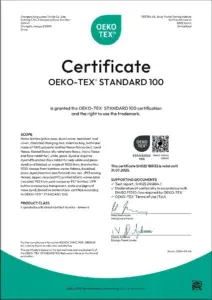 OEKO Certificate
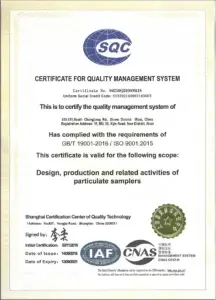 ISO9001 Certificate
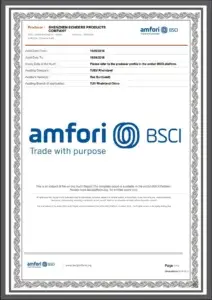 BSCI Certificate
Private Label Maxi Dress Manufacturing
If you are building your own brand, Xiuyu Apparel can develop and produce maxi dresses with your labels and packaging requirements.
You can customize:
- Brand labels
- Care labels
- Size labels
- Hangtags
- Packaging
- Barcode stickers
- Folding method
- Poly bags
- Carton markings
It is worth sorting these details out before the bulk order starts. Label position, folding, or packaging changes made after production is underway can mean reopening finished garments or repacking part of the order. Getting the details confirmed early usually avoids that extra work.
Quality Control for Maxi Dresses
Quality control starts before the first piece is cut. We check the materials, follow the approved construction during sewing, and inspect the finished garments before they are packed.
- Before Cutting: We inspect the fabric for defects, shade differences, width and general condition. We also confirm that the material matches the approved fabric before it goes onto the cutting table.
- During Cutting: The cutting team follows the approved marker and checks panel direction and placement. Printed, striped and directional fabrics need extra attention because the panels cannot simply be placed wherever there is space on the marker.
- During Sewing: QC follows the order on the line, checking measurements, seams and construction. If something is off, it can be corrected at this point instead of waiting until the garments are finished.
- Before Packing: Finished maxi dresses are compared with the approved sample. Measurements, workmanship, labels, closures, appearance, and finishing are reviewed before the garments move to packing.
- Packing: Size, quantity, labels, barcodes, folding and carton markings are checked against the confirmed packing requirements. It is one more check before the cartons are closed and prepared for shipment.
Why Brands Work With Xiuyu Apparel for Maxi Dress Production
If you are comparing several manufacturers, price will usually be one of the first things you look at. The finished garment, however, depends on much more than the quoted unit price.
For us, the important part is what happens between the design and the finished dress. That includes:
- Fabric selection
- Pattern development
- Sample fitting
- Construction feasibility
- Fabric consumption
- In-line QC
- Repeat production consistency
- Private label requirements
- Packaging
- Delivery preparation
We have been manufacturing apparel for more than 18 years, Our wider clothing manufacturing capabilities also cover other apparel categories beyond dresses, working with brands from the first sample through bulk production. Private labels, packaging, and shipment requirements are also handled as part of the production process.
Common Production Issues When Developing Maxi Dresses
Long dresses tend to make small production differences more visible. A few millimeters at the hem, a slight change in fabric relaxation, or a lining that pulls differently can affect the finished silhouette. The examples below are some of the points we pay attention to during development.
The Fabric Looks Different on the Finished Dress
A small fabric swatch does not always tell us how a full-length skirt will behave. Once several meters of fabric are hanging from the waist, its weight and construction start to matter.
This is why flowing maxi dresses are usually judged on the sample rather than from the swatch alone.
The Finished Length Is Not Consistent
Length differences are easy to notice at the bottom of a maxi dress. A small change at the hem can make one side look longer than the other.
We compare the finished garment with the approved size chart and pay particular attention to long hems after sewing and pressing.
Bias-Cut Maxi Dresses Change Length
Bias-cut panels can relax after they have been cut and hung. Softer or heavier fabrics may drop more in some areas than others.
The hem is therefore checked after the fabric has settled, not immediately after cutting.
The Lining Changes the Silhouette
The lining can change the way the outer fabric hangs. A lining that is too heavy may make a lightweight skirt feel stiff, while different shrinkage between the lining and shell can affect the hem.
For this type of dress, the shell and lining need to be considered together.
Long Hems Show Finishing Problems
A long hem gives small finishing problems more room to show. Uneven pressing, slight differences in hem width, or wrinkles can affect the appearance of the entire skirt.
The garment is checked again after pressing, before it goes to packing.
Related Dress Manufacturing Categories
If you are developing a wider dress collection, you can also explore:
- Dress Manufacturer
- Midi Dress Manufacturer
- Velvet Dress Manufacturer
- Formal Dress Manufacturer
- Off Shoulder Dress Manufacturer
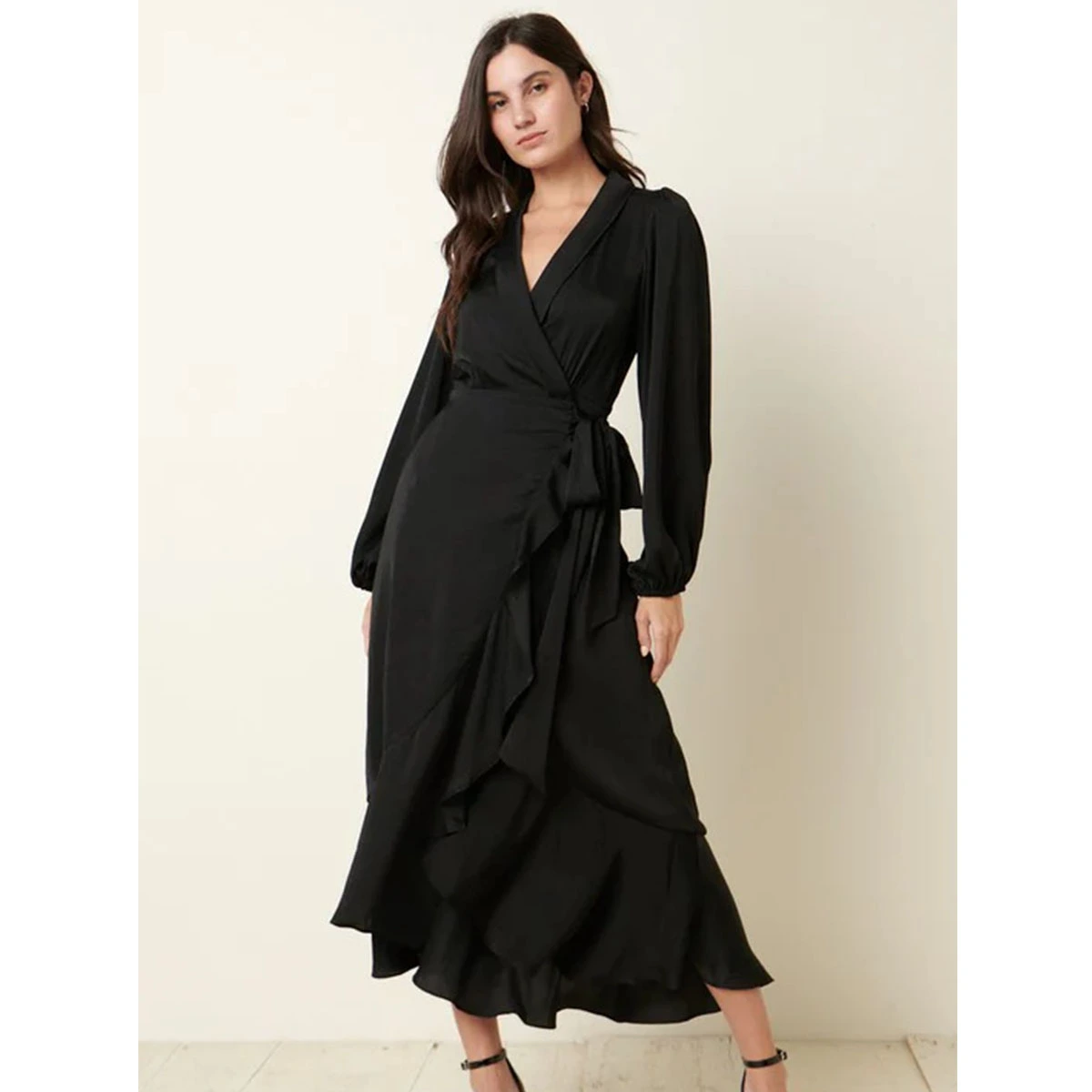
- Wrap Dress Manufacturer
- Ruffle Dress Manufacturer
These pages can help you compare different dress silhouettes, materials, construction methods, and production options.
Custom Maxi Dress Development From Your Design
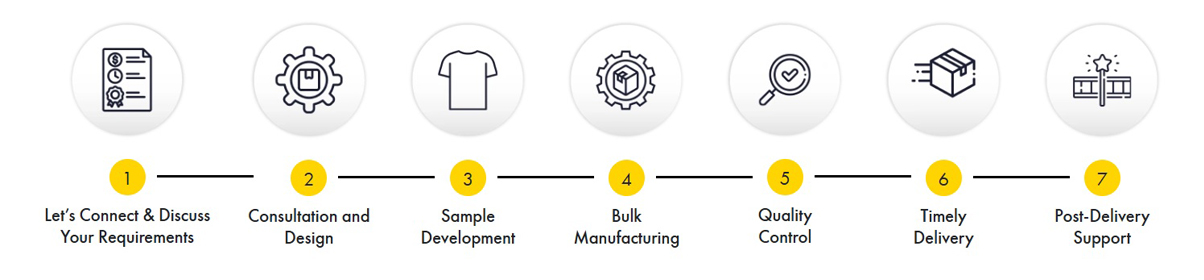
A new maxi dress does not always arrive as a complete tech pack. Some customers come to us with a finished sample, while others start with a sketch, photo, or a few basic measurements. We can work from either and clarify the missing details as the style develops.
A project may start with a complete tech pack, but it does not always. Some customers send us a reference sample or sketch; others start with a photo and a few measurements.
At this stage, we look through the construction, measurements, fabric and closures and flag anything that could cause trouble during sampling.
If the fabric has already been selected, we work from the specification or approved swatch. If it has not, we can source options based on the required weight, drape, appearance and target cost.
Lining, zippers, buttons, elastic, labels and other trims are confirmed before production.
The pattern is developed once the main measurements and construction have been agreed.
For a maxi dress, length and fabric fall need particular attention. A fitted style may need more work around body measurements and grading, while a flowing skirt depends more on balance, volume and fabric behavior.
This is where the design is tested as a garment rather than a drawing.
The first sample gives us a chance to see the silhouette, length, fit, fabric behavior, seams, closures and lining together. One or two details may need adjustment at this stage.
Fitting comments are then turned into pattern or construction changes. In some cases, the first sample is close enough to move forward. In others, the fabric, fit or finished length needs another round before the PP sample.
In some cases, the first sample is close enough to move forward. In others, the fabric, fit or finished length needs another round before the PP sample.
If several points need adjustment, another sample may be required before the PP sample is approved. The goal is to settle the main details before bulk cutting begins.
Once the PP sample and production details are approved, the bulk order can move forward.
The approved sample, measurements, fabric specification, construction details, labels and packing requirements are kept as the production reference for the order.
For repeat orders, the approved sample becomes particularly important. If the fabric, measurements or construction change, the repeat may no longer look the same even when the design has not changed.

About Xiuyu Apparel
We have been making dresses for more than 18 years. Our main production work is handled in-house, from pattern making and fabric sourcing through sampling, cutting, sewing, inspection, finishing and packing.
- Inside Our Maxi Dress Manufacturing Factory
- Factory Picture
- Our Capabilities
- One-Stop Services
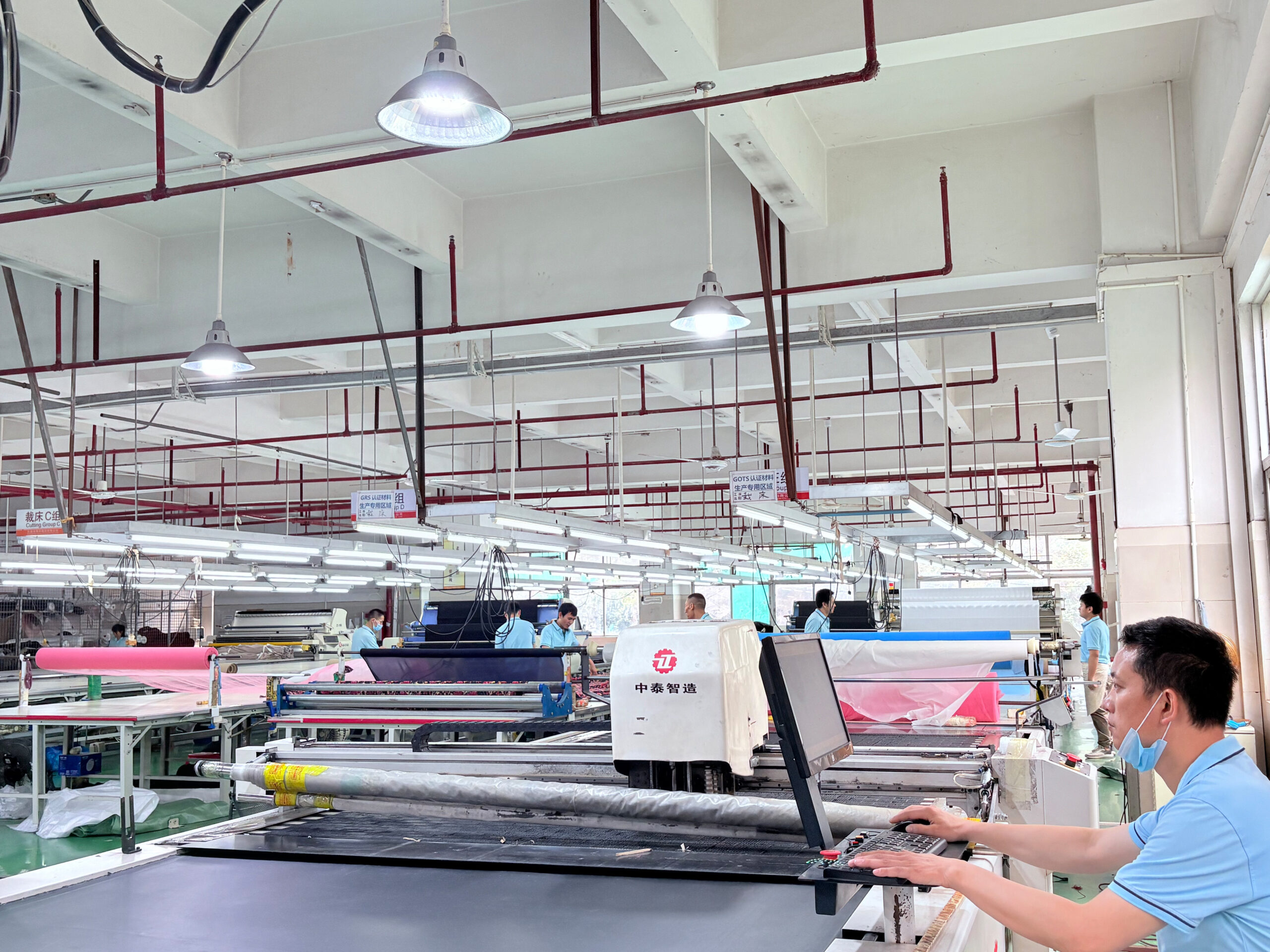
A maxi dress moves through several production stages before shipment. Depending on the fabric and construction, the sequence normally includes fabric preparation, cutting, sewing, inspection, pressing, packing and loading.
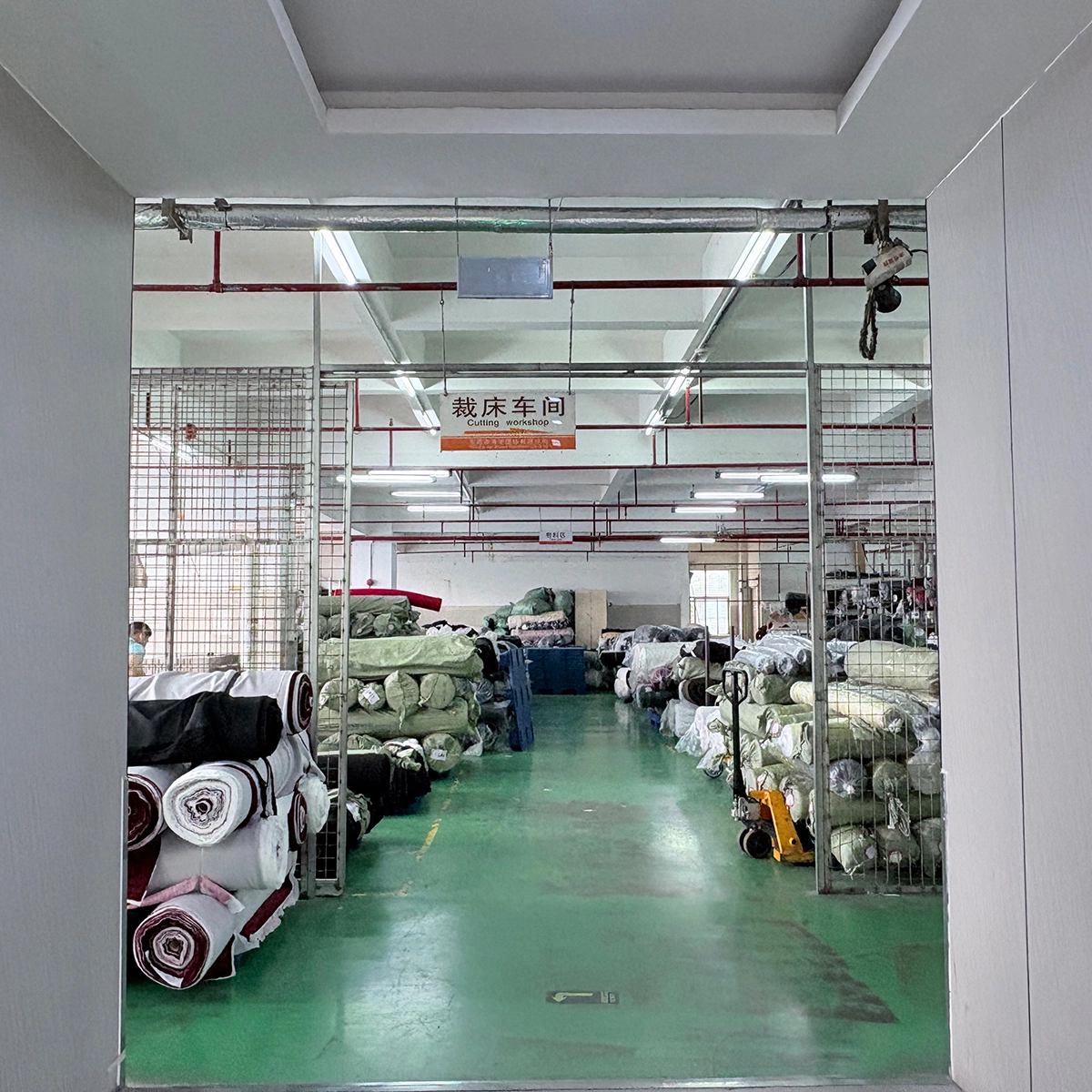
Fabric Warehouse
When fabric arrives, we check the quantity, color, fabric type, and batch information before putting it into production.
The batch information is recorded with the material so it can be traced back if an issue is found later.
↓
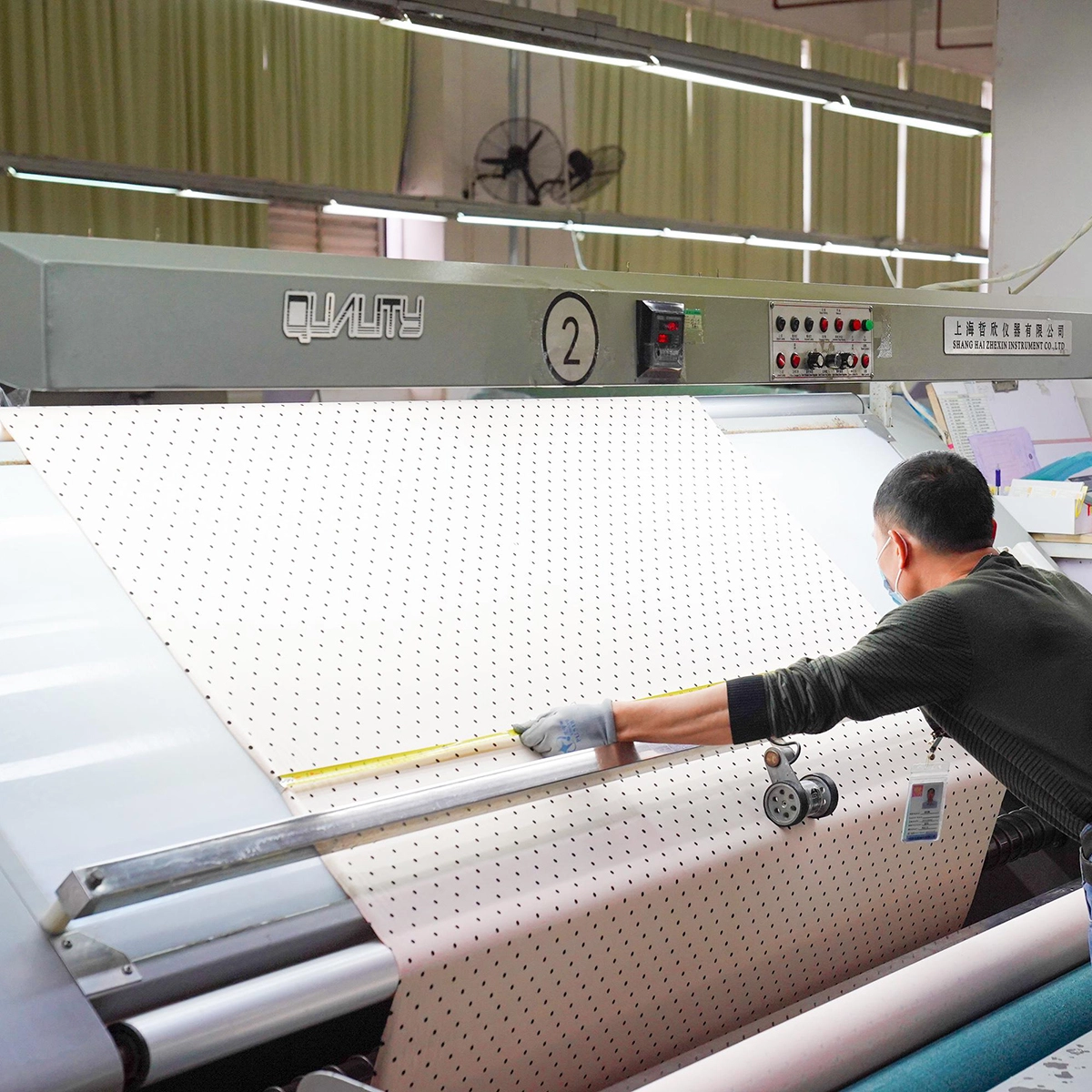
Fabric Inspection
Before cutting, the fabric is checked for visible defects, shade differences, width, and general condition. We do this before spreading the fabric because problems found after cutting are much harder to deal with.
↓
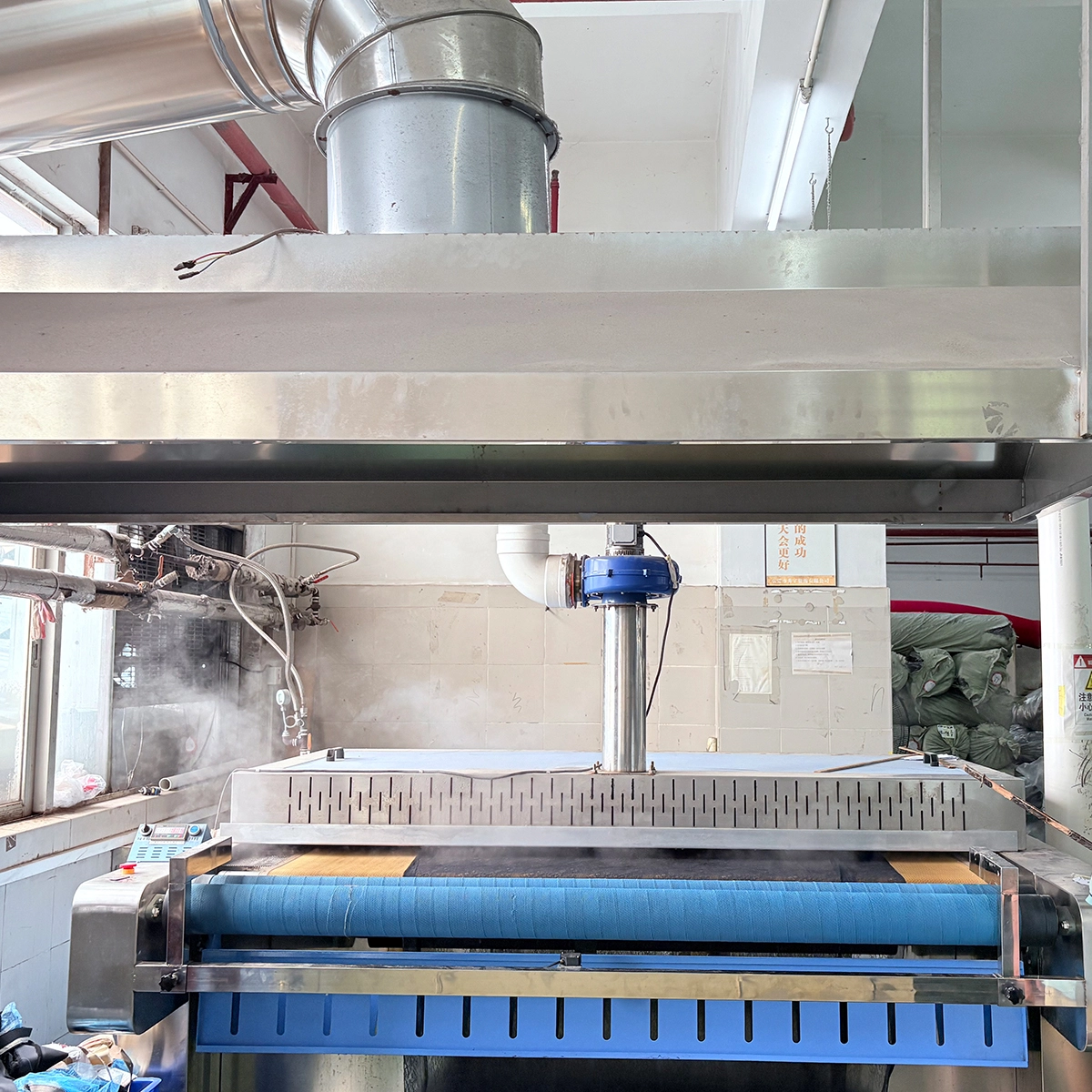
Fabric Pre-shrinking
Some fabrics need pre-shrinking before cutting. The treatment depends on the fabric itself and the required finished measurements. Some fabrics need this step before cutting because their finished width or length can change during treatment.
↓
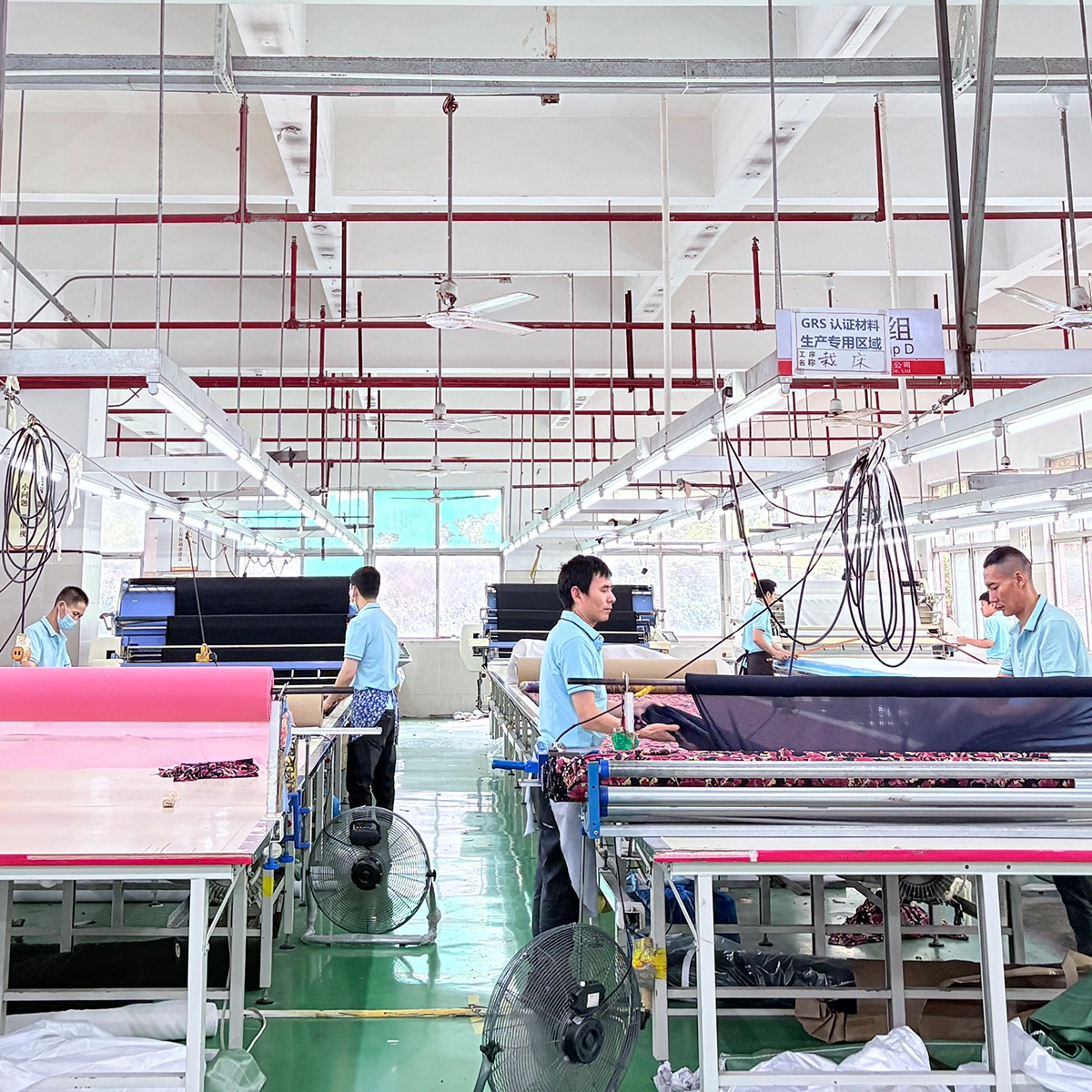
Automatic Cutting
Once the pattern and marker are approved, the fabric is spread and cut according to the production requirements. For long maxi dresses, accurate cutting is particularly important because small panel differences can become noticeable at the hem.
↓
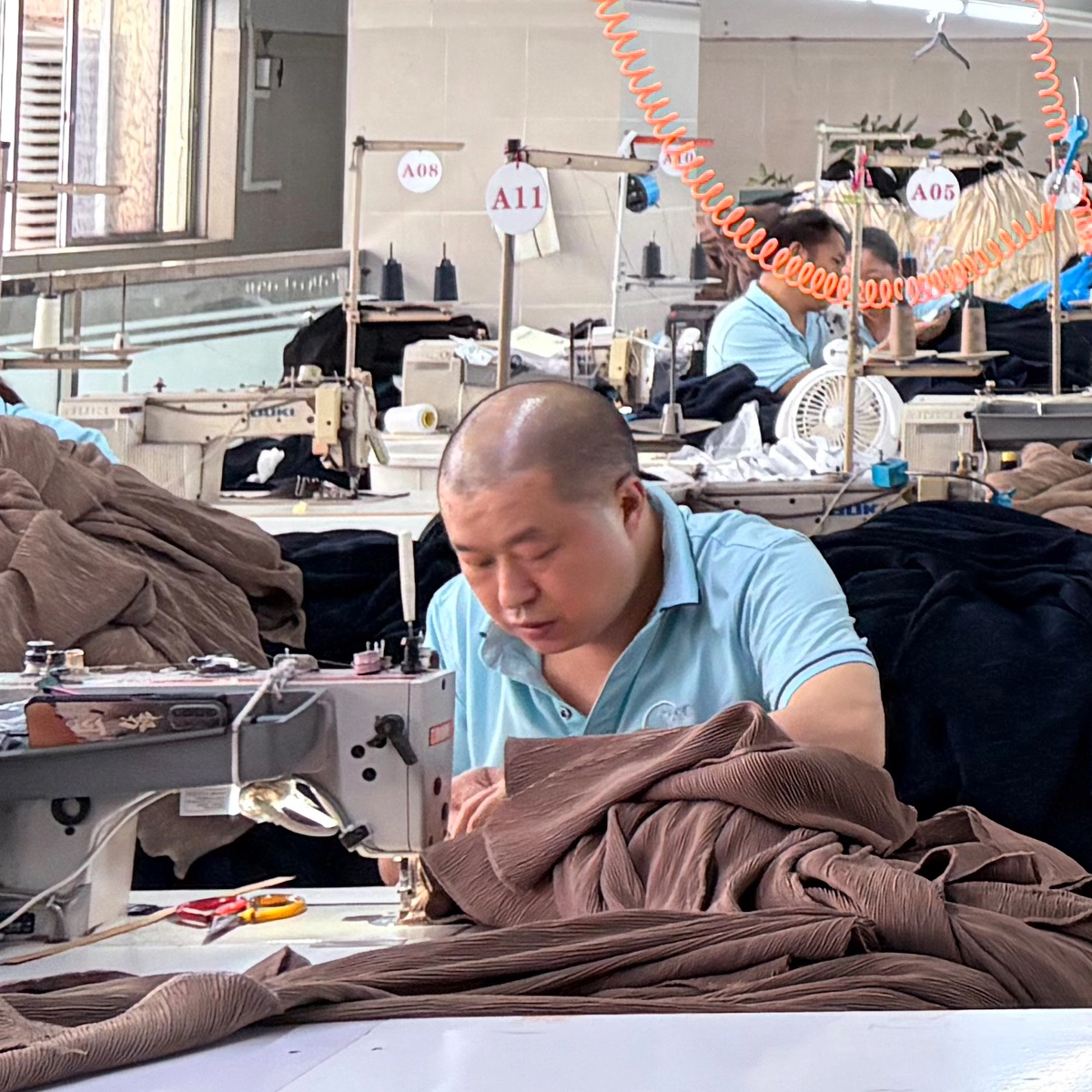
Sewing Workshop
The cut panels are sewn according to the approved sample and construction details. During this stage, we pay attention to areas such as waist seams, side seams, zippers, lining, straps, and other points that can affect the fit and fall of the finished dress.
↓
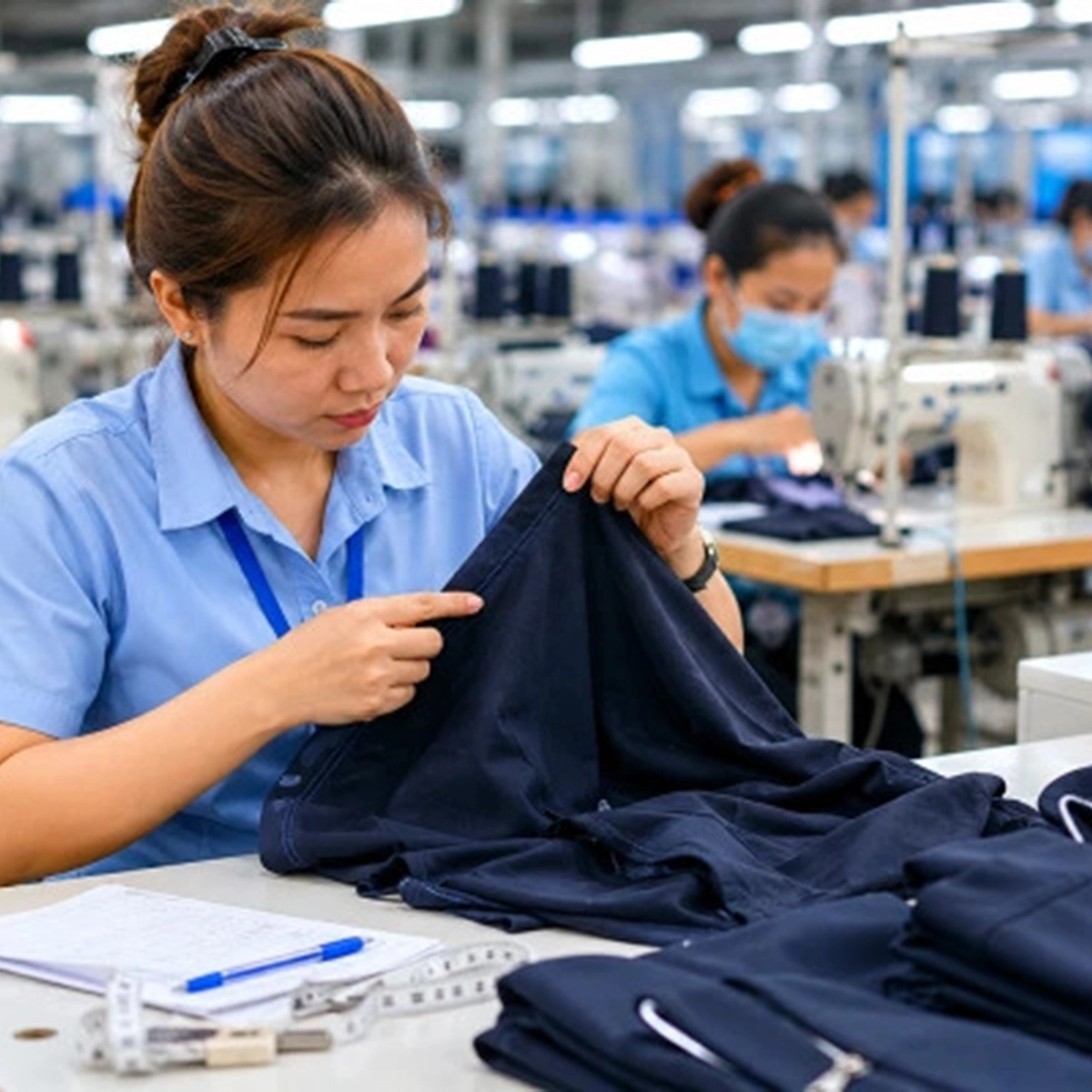
In-line Inspection
QC checks garments while they are still on the sewing line. If a measurement, seam, or construction detail is not right, it is easier to correct it at this stage than after the whole order has been completed.
↓
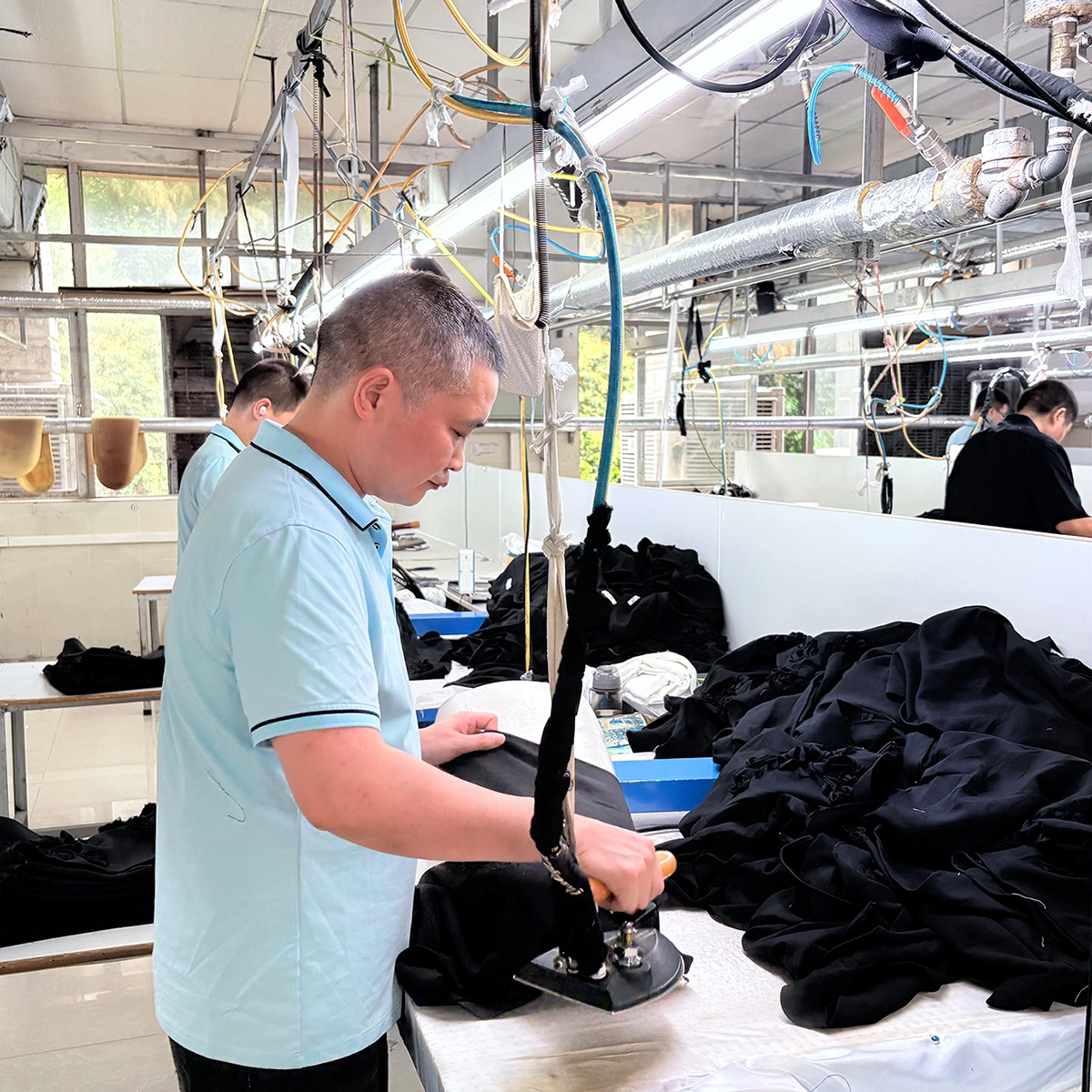
Final Pressing
After sewing, the dresses are pressed and finished. On a long dress, pressing can change the way the skirt hangs, so the garment needs to be looked at again after pressing. Loose threads, wrinkles, uneven seams, and other finishing issues are also dealt with here.
↓
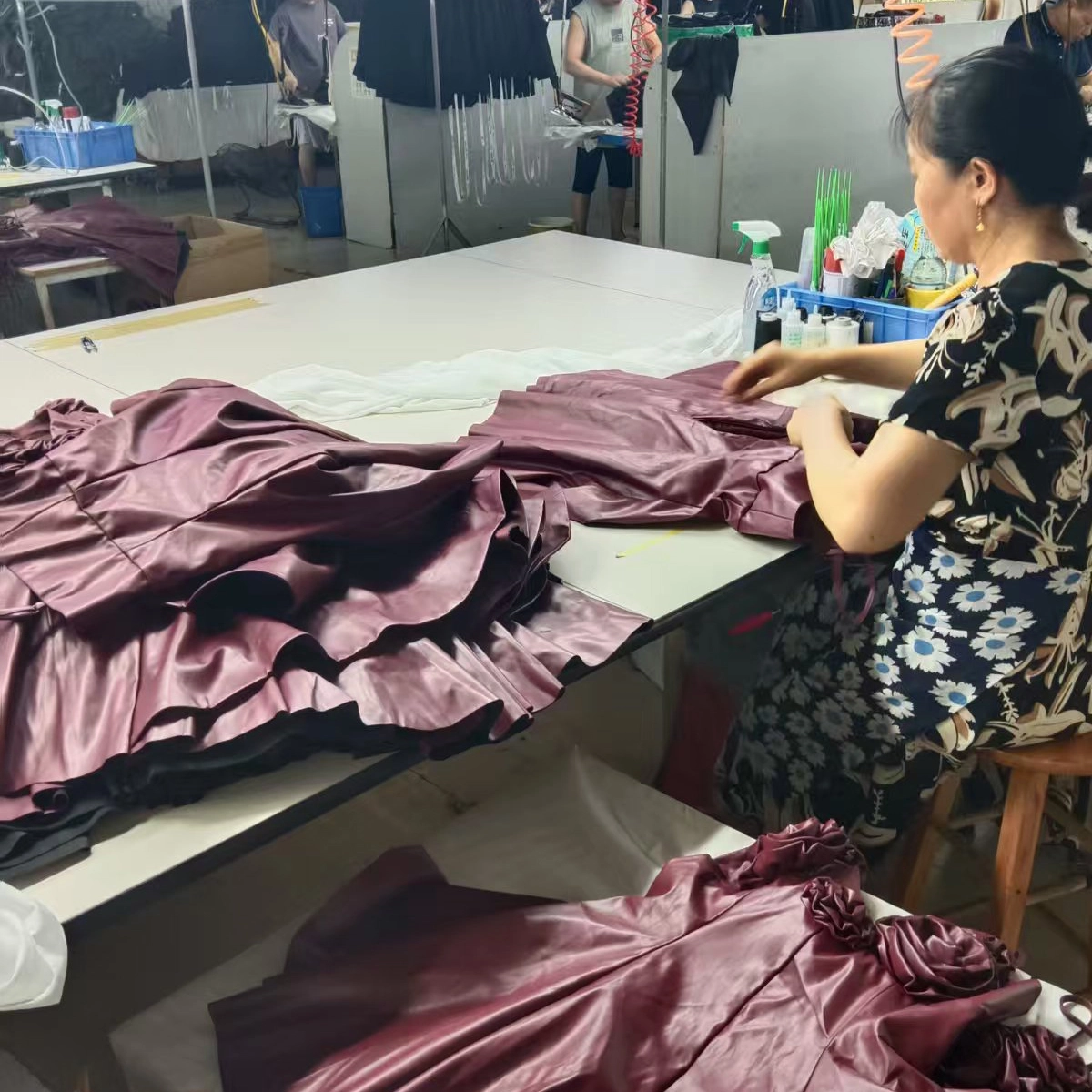
Final Inspection
Before packing, finished dresses are checked against the approved sample and production specifications. Measurements, workmanship, appearance, labels, closures, and overall finishing are checked before the order is released.
↓
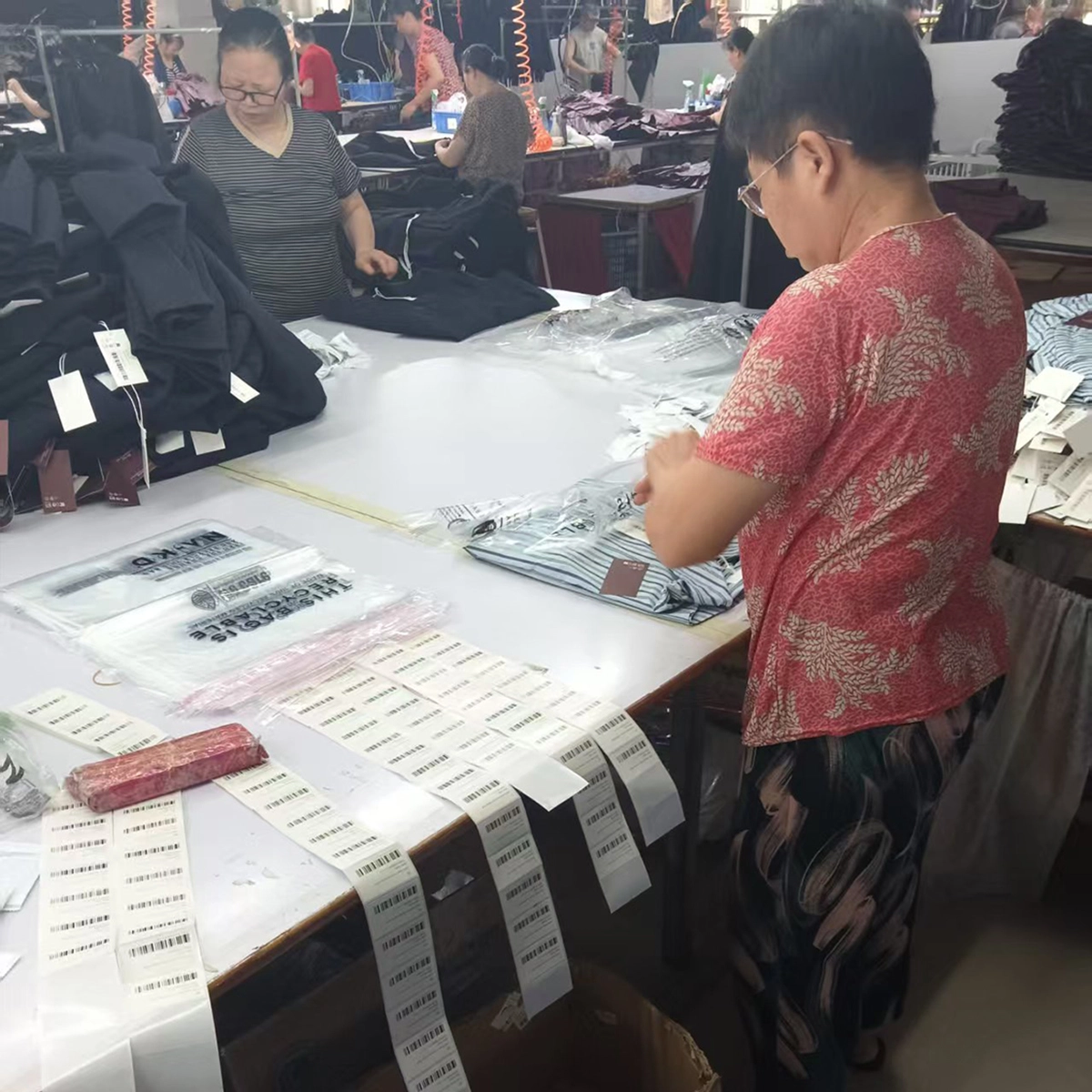
Garment Packing
Once the garments pass final inspection, they are folded, packed, and labeled according to your requirements. The cartons are then checked and prepared for loading and shipment.
↓
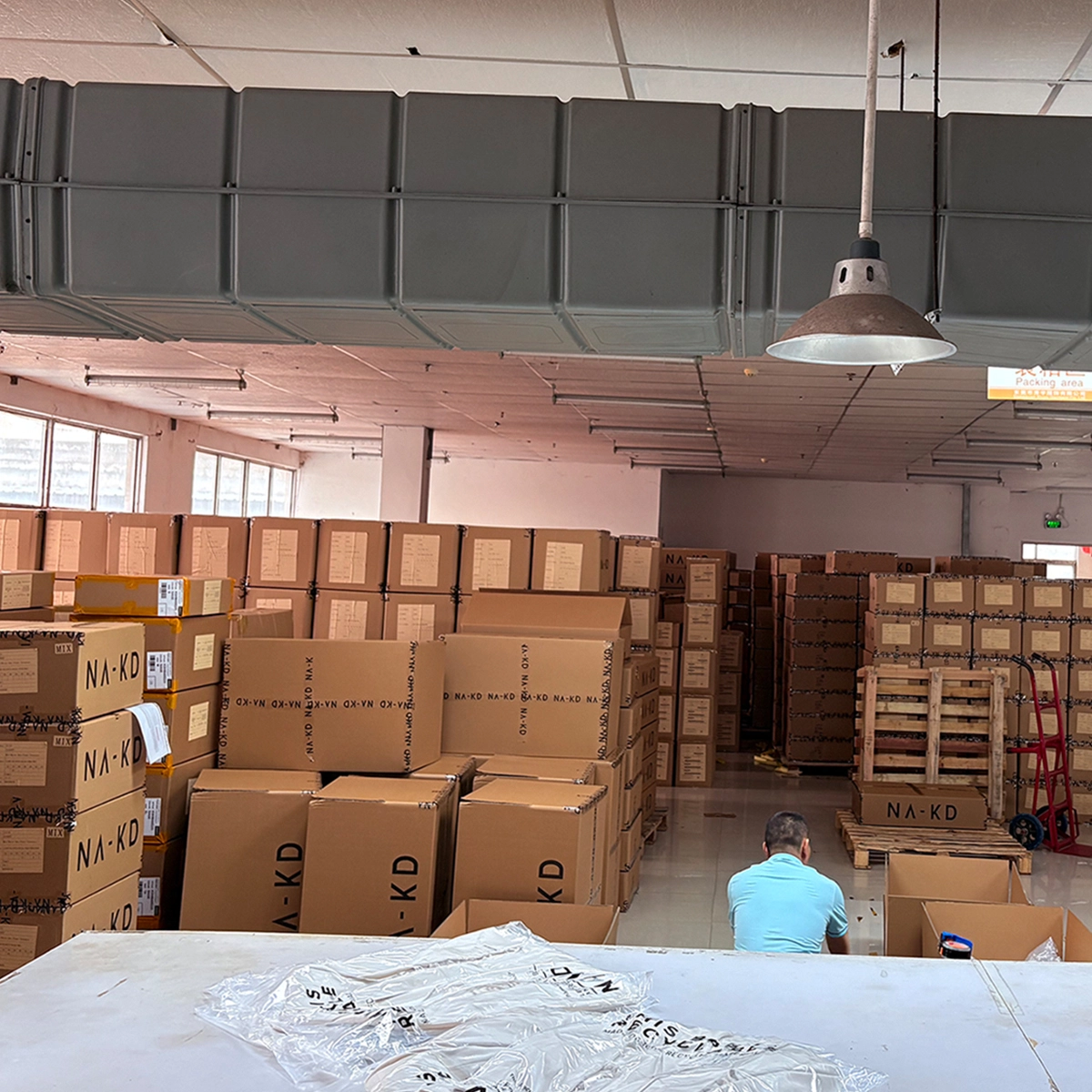
Finished Products
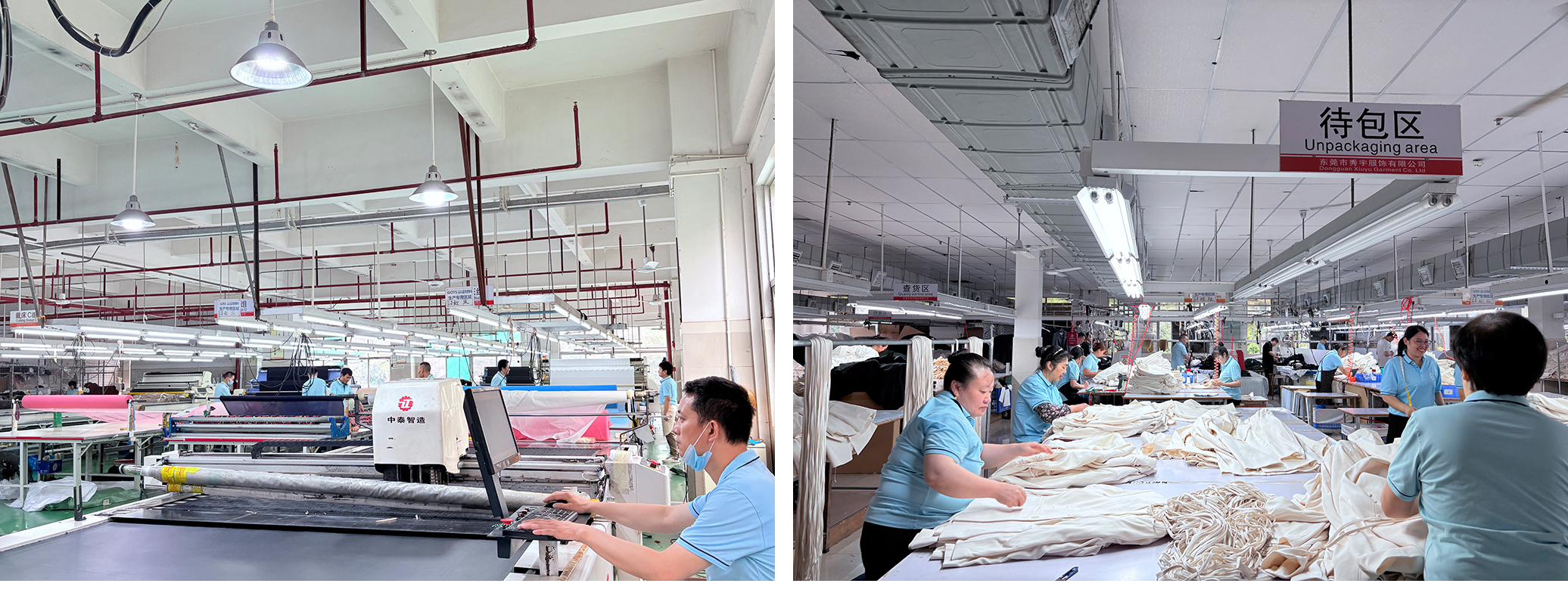 Cutting room & QC inspection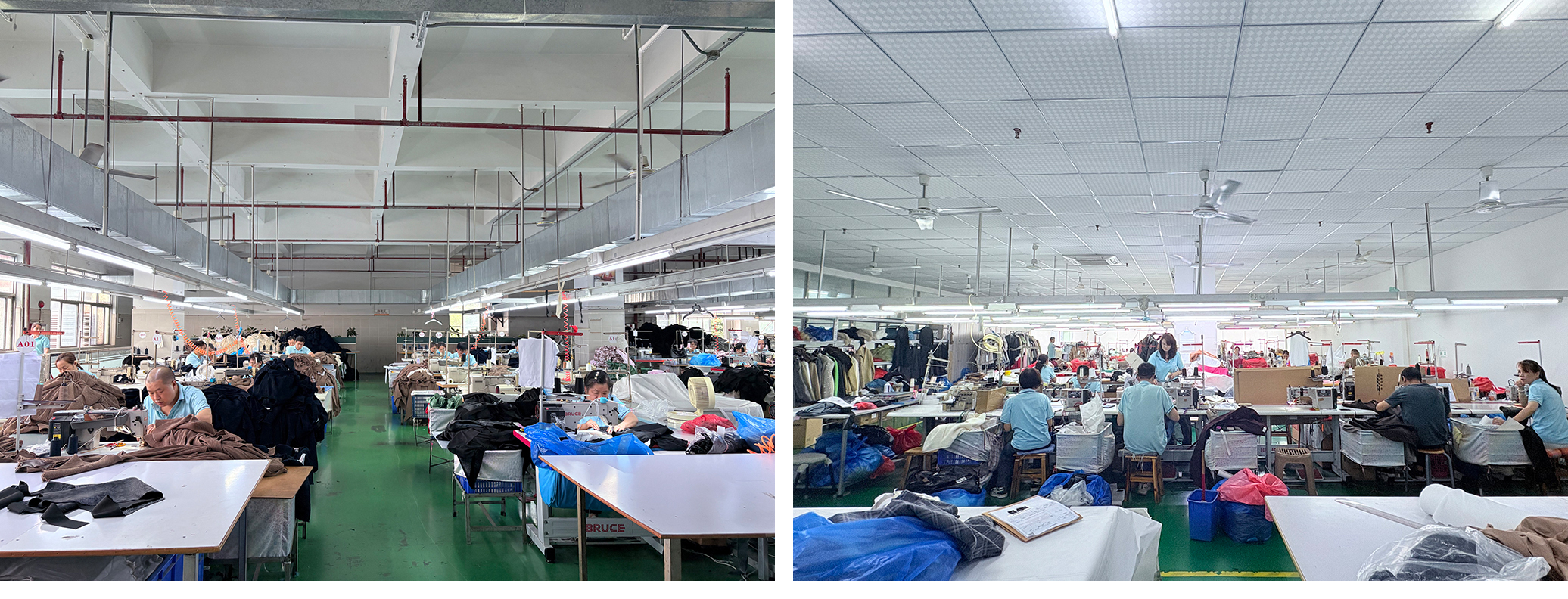
Sewing workshop
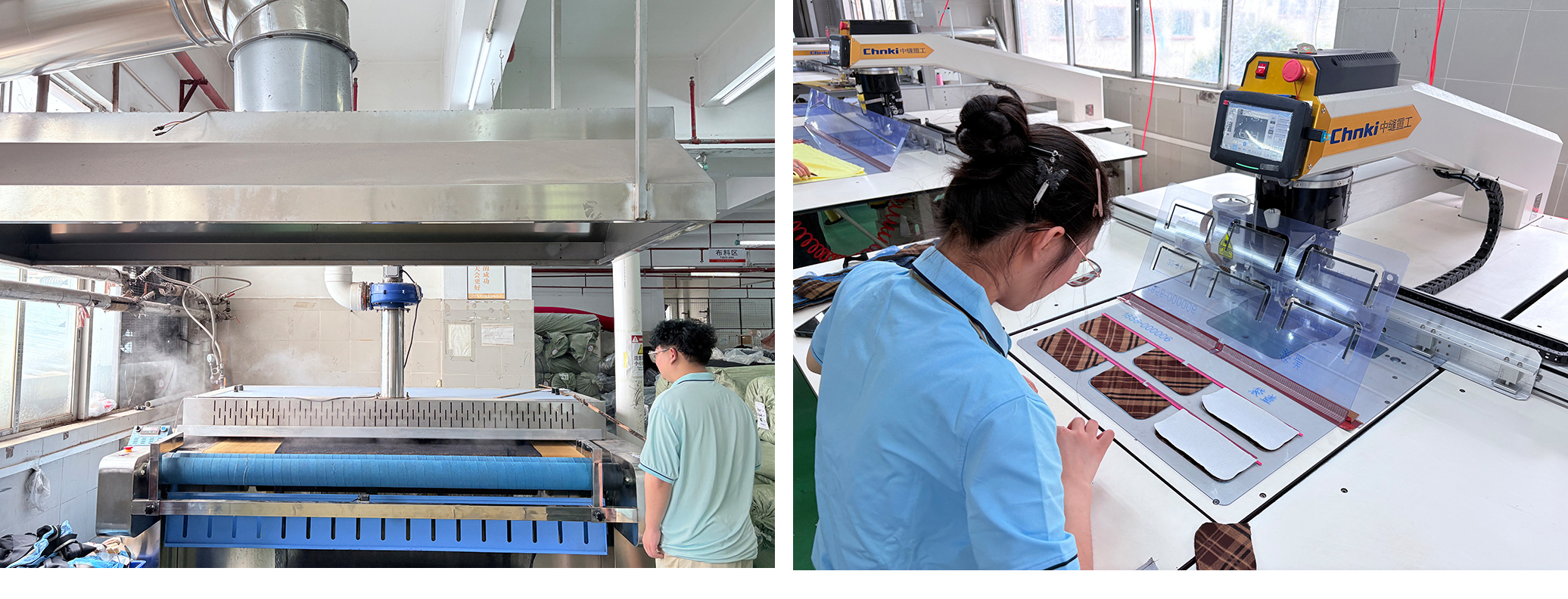 Fabric Pre-shrinking Workshop & Automatic Template Machine Workshop
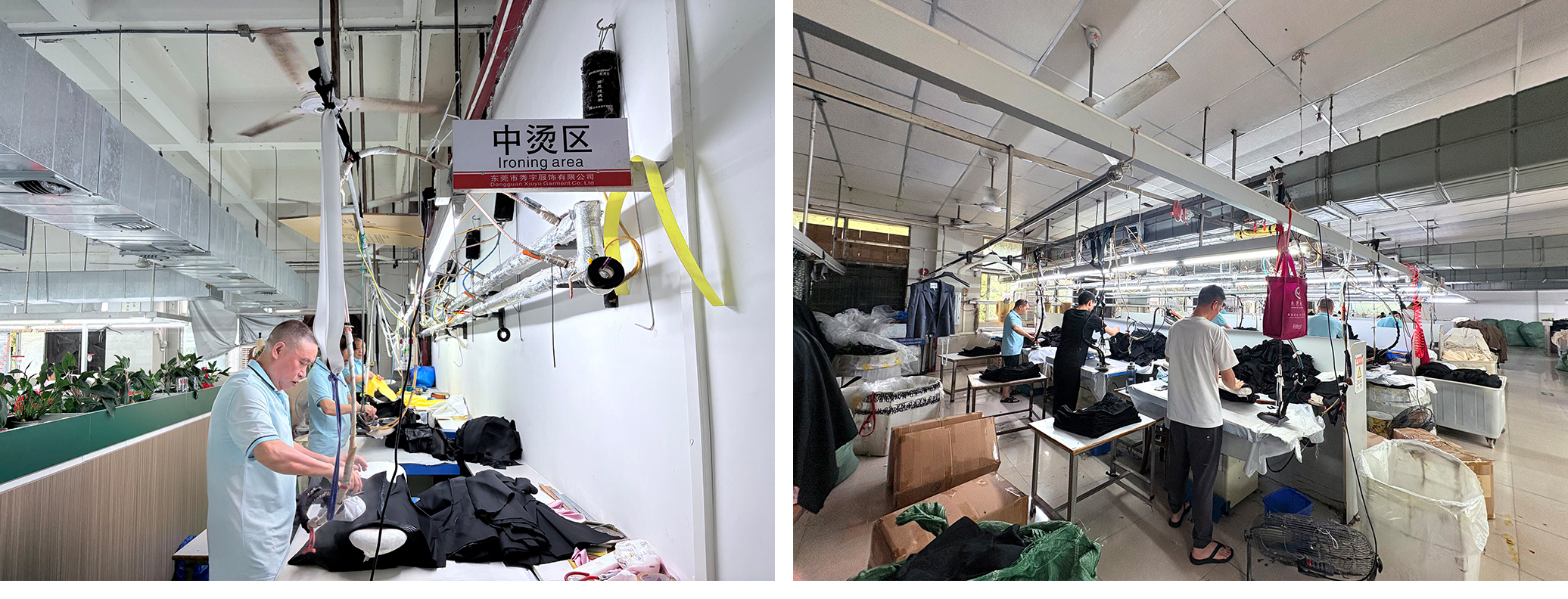 Finishing Workshop
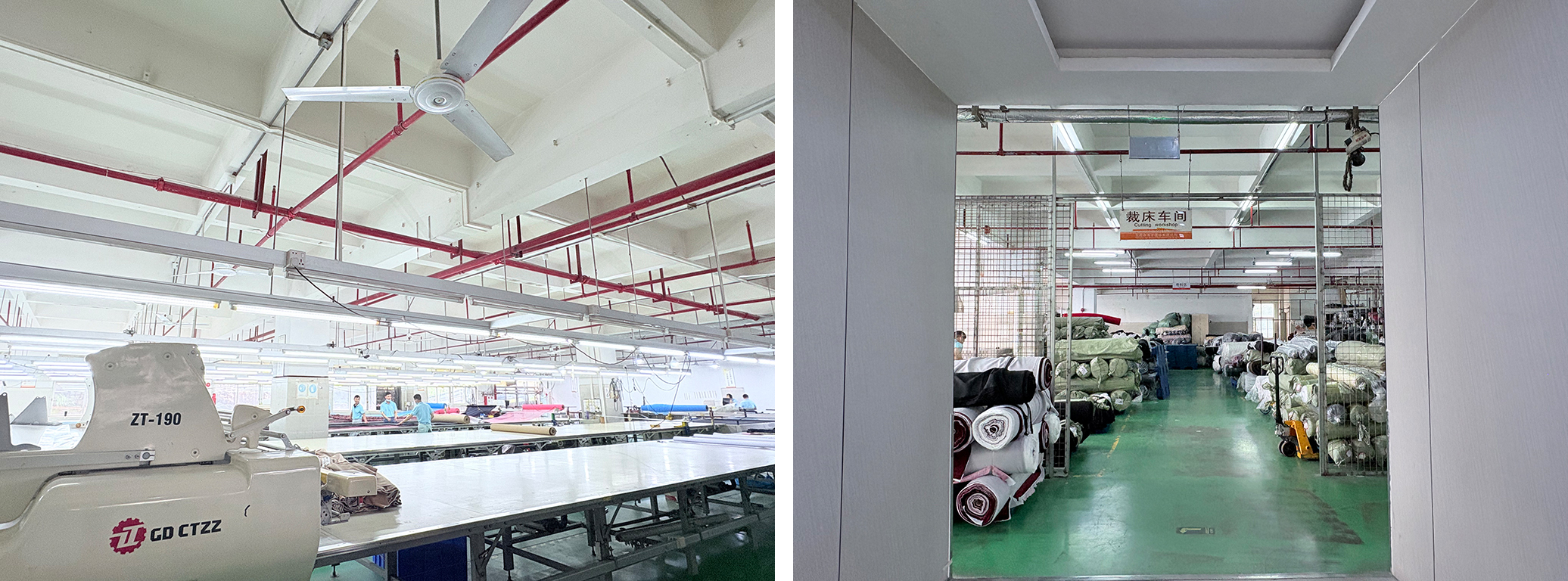
Cutting Room & Fabric warehouse
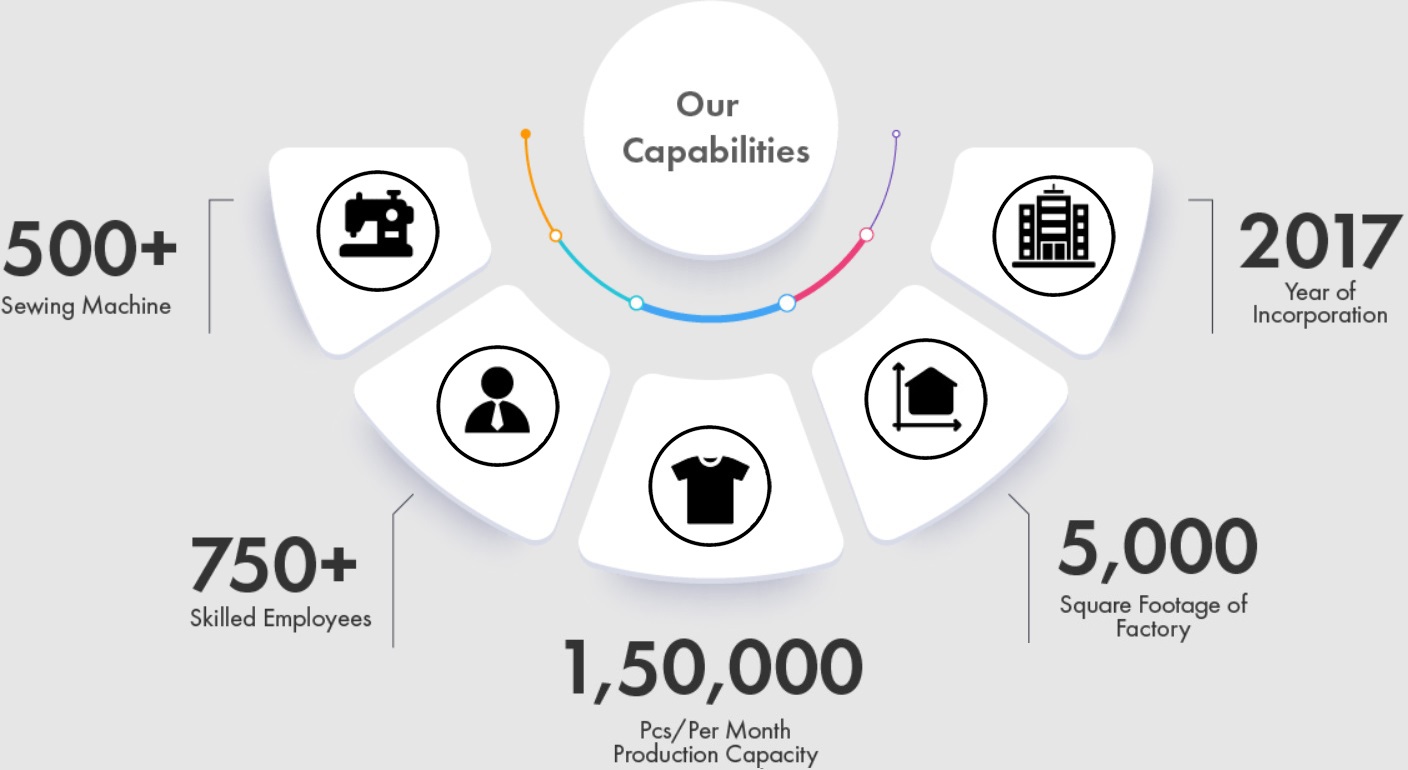
As a custom dress manufacturer, we handle the main production steps in-house, from pattern making and sampling through cutting, sewing, finishing, and final inspection. Our team works from your tech pack, sample, sketch, or reference and checks the details before the style moves into bulk production.
Keeping these stages with one production team makes it easier to deal with pattern changes, sample revisions, and construction issues before cutting starts. We can also arrange screen printing and custom embroidery when these details are part of the design.
More Maxi Dress Styles Available For OEM & ODM Production
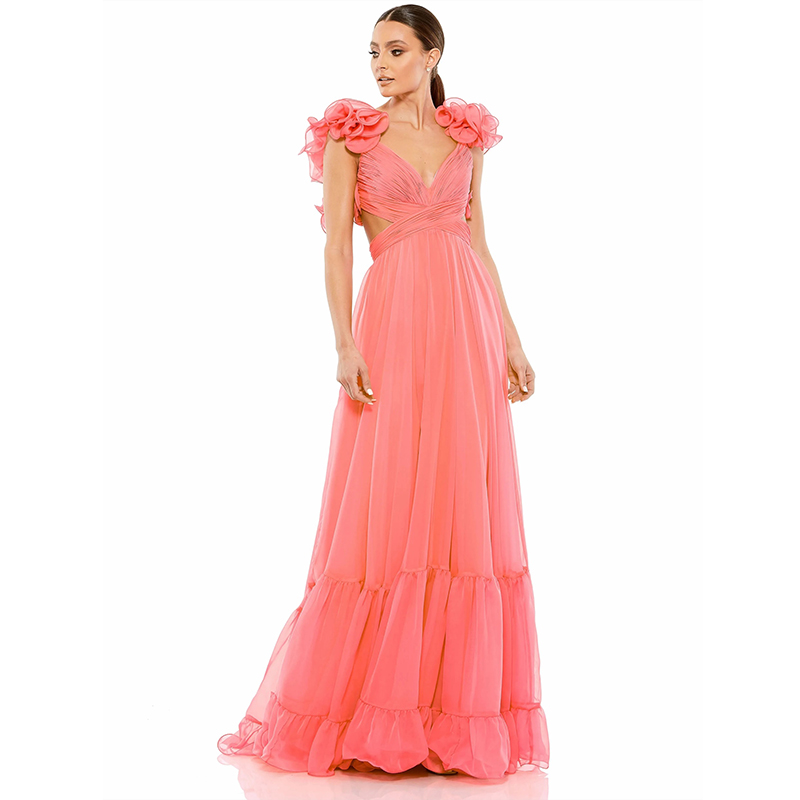
Chiffon Maxi Dress
Chiffon needs careful handling because it is lightweight and can move during cutting. Layered skirts, gathers, lining, and long flowing panels add more work. We check the cutting, seam finishing, and hem on the sample before confirming the bulk construction.
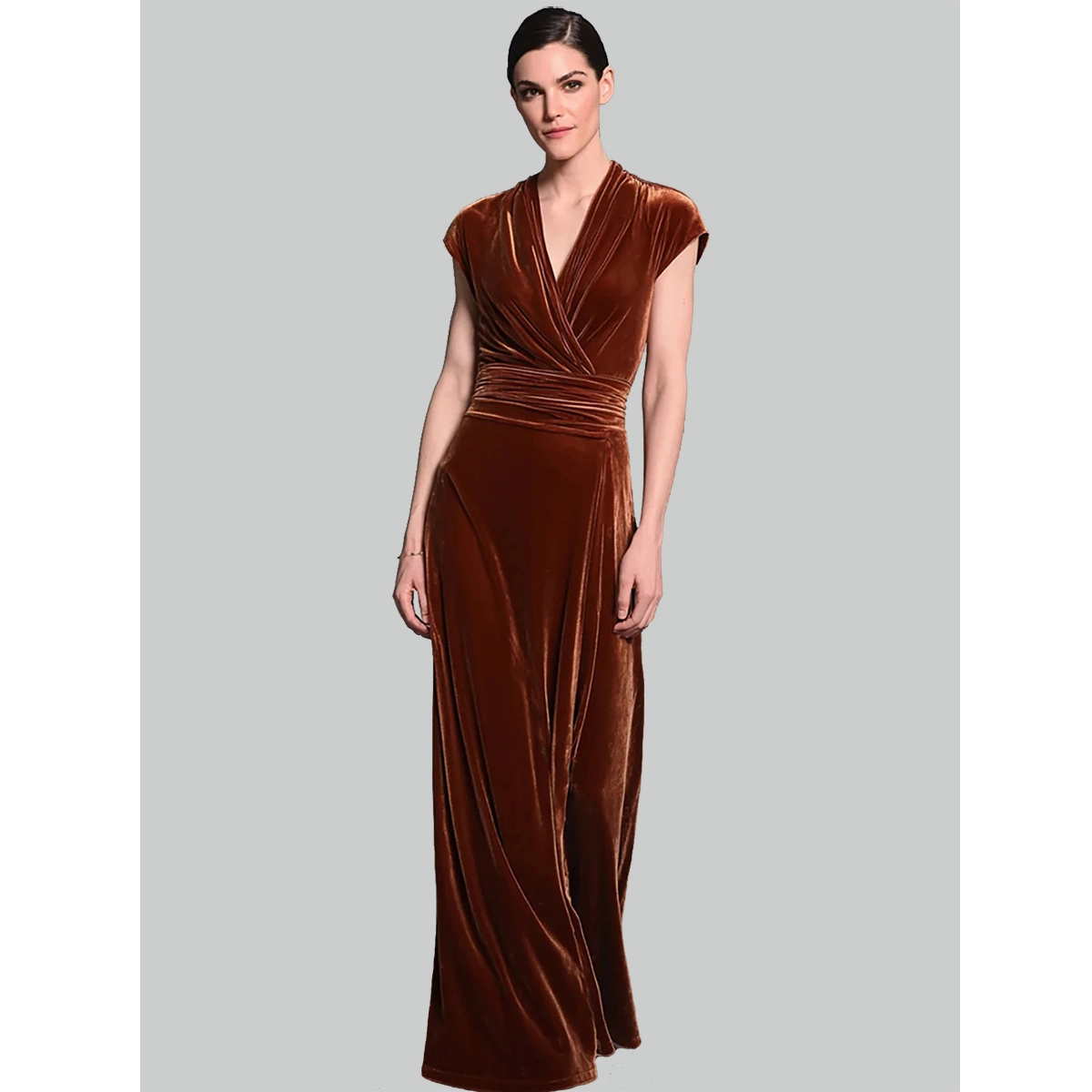
Velvet Maxi Dress
Velvet has a visible pile direction, so cutting pieces in different directions can change how the finished dress looks under light. We keep the fabric direction consistent and take extra care with pressing to avoid flattening the surface.
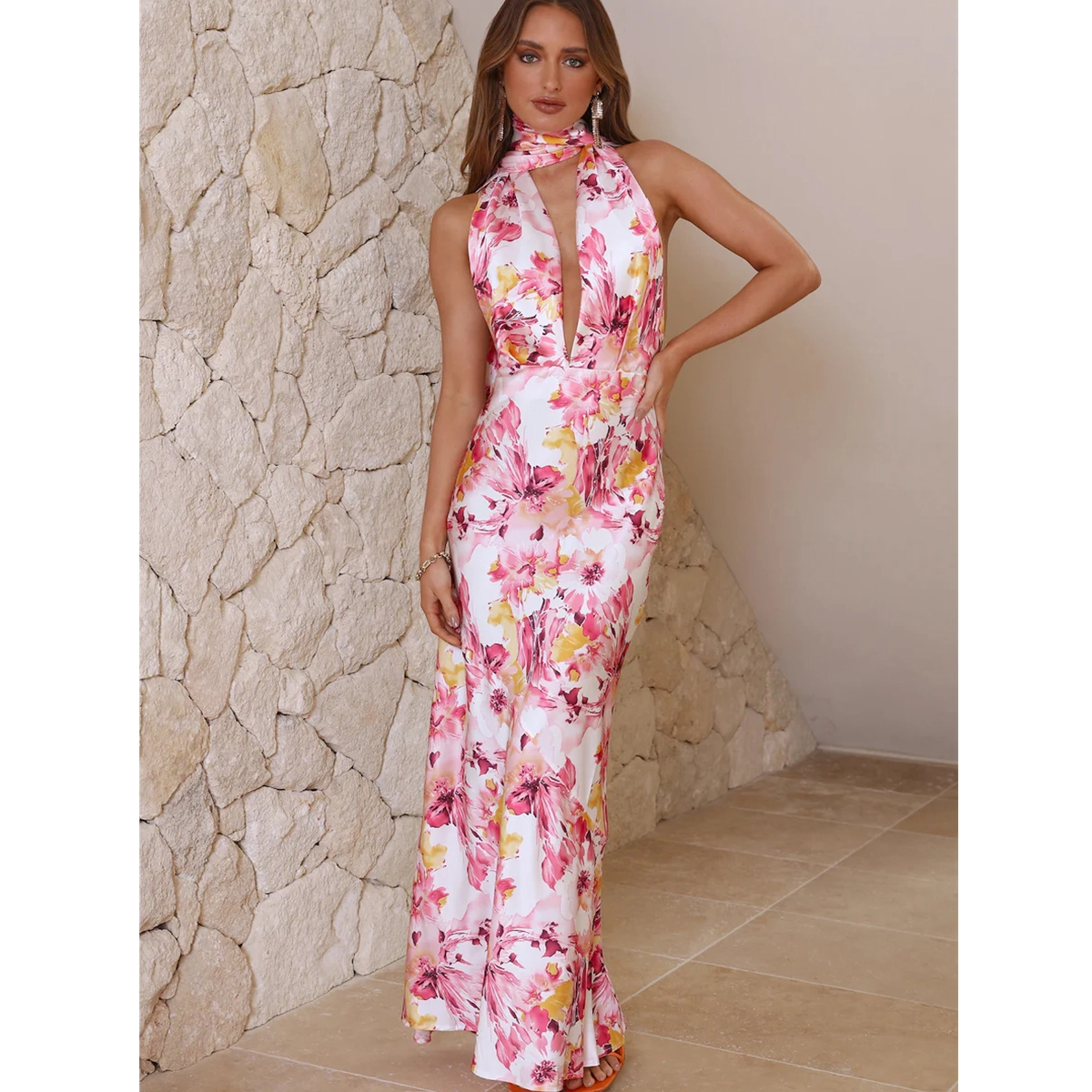
Floral Maxi Dress
For floral prints, the print itself can affect the cutting plan. Depending on the artwork, we may need to consider placement, direction, matching, and fabric width. Custom printed fabrics can also require separate approval before bulk production.
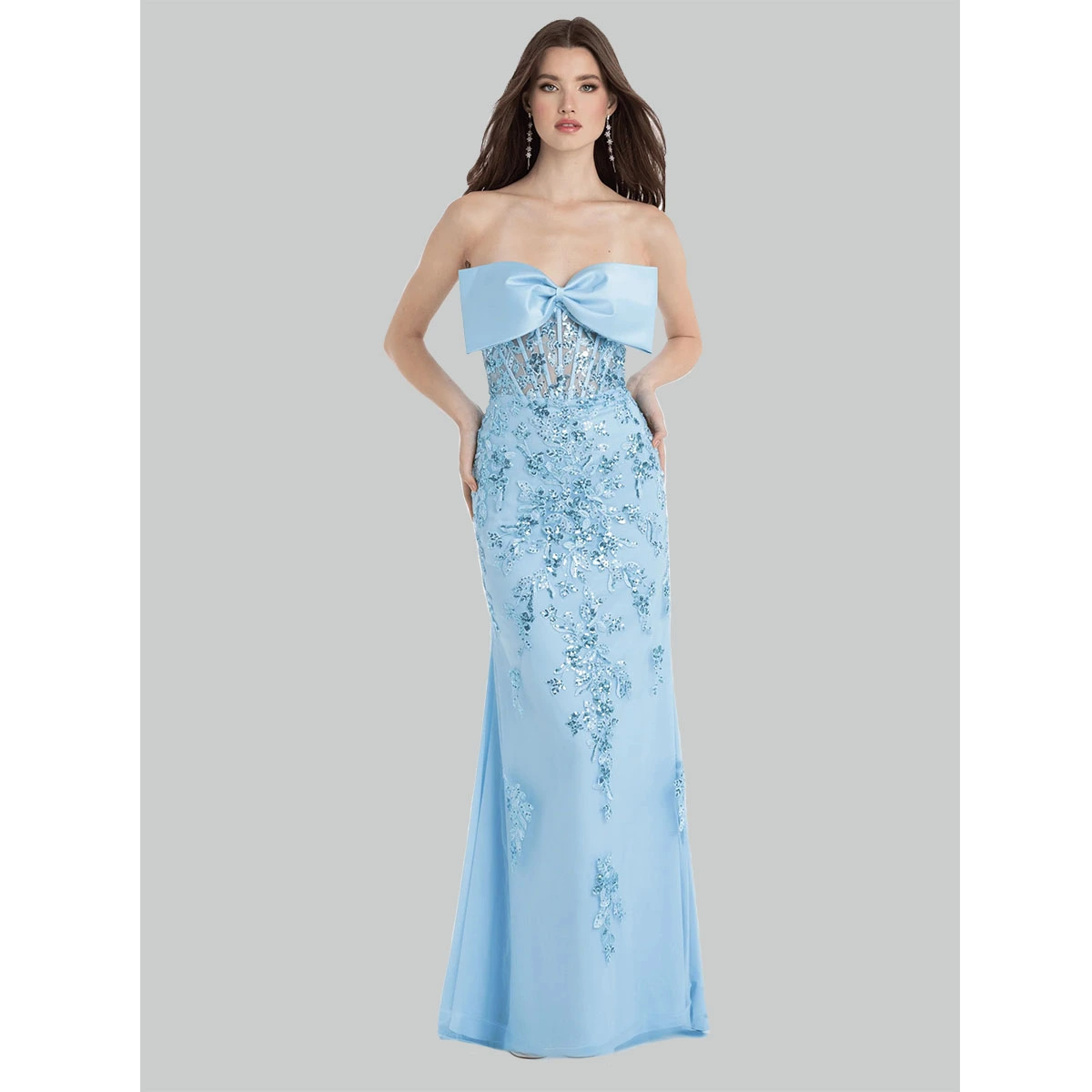
Evening Maxi Dress
Evening maxi dresses can range from relatively simple satin styles to designs with lace, chiffon layers, velvet, embellishment, or more structured construction. The production approach depends on the actual design, so we confirm the fabric, support, finishing, and embellishment details during sampling.
Explore More Dress Manufacturing Solutions At Xiuyu Apparel
- Dress Manufacturer
- Silk Dress Manufacturer
- Slip Dress Manufacturer
- Mini Dress Manufacturer
- Corset Dress Manufacturer
- Velvet Dress Manufacturer
Have a Maxi Dress Project to Develop?
Send us your tech pack, sketch, reference photo, or existing sample. We can check the fabric, construction, measurements, MOQ, and production requirements before sampling.
If you are still working out the details, that’s fine too. Send us what you have and we can go through the main production points with you first.
Yes. We can develop a maxi dress from a sketch, photo, tech pack, or existing sample. We first check the construction, fabric, measurements, and difficult details. If something is unclear from the reference, we confirm it before making the first sample rather than guessing.
Our MOQ depends on the style, fabric, color, and how much customization is involved. For some new brands, we can start from around 50–100 pieces per style or color. We normally confirm the MOQ after checking the fabric and production requirements.
We set the dress length from the approved sample and measurement sheet, then use the same reference during cutting. For longer styles, we also check the finished length after sewing and pressing, since fabric shrinkage and handling can affect the final measurement.
A standard maxi dress sample usually takes around 3–7 days after we have the necessary fabric, measurements, and design details. More complicated styles may take longer, especially with pleats, lining, special trims, or detailed construction that needs extra fitting work.
Yes. We can add your brand labels, care labels, hangtags, and custom packaging to the maxi dresses. These details are usually confirmed before bulk production, including label placement, packaging requirements, and artwork, so the finished order follows your brand specifications.
It depends on the style and the look you want. We commonly work with satin, silk, chiffon, crepe, cotton, linen, and other blended fabrics. For longer dresses, we also consider fabric weight, drape, stretch, and shrinkage because these can affect the final fit and hem.
